Impress employers and recruiters.
Choose from hundreds of resume examples.
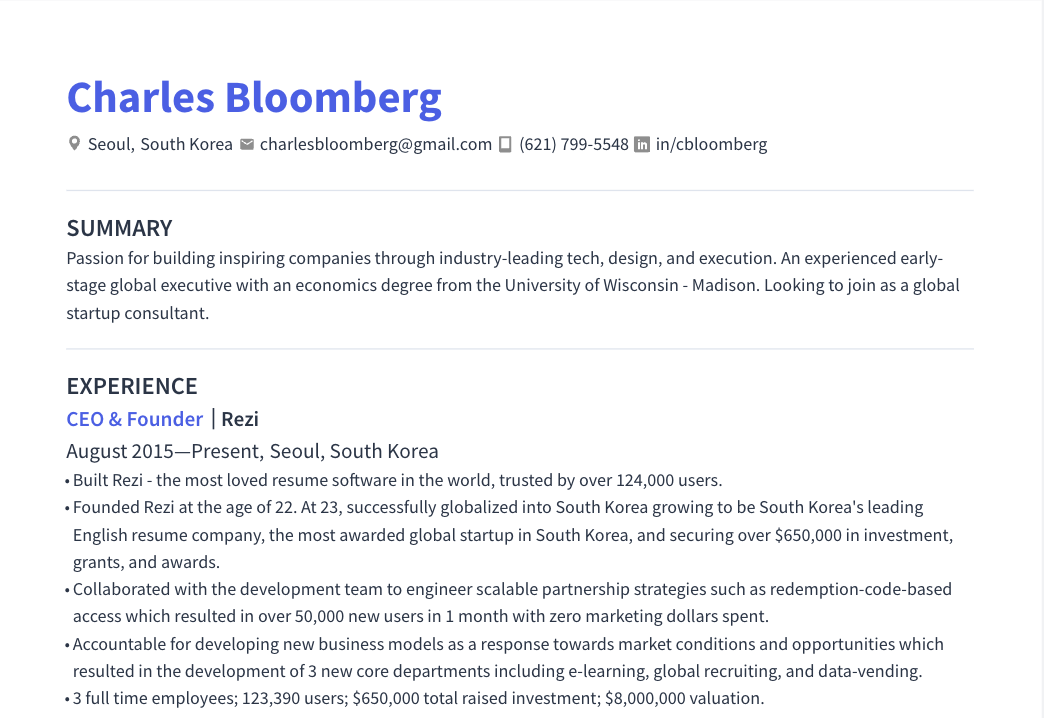
Impress employers and recruiters.
Choose from hundreds of resume examples.
Tailor your resume to this Research, Model Behavior role.
Rezi rewrites your resume against Thinking Machines Lab's job description. Free.
Tailor your resume to this Research, Model Behavior role.
Rezi rewrites your resume against Thinking Machines Lab's job description. Free.
Don't guess if your resume is good enough.
See how it scores against the Research, Model Behavior posting at Thinking Machines Lab — free, in seconds.
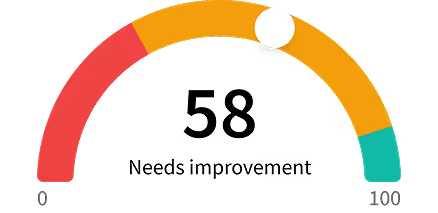
Don't guess if your resume is good enough.
See how it scores against the Research, Model Behavior posting at Thinking Machines Lab — free, in seconds.
About the Role
In this role, you’ll work on discovering, understanding, and shaping model behaviors to improve Thinking Machines’ models and contribute to the open scientific community. You will help build a scientific foundation for understanding and shaping model behaviors, apply it across our training stack, and publish findings and tools openly.
Responsibilities
- Designing methods for surfacing unexpected model behaviors, categorizing them, and tracking them over time.
- Developing and releasing open-source tools for simulating environments in a controlled setting and exploring how model behavior depends on input conditions.
- Running controlled experiments to measure how much model character traits from early training are preserved through RLVR, and designing new interventions to make instilled traits more robust.
- Studying the functional psychological behavior and emotional states of models, and exploring how these states relate to observed behaviors like reward hacking.
- Measuring and shaping how models think of themselves and their situation, and exploring how this affects downstream generalization of model behaviors.
- Developing best practices for writing model specs, instilling their values into models, and measuring whether we succeeded.
- Building and publishing open evaluations of model behaviors and character traits to improve public knowledge and transparency about our evaluation processes.
Requirements
- Bachelor’s degree or equivalent experience in Computer Science, Machine Learning, Physics, Mathematics, or a related discipline with strong theoretical and empirical grounding.
- Strong written and verbal communication skills, with the ability to explain complex technical concepts in writing and collaborate effectively across research and engineering teams.
- Relevant experience in designing evaluations, explaining model behavior, character training, model psychology, or a related area.
- Strong interest in open science or in developing open tools for public understanding of AI systems.
- Hands-on experience with large language models, including writing and iterating on prompts, evaluating outputs, and building an intuition for why a model behaves the way it does.
- A portfolio of scientific publications, open-source libraries and tools, or other public-facing research or writing, especially in areas related to model behavior.
- Familiarity with published literature on behavior generalization and on techniques for shaping model character (e.g. emergent misalignment, synthetic document finetuning, the persona selection hypothesis).
- Experience generating synthetic data at scale for training or evaluation.
- Experience with automated behavior classifiers and LLM judges.
- A strong grasp of probability, statistics, and ML fundamentals, and strong research judgement, including the ability to design meaningful experiments and interpret the results.
- PhD in Computer Science, Machine Learning, Physics, Mathematics, or a related discipline with strong theoretical and empirical grounding; or, equivalent industry research experience.
Skills
- Computer Science
- Machine Learning
- Physics
- Mathematics
- Theoretical grounding
- Empirical grounding
- Written communication
- Verbal communication
- Complex technical concept explanation
- Cross-team collaboration
- Evaluation design
- Model behavior explanation
- Character training
- Model psychology
- Open science
- Open tool development
- AI system understanding
- Large language models
- Prompt writing
- Prompt iteration
- Output evaluation
- Model behavior intuition
- Scientific publications
- Open-source libraries
- Open-source tools
- Public-facing research
- Public-facing writing
- Behavior generalization
- Model character shaping
- Emergent misalignment
- Synthetic document finetuning
- Persona selection hypothesis
- Synthetic data generation
- Automated behavior classifiers
- LLM judges
- Probability
- Statistics
- ML fundamentals
- Research judgment
- Experiment design
- Result interpretation
Location
- San Francisco, California
Work Type
- Onsite
Experience Level
- Equivalent experience
- Industry research experience
Education Level
- Bachelor's degree
- PhD
Salary/Compensations
- $400,000 - $500,000
Benefits
- Generous health, dental, and vision benefits
- Unlimited PTO
- Paid parental leave
- Relocation support
About the Company
- The mission of Thinking Machines is to build AI that extends human will and judgment.
- We are training frontier models with Inkling, developing Tinker to let people make models their own, and crafting interfaces that broaden human-AI communication.
- We believe the future worth building is human, and we're hiring people who want to build it.