Impress employers and recruiters.
Choose from hundreds of resume examples.
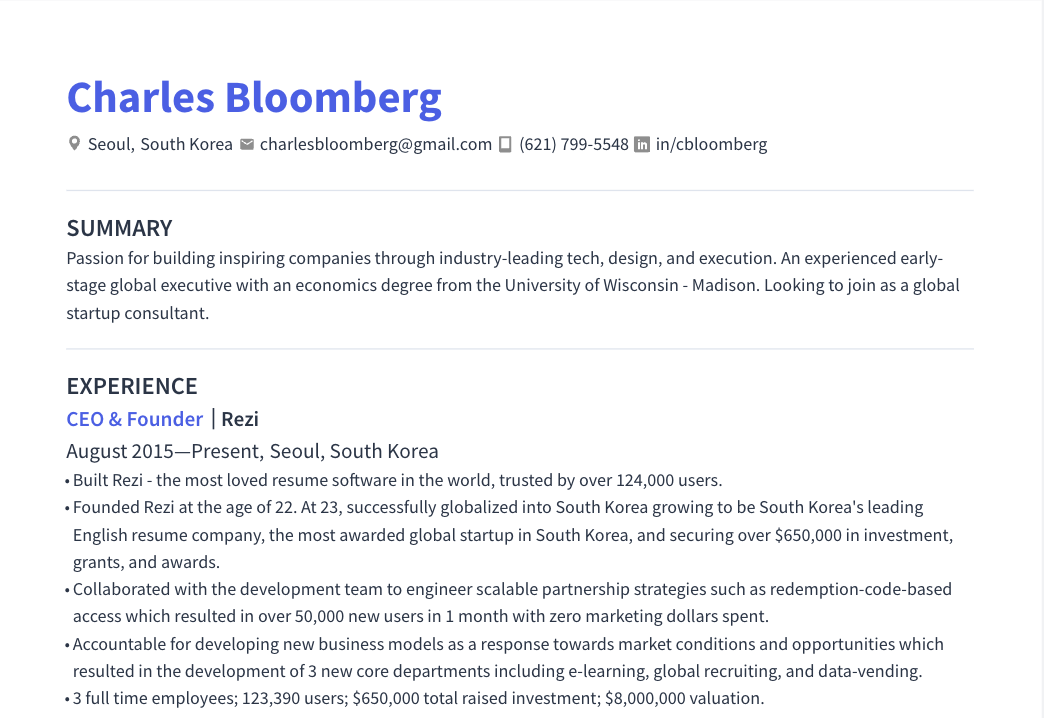
Impress employers and recruiters.
Choose from hundreds of resume examples.
Tailor your resume to this AI & Innovation Specialist role.
Rezi rewrites your resume against ispace, inc.'s job description. Free.
Tailor your resume to this AI & Innovation Specialist role.
Rezi rewrites your resume against ispace, inc.'s job description. Free.
Don't guess if your resume is good enough.
See how it scores against the AI & Innovation Specialist posting at ispace, inc. — free, in seconds.
Don't guess if your resume is good enough.
See how it scores against the AI & Innovation Specialist posting at ispace, inc. — free, in seconds.
About the Role
The AI & Innovation Specialist is the global technical application owner responsible for identifying, evaluating, integrating, deploying, and continuously improving artificial intelligence solutions across ispace. The role focuses on AI agents, enterprise AI platforms, workflow automation, knowledge integration, and intelligent applications. The analyst serves as the bridge between business functions, IT, Security, and technology providers, translating business opportunities into secure, scalable, maintainable, and measurable AI solutions. The role moves use cases through the full lifecycle from discovery and prototype to pilot, production, adoption, and continuous improvement. The role acts as the end-to-end technical owner of the AI agent lifecycle, translating business requirements into agent solutions and owning the process from solution design and proof of concept through deployment, monitoring, troubleshooting, user training, and continuous improvement. A key priority is the deployment of AI agents that can securely use authorized enterprise information and interact with business applications while respecting identity, access control, security, privacy, data governance, and human oversight requirements.
Responsibilities
- Support the AI business owner to identify opportunities where AI can improve productivity, decision-making, knowledge management, engineering, and business operations.
- Engage with business teams to discover, assess, prioritize, and define AI use cases based on feasibility, risk, and expected value.
- Evaluate emerging AI technologies and determine their relevance to ispace business and mission needs.
- Rapidly prototype and validate AI capabilities, develop business cases, and recommend whether to stop, refine, pilot, or scale each use case.
- Promote responsible experimentation and continuous innovation across the organization.
- Design, configure, test, deploy, and maintain AI agents and agentic workflows.
- Develop agents that retrieve enterprise knowledge, support users, automate processes, and perform controlled actions across business applications.
- Implement agent orchestration, knowledge grounding, prompt design, tool integration, workflow automation, and human-in-the-loop controls.
- Define evaluation criteria and test agents for accuracy, security, reliability, latency, cost, and appropriate behavior before production release.
- Monitor agent quality, usage, task success, and business value, and continuously improve deployed solutions.
- Troubleshoot and resolve agent issues, including inaccurate or inconsistent outputs, prompt issues, knowledge-grounding problems, access or permission issues, workflow failures, and configuration issues.
- Define and organize the infrastructure, information architecture, access model, and platform requirements needed to support AI agents.
- Design how enterprise information should be structured and accessed by AI agents, including separation of common, private, and restricted information.
- Determine appropriate solution architecture and platform requirements based on each business use case, including security, scalability, maintainability, and operational needs.
- Work with IT, Security, and infrastructure teams where specialist implementation is required, while maintaining end-to-end ownership of the AI solution.
- Evaluate infrastructure and platform options and recommend appropriate approaches as the company’s AI environment evolves.
- Integrate AI capabilities with enterprise platforms, data sources, knowledge repositories, and business applications.
- Develop and maintain integrations using APIs, connectors, automation platforms, cloud services, and event-driven workflows.
- Design and coordinate integrations using available platform capabilities, connectors, automation tools, and cloud services, working with relevant technical teams where specialist development is required.
- Work with appropriate enterprise AI platforms and business systems depending on the selected solution.
- Work with Microsoft 365 Copilot, Copilot Studio, Azure AI, Azure OpenAI, Microsoft Graph, Power Platform, SharePoint, Teams, AWS AI services, Jira, Confluence, and other enterprise systems as required.
- Enable AI solutions to access only authorized enterprise knowledge and data.
- Collaborate with application and infrastructure owners on authentication, authorization, API access, identity, logging, and architecture.
- Manage the lifecycle of AI solutions from prototype through controlled production deployment and retirement.
- Establish repeatable practices for versioning, testing, release, monitoring, support, incident handling, and continuous improvement.
- Coordinate pilots, user acceptance testing, production releases, operational handover, and adoption activities.
- Document architecture, data flows, configurations, integrations, ownership, controls, and operating procedures.
- Monitor service performance, reliability, adoption, consumption, and cost, and coordinate vendor escalation when required.
- Ensure AI solutions comply with company policies for information security, privacy, data protection, acceptable use, and responsible AI.
- Apply least-privilege access, data classification, logging, auditability, and appropriate human oversight to AI agents and integrations.
- Partner with Security and Governance teams to assess risks and define controls for models, agents, connectors, actions, and data sources.
- Help maintain an inventory of approved AI solutions, ownership, intended use, data access, risks, and controls.
- Address risks including data leakage, prompt injection, excessive permissions, inaccurate output, unsafe autonomous action, and third-party dependency.
- Gather and document business, functional, technical, security, and operational requirements.
- Translate business challenges into practical solution designs and implementation roadmaps.
- Facilitate workshops, map current and future processes, and build alignment on priorities and solution options.
- Coordinate functional testing, user acceptance testing, issue resolution, training, and communications.
- Gather user feedback, measure outcomes, and improve solutions based on evidence.
Requirements
- Hands-on understanding of generative AI, large language models, AI agents, and agentic workflows.
- Experience with prompt design, knowledge grounding, AI evaluation, workflow orchestration, and familiarity with concepts such as retrieval-augmented generation (RAG) and enterprise search.
- Experience with prompt design, retrieval-augmented generation (RAG), enterprise search, knowledge grounding, AI evaluation, and workflow orchestration.
- Ability to select an appropriate model, platform, integration pattern, and control approach for a business use case.
- Ability to learn emerging technologies quickly and convert experiments into supportable enterprise solutions.
- Experience with REST APIs, JSON, OAuth 2.0, OpenID Connect, webhooks, and enterprise application integration.
- Working knowledge of Python and/or JavaScript and basic software lifecycle practices, including Git, testing, documentation, and release management.
- Experience with enterprise automation or AI platforms such as Power Automate, Power Apps, Copilot Studio, or equivalent technologies is advantageous.
- Experience with Power Automate, Power Apps, Copilot Studio connectors/actions, SQL, and cloud services in Azure and/or AWS.
- Understanding of identity, authorization, data access, logging, monitoring, and secure integration patterns.
- Strong requirements gathering, stakeholder management, functional design, testing, and business process mapping skills.
- Ability to communicate technical concepts clearly to both technical and non-technical stakeholders.
- Practical project delivery skills, with the ability to balance experimentation, control, time, cost, and business value.
- Business-level English.
- Japanese capability is highly desirable for collaboration across ispace.
Skills
- Generative AI
- Large language models
- AI agents
- Agentic workflows
- Prompt design
- Knowledge grounding
- AI evaluation
- Workflow orchestration
- Retrieval-augmented generation (RAG)
- Enterprise search
- REST APIs
- JSON
- OAuth 2.0
- OpenID Connect
- Webhooks
- Enterprise application integration
- Python
- JavaScript
- Git
- Testing
- Documentation
- Release management
- Power Automate
- Power Apps
- Copilot Studio
- SQL
- Azure
- AWS
- Identity management
- Authorization
- Data access
- Logging
- Monitoring
- Secure integration patterns
- Requirements gathering
- Stakeholder management
- Functional design
- Business process mapping
- Project delivery