Impress employers and recruiters.
Choose from hundreds of resume examples.
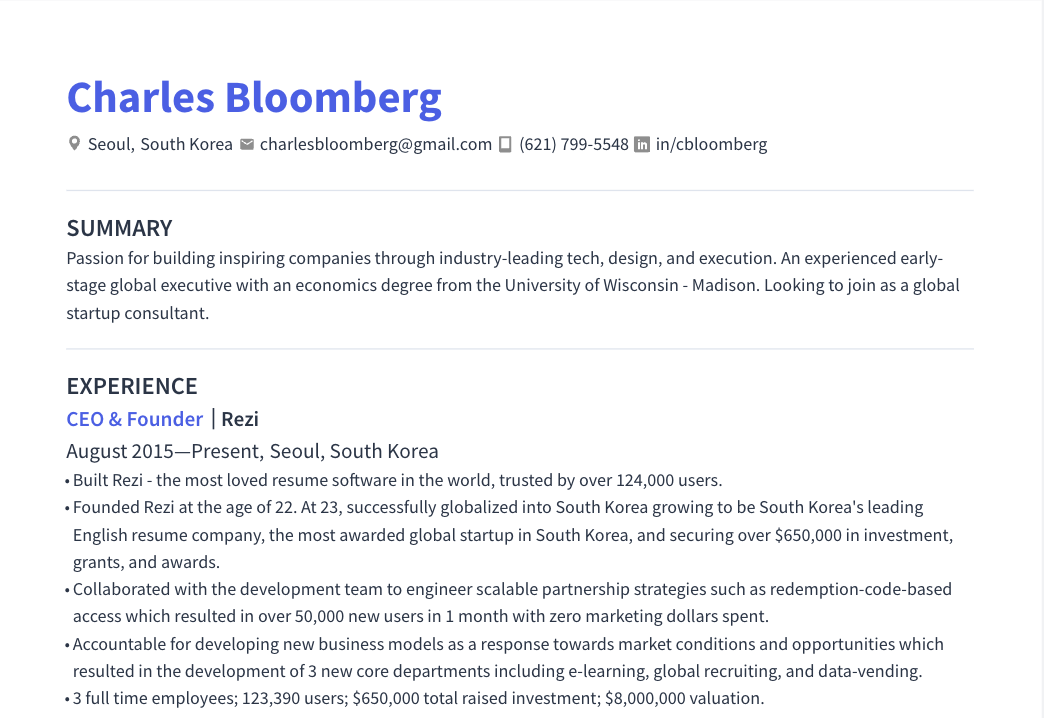
Impress employers and recruiters.
Choose from hundreds of resume examples.
Tailor your resume to this Software Engineer, Control & Error Correction role.
Rezi rewrites your resume against Silicon Quantum Computing's job description. Free.
Tailor your resume to this Software Engineer, Control & Error Correction role.
Rezi rewrites your resume against Silicon Quantum Computing's job description. Free.
Don't guess if your resume is good enough.
See how it scores against the Software Engineer, Control & Error Correction posting at Silicon Quantum Computing — free, in seconds.
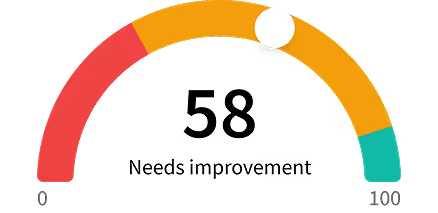
Don't guess if your resume is good enough.
See how it scores against the Software Engineer, Control & Error Correction posting at Silicon Quantum Computing — free, in seconds.
About the Role
We are hiring software engineers into Control & Error Correction, the team that builds the realtime engine inside the quantum computer. This team develops the software and digital logic that executes circuits, corrects errors, and manages logical qubit operations, operating in NISQ mode today and fault-tolerant mode as the system scales. These components form the Realtime Quantum Control Plane, running across a mesh of FPGA cards wired to cryogenic hardware, where timing is critical, with corrections needing to be completed within approximately one microsecond.
Responsibilities
- Build and operate the realtime scheduler, including logical qubit allocation across the FPGA mesh, and the schedule and result pipeline.
- Maintain and extend the NISQ pulse compiler that translates pulse-level operations into hardware instructions.
- Implement logical measurement, Pauli frame tracking, and inter-QPU operations across chiplets.
- Work on the decoder path, including error monitoring, offload and look-ahead, and the neural network decoder services in the cluster layer.
- Build the orchestration for magic state distillation to ensure resource states are available when a logical gate requires them.
- Design against hard deadlines, including latency budgets, jitter, and hot paths with no allocation and no surprises.
- Work across the boundaries between fabric, embedded processor, host, and cluster, including memory-mapped interfaces, DMA, and card-to-card protocols.
- Verify timing-dependent behavior using simulation, reference models, and replay of recorded device data.
- Measure latency and jitter on the hardware and report the measured results.
- Collaborate with Compiler Services on executable control plane functions and with Automated Calibration Services on calibration duty cycles.
- Bring up and operate the mesh alongside Platform & Infrastructure, including the CI/CD path onto real hardware.
- Document the design, interfaces, and measurements to facilitate future development.
Requirements
- 4+ years building systems software in production.
- Proficiency in Rust or C++ at depth, plus Python for tooling, analysis, and testing.
- Hard realtime experience, where a missed deadline is a failure.
- Experience with concurrency and synchronization, with a focus on keeping the critical path simple.
- Experience working close to hardware, including memory-mapped IO, drivers, DMA, and interrupts.
- Experience with scheduling, allocation, or queueing algorithms, and the ability to reason about worst-case scenarios.
- Strong computer science fundamentals and comfort implementing algorithms from research papers.
- Experience testing systems with timing-dependent behavior, including simulation and comparison against reference implementations.
- Experience measuring performance on target hardware.
- Proficiency with Git workflow, code review, and CI applied to hardware-facing code.
- Ability to collaborate with physicists and quantum information scientists to define requirements.
Skills
- Rust
- C++
- Python
- Hard realtime systems
- Concurrency
- Synchronization
- Memory-mapped IO
- Drivers
- DMA
- Interrupts
- Scheduling algorithms
- Allocation algorithms
- Queueing algorithms
- Worst-case analysis
- Computer science fundamentals
- Algorithm implementation
- Timing-dependent system testing
- Performance measurement
- Git
- Code review
- CI/CD
- HDL design (VHDL, Verilog, SystemVerilog)
- FPGA toolchain
- Quantum error correction
- Decoders
- Matching algorithms
- Graph algorithms
- Embedded systems
- Bare-metal programming
- No_std Rust
- ARM targets
- Kernel bypass
- RDMA
- DPDK
- DSP
- Pulse-level control
- Closed-loop feedback
- Instrument control
- Scientific hardware
- Precision timing
- Synchronization
- Neural network inference
- Quantisation
- Linux performance tooling
- Quantum computing
Location
- Sydney
Work Type
- Full-time
Experience Level
- 4+ years
About the Company
- Silicon Quantum Computing (SQC) is building the world's first commercial-scale quantum computer and delivering quantum-enhanced AI and simulation products.
- SQC leverages a proprietary manufacturing process to engineer atomic qubits in silicon with 0.13 nanometer precision, enabling world-leading fidelity.
- The company's products are commercially deployed and generating revenue, with Watermelon (quantum-enhanced AI) and Quantum Twins (simulation platform) already in use.
- Founded by Michelle Simmons, a pioneer in atomic electronics, and led by former Arm CEO Simon Segars, SQC has a strong foundation in quantum computing and semiconductor technology.
- SQC operates in a high-accountability environment with the principle 'Every Atom Counts', aiming to play a meaningful role in building the next frontier of computing.
Equal Opportunity
- SQC is an equal opportunity employer that values diverse perspectives and experiences.
- Applications are encouraged from candidates who may not meet every listed requirement.
- Candidates excited about the role and believing they can contribute are encouraged to apply.