Impress employers and recruiters.
Choose from hundreds of resume examples.
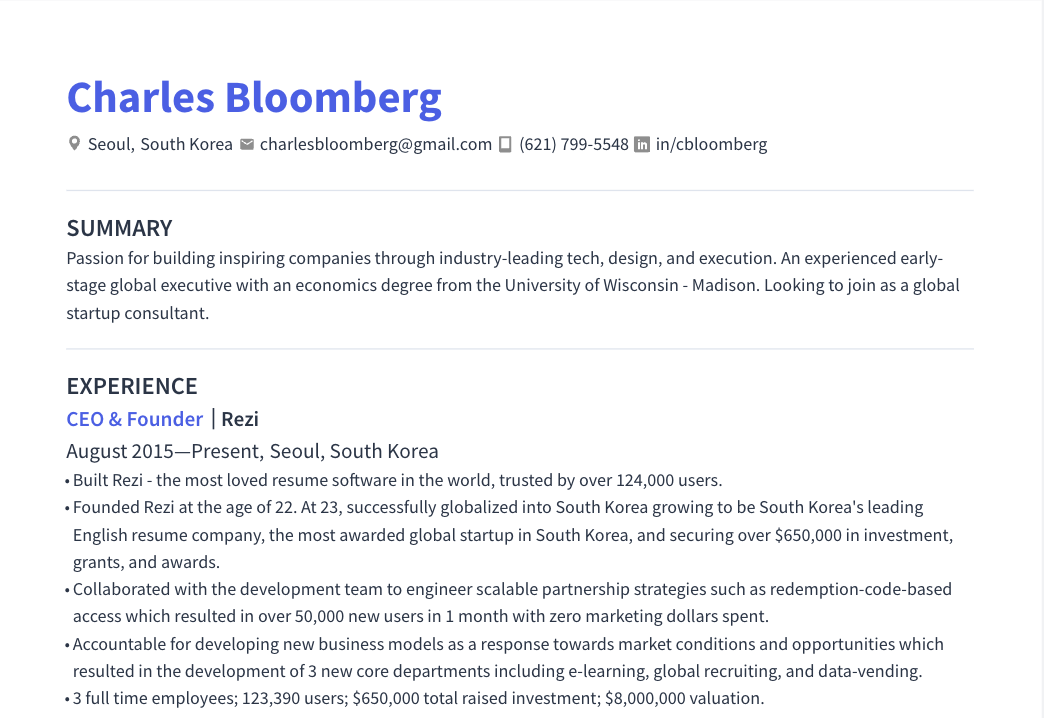
Impress employers and recruiters.
Choose from hundreds of resume examples.
Tailor your resume to this Digital Workplace Principal Architect role.
Rezi rewrites your resume against Northwestern Mutual's job description. Free.
Tailor your resume to this Digital Workplace Principal Architect role.
Rezi rewrites your resume against Northwestern Mutual's job description. Free.
Don't guess if your resume is good enough.
See how it scores against the Digital Workplace Principal Architect posting at Northwestern Mutual — free, in seconds.
Don't guess if your resume is good enough.
See how it scores against the Digital Workplace Principal Architect posting at Northwestern Mutual — free, in seconds.
About the Role
The Principal Digital Workplace Architect defines Northwestern Mutual’s enterprise digital workplace and productivity architecture. You will establish target-state architectures, roadmaps, standards, reference architectures, and investment guidance across employee experience, collaboration, end-user computing, mobility, knowledge and content, service experience, automation, citizen development, and AI-enabled productivity. Through expertise and influence, you will partner across business and technology functions to guide complex decisions and improve productivity, collaboration, employee experience, resilience, cost, adoption, and risk outcomes. As a member of the Architecture Practice and the architecture counterpart on the Digital Workplace leadership team, you will connect enterprise architecture standards with Technology Foundations Platform priorities, investments, roadmaps, and delivery decisions. This principal individual-contributor role has no direct people-management responsibilities but may lead cross-functional efforts, coordinate architecture work, and mentor others through technical influence.
Responsibilities
- Define and communicate the enterprise digital workplace architecture strategy, aligning it with business, workforce, technology, security, and employee and field priorities.
- Develop target-state architectures and transition roadmaps for productivity, collaboration, communication, end-user computing, endpoint and mobility, employee experience, knowledge and content, service experience, automation, and AI-enabled work.
- Translate workforce trends, employee needs, regulatory expectations, technology developments, vendor roadmaps, and portfolio constraints into clear strategic choices, architecture priorities, and decision principles.
- Assess the workplace technology landscape to identify fragmentation, overlap, legacy risk, and experience friction, and recommend investment, reuse, consolidation, simplification, sequencing, and retirement decisions.
- Establish and evolve enterprise principles, standards, reference architectures, design patterns, guardrails, and decision guidance for Microsoft 365, Teams, SharePoint, OneDrive, Exchange, Viva, Copilot, endpoint management, virtual desktop and application delivery, digital experience management, Power Platform, and related workplace capabilities.
- Guide platform, product, domain, and solution architectures toward the target state through architecture reviews, strategic planning, portfolio decisions, and direct engagement with architects, product leaders, engineers, and service owners.
- Provide independent architectural judgment on high-impact or ambiguous decisions involving employee value, security, privacy, accessibility, interoperability, resilience, supportability, cost, adoption, and time to market.
- Maintain authoritative architecture artifacts and decision histories that are understandable, reusable, enforceable, and practical for technical and nontechnical stakeholders.
- Define architecture direction for a cohesive digital employee experience that reduces friction across collaboration, knowledge discovery, communications, workflow, support, and devices.
- Shape enterprise AI-enabled productivity architecture, including copilots, agents, enterprise search, knowledge grounding, extensibility, identity, data access, observability, human oversight, lifecycle management, and pathways from experimentation to scaled production.
- Partner with business, HR, change, communications, accessibility, learning, and platform leaders to support adoption, inclusive design, role-based experiences, and measurable productivity outcomes.
- Define telemetry and measurement expectations for adoption, experience, service health, workflow completion, employee sentiment signals, and business value while respecting privacy and workforce-data boundaries.
- Lead architectural rationalization across overlapping workplace tools and services, considering capability fit, user experience, risk, total cost, integration, data governance, vendor viability, and operating-model implications.
- Develop integrated roadmaps connecting target-state architecture with platform lifecycles, renewal cycles, organizational cross-skilling, product plans, technical debt, investment priorities, and measurable outcomes.
- Promote standardization, interoperability, platform reuse, configuration over customization, and retirement of redundant capabilities while preserving differentiated experiences where business value warrants them.
- Provide architecture oversight for major workplace initiatives, identifying divergence and cross-platform dependencies early while ensuring near-term delivery decisions preserve viable long-term options.
- Define an architecture model that enables business colleagues to build applications, workflows, AI agents, and automations within agreed guardrails while controlling shadow IT, data exposure, unmanaged dependencies, and unsupported production solutions.
- Establish environment, identity, connector, data-loss prevention, lifecycle, ownership, support, and monitoring patterns for Power Platform and related automation capabilities.
- Create promotion paths from citizen-built experiments to enterprise-supported products, including architecture-review triggers, operational readiness, support ownership, security and compliance requirements, and retirement expectations.
- Partner with Cybersecurity, Legal, Risk, Compliance, Privacy, Records, and data-governance stakeholders to establish guardrails that are proportionate, practical, and visible to delivery teams.
- Serve as the senior steward and direction setter for Digital Workplace and enterprise productivity architecture, maintaining its target state, roadmap, standards, stakeholder relationships, decision evidence, measures, and backup stewardship.
- Clarify decision rights and working relationships among Enterprise Architecture, Digital Workplace engineering, Product Management, Service Management, Cybersecurity, Infrastructure, HR Technology, business technology teams, and enterprise governance forums.
- Enable a cross-skilled workplace engineering model through simplified platform patterns, fewer one-off solutions, and reusable architecture guidance.
- Convene stakeholders, drive unresolved decisions, and escalate enterprise-consequential or cross-domain matters through the appropriate architecture and investment-governance forums.
- Advise senior business and technology leaders on digital workplace strategy, employee experience, AI-enabled productivity, platform economics, risk, architectural implications, and investment choices.
- Build alignment across organizational boundaries by simplifying complex issues, identifying tradeoffs, and creating shared conviction around a practical path forward.
- Lead cross-functional architecture working sessions and federated decision forums without relying on positional authority.
- Monitor industry, regulatory, and technology developments, assess their enterprise implications, and selectively incorporate proven advances into strategies, standards, and roadmaps.
- Represent Digital Workplace architecture in strategic planning, architecture governance, portfolio reviews, vendor evaluations, renewal decisions, and other high-impact forums.
Requirements
- A bachelor’s or master’s degree in computer science, engineering, information systems, human-computer interaction, or a related field, or equivalent relevant experience.
- Typically 12 or more years of progressively responsible experience in enterprise architecture, digital workplace architecture, end-user computing, collaboration architecture, platform architecture, solution architecture, or a related technology discipline, including experience in large, complex enterprises.
- Experience defining enterprise strategy, target-state architecture, transition roadmaps, standards, and governance within a complex, matrixed organization.
- Deep expertise in enterprise productivity and collaboration technologies, including Microsoft 365, Teams, SharePoint, OneDrive, Exchange, Viva, Copilot, Entra ID, Intune, Windows, endpoint and mobility management, virtual desktop or application delivery, Power Platform, and digital experience management.
- Experience with employee experience architecture, knowledge and content services, enterprise search, service desk and self-service, automation, conversational AI, observability, telemetry, accessibility, and adoption measurement.
- Demonstrated success simplifying overlapping technology portfolios and connecting platform rationalization with user experience, operating model, risk, supportability, vendor lifecycle, and total cost of ownership.
- Experience defining secure and compliant architectural patterns for identity, endpoints, data protection, information governance, records, privacy, accessibility, and regulated workplace use cases.
- The ability to connect technical architecture with employee productivity, field outcomes, business capabilities, risk, economic tradeoffs, and investment priorities.
- Proven ability to influence senior leaders, architects, product leaders, engineers, service owners, and business stakeholders without direct authority.
- Exceptional written, verbal, facilitation, and executive-presentation skills, with the ability to simplify complex topics without losing important nuance.
- Strong strategic thinking, analytical judgment, learning agility, and problem-solving skills, with the ability to work independently in highly ambiguous situations.
- Experience in insurance, wealth management, financial services, or another highly regulated industry is preferred.
Skills
- Architecture Strategy
- Business Acumen
- Collaborative Partnership & Planning
- Regulatory Compliance
- Stakeholder Relationship
- Strategic & Systems Thinking
- Technical Problem Solving
Location
- Remote
Work Type
- Hybrid
- Full-time
Experience Level
- Principal
- 12+ years
Education Level
- Bachelor's degree or Master's degree in Computer Science, Engineering, Information Systems, Human-Computer Interaction, or a related field, or equivalent relevant experience.
- Advanced degrees and architecture, Microsoft, cloud, security, or service-management certifications are a plus.
Salary/Compensations
- $176,000.00 - $264,000.00
- $193,600.00 USD - $290,400.00 USD
- $202,400.00 USD - $303,600.00 USD
About the Company
- Grow your career with a best-in-class company that puts our clients' interests at the center of all we do. Get started now!
Equal Opportunity
- Northwestern Mutual is an equal opportunity employer that welcomes talented individuals of all backgrounds. We are committed to creating and maintaining an environment in which each employee can contribute creative ideas, seek challenges, assume leadership and continue to focus on meeting and exceeding business and personal objectives.