Impress employers and recruiters.
Choose from hundreds of resume examples.
Impress employers and recruiters.
Choose from hundreds of resume examples.
Tailor your resume to this AI Security Architect & Red Team Lead role.
Rezi rewrites your resume against University of Toronto's job description. Free.
Tailor your resume to this AI Security Architect & Red Team Lead role.
Rezi rewrites your resume against University of Toronto's job description. Free.
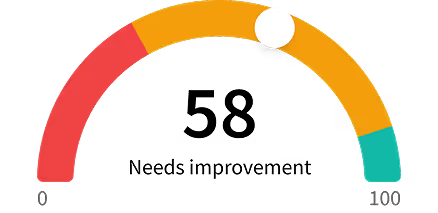
Don't guess if your resume is good enough.
See how it scores against the AI Security Architect & Red Team Lead posting at University of Toronto — free, in seconds.
Don't guess if your resume is good enough.
See how it scores against the AI Security Architect & Red Team Lead posting at University of Toronto — free, in seconds.
About the Role
The University of Toronto is establishing an AI red teaming function and seeks an AI Security Architect & Red Team Lead to build this capability from the ground up. This foundational role involves defining strategy, assessing the AI threat landscape, and serving as the university's primary authority on AI-specific security threats. The position requires significant autonomy in independently assessing needs and providing actionable recommendations to senior leadership.
Responsibilities
- Establish and drive the university’s adversarial testing capability for AI systems.
- Build the AI red teaming function from the ground up.
- Define the strategy for AI red teaming.
- Serve as the university’s primary authority on AI-specific security threats.
- Independently assess the AI threat landscape.
- Identify university needs related to AI security.
- Provide clear, actionable recommendations to senior leadership.
- Shape the university’s approach to AI security testing.
- Build internal checks and balances for responsible AI deployment.
- Manage relationships with third-party red teaming providers.
- Communicate findings and recommendations directly to senior & executive leadership.
Requirements
- Bachelor’s degree in Computer Science, Cybersecurity, Data Science, or a related field.
- Master’s degree preferred.
- Equivalent combination of education and experience will be considered.
- Relevant certifications: OSCP, GIAC (GPEN, GXPN), CEH, CISM, or AI-specific certifications are preferred.
- Minimum 5 years of experience in cybersecurity and/or application architecture.
- At least 3 years focused on AI/ML security, adversarial testing, or red teaming.
- Demonstrated experience leading or conducting adversarial testing of AI systems, including LLMs and/or agentic AI applications.
- Proven track record of managing third-party security vendors, including scoping engagements, evaluating deliverables, and holding providers accountable.
- Experience working independently to define and build a security program or capability from scratch.
- Experience communicating technical security findings and recommendations to senior non-technical leadership.
- Experience in higher education, research institutions, or public-sector environments is preferred.
- Experience with deepfake detection, multimodal AI security, or AI-generated content forensics is preferred.
- Experience building or contributing to open-source AI security tools is preferred.
- Experience evaluating or adversarially testing AI guardrail frameworks and PII protection tools is preferred.
- Knowledge of data classification frameworks and AI-specific Data Loss Prevention (DLP) strategies.
- Published research or conference presentations in AI security, adversarial ML, or related fields is preferred.
- Self-starter who thrives with autonomy and can independently determine priorities and next steps without close supervision.
- Strong strategic thinking, able to see the big picture of AI security risk and translate it into a concrete, phased plan.
- Excellent written and verbal communication skills, with the ability to brief senior executives and produce polished reports.
- Comfort operating in a complex, decentralized environment where influence, persuasion, and relationship-building are as important as technical expertise.
- Adversarial mindset paired with ethical judgment and integrity.
Skills
- Deep understanding of LLM architectures, transformer models, prompt engineering, and common AI attack vectors.
- Proficiency in Python.
- Familiarity with adversarial ML libraries and frameworks (ART, PyRIT, Garak, TextAttack, CleverHans).
- Knowledge of agentic AI systems, MCP, RAG architectures, and multi-agent orchestration.
- Strong understanding of AI security frameworks: NIST AI RMF, NIST AI 600-1, MITRE ATLAS, OWASP LLM Top 10, and OWASP Agentic Top 10.
- Familiarity with SIEM/SOAR platforms, CI/CD pipeline security, and infrastructure security fundamentals.
- Strong understanding of Canadian data protection regulations (PIPEDA, provincial privacy legislation, emerging federal AI regulation), ISO/IEC 42001, and ISO/IEC 27001.
- Familiarity with the EU AI Act.
- Familiarity with AI observability and tracing platforms and model artifact scanning tools.
- Familiarity with MCP security scanning tools, MCP gateway architectures, and agent-level audit logging.
Location
- St. George (Downtown Toronto)
Work Type
- Full-Time
Experience Level
- Minimum 5 years of experience in cybersecurity and/or application architecture
- At least 3 years focused on AI/ML security, adversarial testing, or red teaming
Education Level
- Bachelor’s degree in Computer Science, Cybersecurity, Data Science, or a related field
- Master’s degree preferred
Salary/Compensations
- $125,319 - $208,864
About the Company
- The University of Toronto is seeking an AI Security Architect & Red Team Lead to establish and drive the university’s adversarial testing capability for AI systems.
- This is a foundational hire: a self-directed professional who will build the AI red teaming function from the ground up, define its strategy, and serve as the university’s primary authority on AI-specific security threats.
- Reporting to the Chief Information Security and Digital Trust Officer, the AI Security Architect & Red Team Lead will operate with significant autonomy, independently assessing the AI threat landscape, identifying what the university needs, and coming back to senior leadership with clear, actionable recommendations.
- This role is not about managing a large team; it is about being the expert who shapes the university’s approach to AI security testing, builds the internal checks and balances required for responsible AI deployment, and manages relationships with third-party red teaming providers.
- The ideal candidate has a clear vision for how AI red teaming should work in a complex, decentralized environment like a major research university, can work independently with minimal direction, and communicates findings and recommendations directly to senior & executive leadership including the Chief Information Security and Digital Trust Officer.