Impress employers and recruiters.
Choose from hundreds of resume examples.
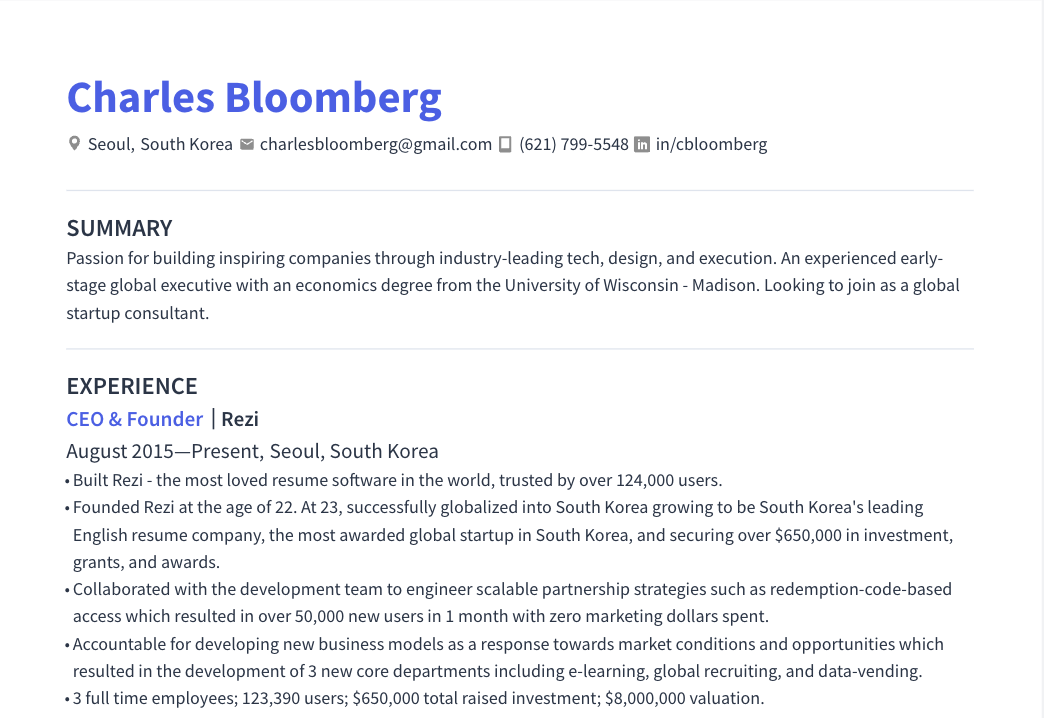
Impress employers and recruiters.
Choose from hundreds of resume examples.
Tailor your resume to this Lead AI Architect role.
Rezi rewrites your resume against Investment Management Corporation of Ontario (IMCO)'s job description. Free.
Tailor your resume to this Lead AI Architect role.
Rezi rewrites your resume against Investment Management Corporation of Ontario (IMCO)'s job description. Free.
Don't guess if your resume is good enough.
See how it scores against the Lead AI Architect posting at Investment Management Corporation of Ontario (IMCO) — free, in seconds.
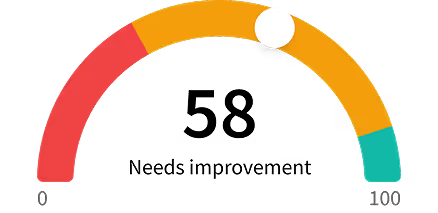
Don't guess if your resume is good enough.
See how it scores against the Lead AI Architect posting at Investment Management Corporation of Ontario (IMCO) — free, in seconds.
About the Role
The Lead AI Architect is responsible for defining and governing IMCO's enterprise AI architecture. This role establishes target-state architecture, reusable patterns, and technical guardrails to ensure AI solutions are secure, scalable, interoperable, cost-conscious, and aligned with business outcomes. The role translates enterprise requirements into practical architecture standards and designs by working across data, cloud, cybersecurity, platform, and application architecture.
Responsibilities
- Define and maintain IMCO’s enterprise AI architecture, reference patterns, standards, and technical guardrails.
- Develop and maintain end-to-end architecture views and diagrams showing how AI platforms, data, applications, and enterprise services fit together.
- Provide architecture direction across data, cloud, cybersecurity, platforms, and enterprise applications, ensuring alignment and consistency.
- Ensure AI solutions are scalable, secure, interoperable, and aligned with enterprise architecture standards.
- Provide architecture expertise in investigating and resolving production issues requiring understanding of end-to-end dependencies and integrations.
- Define reusable patterns for capabilities such as RAG, enterprise agents, agentic workflows, vector stores, semantic layers, and knowledge services.
- Establish secure integration patterns across enterprise applications, APIs, and data platforms.
- Define architecture approaches for identity, security, model interaction, deployment, and enterprise integration.
- Define architecture patterns for knowledge management, semantic layers, vector stores, and retrieval to support enterprise AI solutions.
- Partner with Data Architecture and Data Governance to ensure AI solutions are grounded in trusted, quality-assured enterprise data.
- Define how structured and unstructured enterprise data and content are made available to AI solutions.
- Ensure AI solutions integrate with enterprise data capabilities and authoritative sources, avoiding duplicate or disconnected sources of truth.
- Assess emerging AI capabilities and architectural approaches and recommend their use and enablement within IMCO.
- Define right-sized AI architecture balancing business outcomes, scalability, security, and cost.
- Advise business and technology teams on architectural choices, trade-offs, and implications.
- Evolve IMCO's AI architecture patterns and standards as AI capabilities mature.
Requirements
- 10+ years of progressive experience in software engineering, solution architecture, and enterprise architecture roles.
- Significant experience operating at a Principal Architect, Lead Architect, or equivalent senior architecture level.
- 3+ years of architecture experience focused on artificial intelligence, machine learning, or generative AI solutions.
- Demonstrated experience defining enterprise standards and influencing architecture decisions across multiple teams or business units.
- Strong knowledge of generative AI, RAG, embeddings, vector stores, agentic frameworks, model orchestration, and evaluation practices.
- Deep knowledge of Azure and cloud-native architecture.
- Experience with Microsoft AI capabilities, Microsoft 365 Copilot, Copilot Studio, Fabric, or related ecosystems is an asset.
- Strong understanding of identity, zero-trust architecture, MLOps/LLMOps, DevOps, CI/CD, and production operating models.
- Experience in a regulated environment, preferably financial services or investment management.
- Candidates being considered for this position will be required to undergo background screening.
Skills
- Generative AI
- RAG
- Embeddings
- Vector stores
- Agentic frameworks
- Model orchestration
- Model evaluation
- Azure
- Cloud-native architecture
- Microsoft AI capabilities
- Microsoft 365 Copilot
- Copilot Studio
- Fabric
- Identity
- Zero-trust architecture
- MLOps/LLMOps
- DevOps
- CI/CD
- Production operating models
Location
- Downtown Toronto
Work Type
- Hybrid
- Office-first
Experience Level
- 10+ years of progressive experience
- Significant experience at a Principal Architect, Lead Architect, or equivalent senior architecture level
- 3+ years of architecture experience focused on AI/ML/GenAI
Education Level
- Bachelor's or Master's degree in Computer Science, Software Engineering, Information Systems, or a related discipline; Master's degree preferred
- Relevant Microsoft Azure, AI, cloud, or architecture certifications are assets.
About the Company
- IMCO offers a uniquely stimulating and rewarding environment where you can help build and drive organizational transformation, all while seeking to challenge yourself, learn, and grow your career.
- Our culture is built on collaboration and passion, with a shared commitment to delivering lasting value to the clients we serve.
- Located in downtown Toronto, our vision is to be the partner of choice for Ontario’s public sector funds and to build a high-performing, value-driven asset management firm.
- IMCO is committed to providing accommodation for people with disabilities throughout the recruitment process.
Equal Opportunity
- IMCO is committed to providing accommodation for people with disabilities throughout the recruitment process. If you require support, please let us know and we will work with you to meet your needs.
- Artificial intelligence (AI) tools may be used to support parts of our recruitment process, such as screening and assessments. However, all hiring decisions are made by our recruitment team.