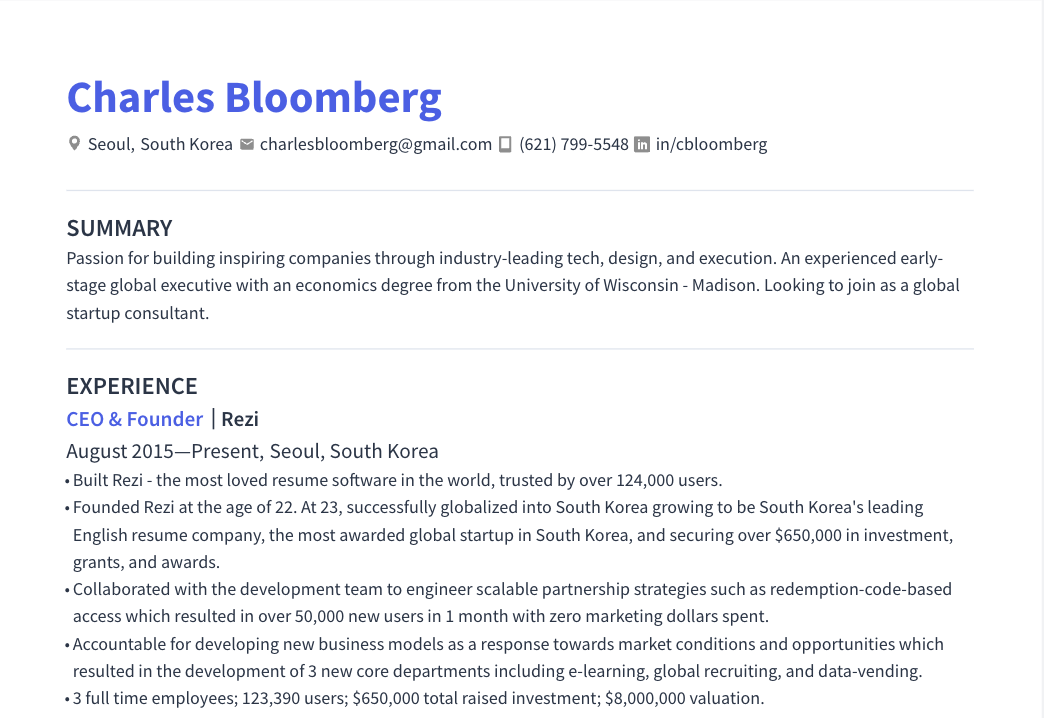
Impress employers and recruiters.
Choose from hundreds of resume examples.
Impress employers and recruiters.
Choose from hundreds of resume examples.
Tailor your resume to this Postdoctoral Fellow MRI role.
Rezi rewrites your resume against Max-Planck-Institut für Bildungsforschung's job description. Free.
Tailor your resume to this Postdoctoral Fellow MRI role.
Rezi rewrites your resume against Max-Planck-Institut für Bildungsforschung's job description. Free.
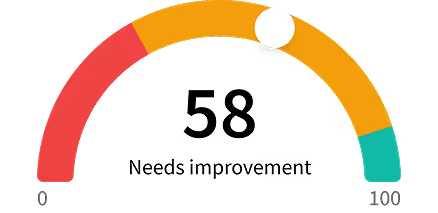
Don't guess if your resume is good enough.
See how it scores against the Postdoctoral Fellow MRI posting at Max-Planck-Institut für Bildungsforschung — free, in seconds.
Don't guess if your resume is good enough.
See how it scores against the Postdoctoral Fellow MRI posting at Max-Planck-Institut für Bildungsforschung — free, in seconds.
About the Role
This postdoctoral fellowship focuses on investigating the causes and consequences of significant changes in autonomic and noradrenergic systems across adulthood using advanced functional and structural magnetic resonance imaging (MRI) methods, including ultra-high field (7T) MRI. The role involves developing and optimizing novel MR sequences and analysis pipelines to measure brainstem structure and function, integrating these with autonomic physiology to understand age-related changes in neuromodulatory systems. The position offers an opportunity to push the boundaries of brainstem imaging and contribute to promoting healthy aging.
Responsibilities
- Develop and validate new approaches to measure age-related changes in brainstem neuromodulatory systems, and link these changes to cognitive and physiological outcomes.
- Collaborate in developing new MR sequences and optimizing existing protocols to measure the structure and function of brainstem nuclei.
- Develop strategies to mitigate physiological noise and motion artifacts in brainstem imaging.
- Assess the reliability and validity of brainstem MR measures.
- Build reproducible pipelines to analyze MR data.
- Integrate autonomic measures with neuroimaging data to probe mechanisms.
- Contribute to open-science practices, including sharing code, protocols, and data.
- Lead manuscripts, present at conferences, and contribute to grant writing.
- Collaborate within a multidisciplinary team and mentor junior trainees, including in the use of shared analysis tools.
- Apply and advance quantitative MRI methods, including relaxometry, magnetization transfer, susceptibility mapping, and arterial spin labeling (ASL), to characterize the microstructure, composition, and perfusion of brainstem nuclei.
Requirements
- PhD (or equivalent) in physics, psychology, neuroscience, biomedical engineering, or a related field.
- Experience with MRI sequence development and/or data analysis.
- Proficient programming and data-wrangling skills (e.g., Python, R, MATLAB, shell scripting) for building analysis pipelines and/or MR signal and contrast simulations.
- Familiarity with neuroimaging software (e.g., FSL, AFNI, ANTs, FreeSurfer) and/or Siemens sequence-programming environments.
- A track record of first-author scholarly work and strong scientific writing skills.
- Excellent communication skills in English and the ability to work collaboratively across disciplines.
Skills
- MRI sequence development
- MRI data analysis
- Python
- R
- MATLAB
- Shell scripting
- Neuroimaging software (FSL, AFNI, ANTs, FreeSurfer)
- Siemens sequence-programming environments
- Ultra-high-field (7T) MRI
- Imaging small brainstem nuclei
- Physiological signal collection/analysis (heart rate variability, pupillometry, respiration)
- Aging or lifespan research
- Quantitative MRI (relaxometry, magnetization transfer, susceptibility mapping)
- Arterial spin labeling (ASL)
Location
- Berlin
Work Type
- Full-time
- Hybrid (up to 40% remote)
Experience Level
- Postdoctoral
Education Level
- PhD
Salary/Compensations
- EG 13 TVöD
Benefits
- Access to state-of-the-art neuroimaging facilities
- Collaboration with experienced MR physicists and neuroscientists
- Support from data collection staff
- Mentoring for publications, grant applications, and career development
- Stimulating, international work environment
- Access to training programs offered by the Planck Academy
- Flexible working hours
- Annual bonus payment
- 30 days of vacation
- December 24 and 31 off
- Daycare partnerships with dedicated places
- Parent-child room
- Excellent public transport connections
- Jobticket
- Institute canteen
- Biodiverse institute garden
- Health and wellness programs (fitness room, massage, yoga)
- Extensive support services (International Office, Disability Office, Gender Equality Office, mental health support)
- Diversity-sensitive working environment
About the Company
- The Max Planck Institute for Human Development studies human development across the lifespan, considering physical, societal, and technological environmental influences.
- It fosters interdisciplinary research in psychology, neuroscience, computer science, economics, and sociology.
- The institute combines pioneering research infrastructures with local and international collaboration to generate knowledge that strengthens individuals and society.
- Its vision is a healthy environment and an open society where individuals can realize their potential.
Equal Opportunity
- The Max Planck Society strives for gender equality and diversity, recognizing that these enrich society and foster scientific excellence.
- The institute is committed to increasing the representation of women in underrepresented areas and employing more individuals with disabilities.
- Applications are welcomed from individuals belonging to groups often underrepresented in the workplace due to age, disability/chronic illness, ethnicity, gender identity, and religion.
- Information on diversity commitment and available accommodations can be found on the website: www.mpib-berlin.mpg.de/diversity.