Impress employers and recruiters.
Choose from hundreds of resume examples.
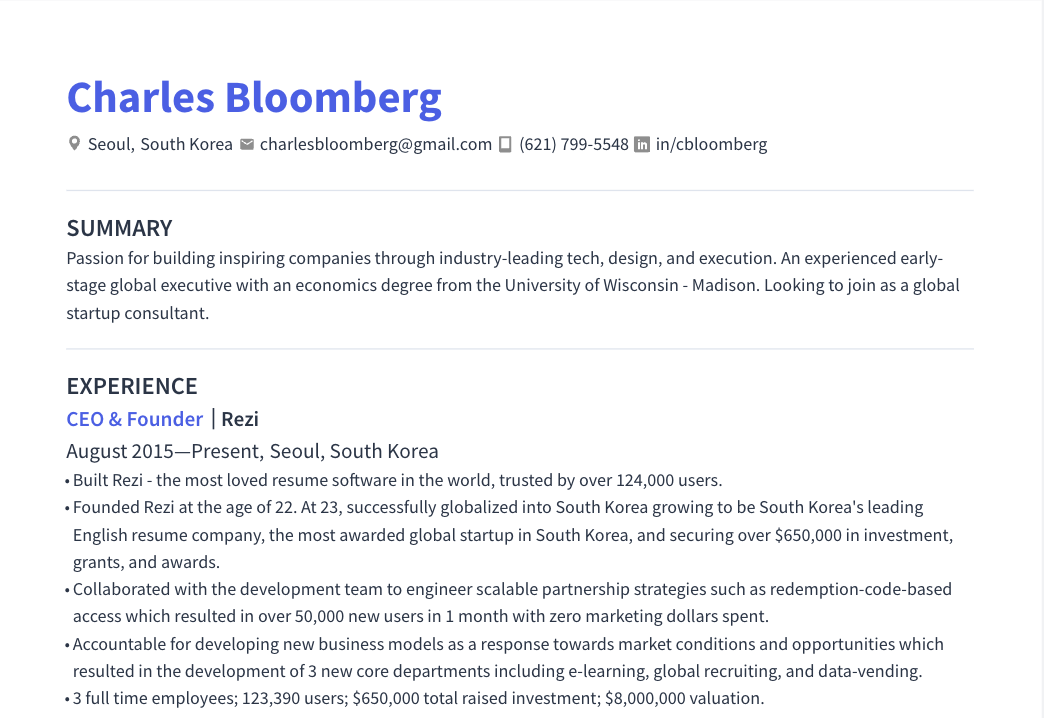
Impress employers and recruiters.
Choose from hundreds of resume examples.
Tailor your resume to this Custom Silicon Modeling Architect role.
Rezi rewrites your resume against Intel Corporation's job description. Free.
Tailor your resume to this Custom Silicon Modeling Architect role.
Rezi rewrites your resume against Intel Corporation's job description. Free.
Don't guess if your resume is good enough.
See how it scores against the Custom Silicon Modeling Architect posting at Intel Corporation — free, in seconds.
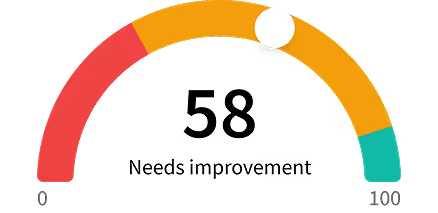
Don't guess if your resume is good enough.
See how it scores against the Custom Silicon Modeling Architect posting at Intel Corporation — free, in seconds.
About the Role
Intel is seeking a Principal Engineer in System Modeling and Virtual Platforms to drive innovation in virtual platform architecture, modeling, and simulation for next-generation semiconductor product development. This role involves architecting, designing, and deploying high-performance models and virtual prototypes, championing AI-assisted engineering workflows, and advancing engineering efficiency.
Responsibilities
- Architect and implement scalable virtual platforms and transaction-level models (TLM) using SystemC, C++, and Intel Simics across IP, subsystem, and full-SoC platform scopes.
- Define and deliver across multiple modeling abstraction fidelities-including Loosely Timed (LT) for pre-silicon firmware/software development, Cycle-Approximate (CA) for architectural trade-offs, and Cycle-Accurate (CC) for rigorous microarchitectural exploration.
- Drive RTL-to-model correlation flows and methodologies, ensuring fidelity between architectural models, SystemC virtual prototypes, and RTL/emulation implementations.
- Pioneer, deploy, and scale AI-augmented engineering workflows-leveraging LLMs, agentic assistants, and AI-driven automation for automated model generation, test synthesis, regression triage, and design-to-spec verification.
- Architect and optimize scalable build systems, continuous integration (CI/CD) pipelines, and containerized developer infrastructure for fast model compilation, regression execution, and EDA tool orchestration.
- Integrate SystemC/Simics virtual platforms with industry-standard EDA simulation and hardware emulation environments (e.g., hybrid virtual prototype to ZeBu/Palladium co-emulation flows).
- Develop robust testbenches, verification harnesses, and automated validation suites to ensure functional and timing correctness of virtual platform models.
- Mentor engineers across the organization and raise the technical bar through rigorous architecture reviews, modern C++ code standards, and clear technical documentation.
Requirements
- Bachelor's degree with 12+ years, Master's degree with 10+ years, or PhD with 8+ years in Computer Science, Computer Engineering, Electrical Engineering, or a related STEM discipline.
- 5+ years of experience with architecture, design, and development of transaction-level models (TLM 2.0) and virtual platforms using C++ and SystemC.
- 5+ years of hands-on development with Intel Simics or equivalent full-system simulation frameworks (e.g., QEMU, Synopsys Virtualizer, Arm Fast Models).
- 5+ years of deep understanding of computer architecture, SoC interconnects, memory hierarchies (caches, controllers), processor pipelines, and register-level hardware/software interfaces.
- 5+ years of experience with Modern C++ design and software engineering best practices (OOP, templates, design patterns, and performance optimization).
- 5+ years of experience in leading modeling architecture definition and virtual platform delivery for complex SoC or IP subsystems shipping into high-volume production.
- 5+ years of experience developing timing-accurate models across abstraction levels (Loosely Timed, Cycle-Approximate, Cycle-Accurate) and establishing RTL correlation methodologies.
- Demonstrated ability to solve complex, system-level simulation and co-verification challenges spanning cross-functional organizational boundaries.
- Self-directed and adaptable - thrives in lean teams, takes ownership regardless of organizational structure, and holds themselves and teammates accountable for results.
- Demonstrated track record of integrating AI tools and workflows into daily engineering practice (e.g., LLM-assisted code generation, AI-driven testbench synthesis, agentic triage tools, or ML-enhanced simulation performance).
- Experience developing power and thermal models for SoC and multi-die designs, including correlating virtual platform activity with RTL/emulation-based power estimates.
- Experience architecting hybrid execution environments integrating SystemC/Simics virtual platforms with RTL simulators (VCS, Questa, Xcelium, Verilator) and/or hardware emulators (ZeBu, Palladium, Veloce).
- Experience designing and maintaining EDA build infrastructure, automation toolchains, and CI/CD pipelines (e.g., CMake, Bazel, Python, Linux containerized workflows).
- Experience modeling high-performance SoC protocols, cache-coherent fabrics, high-speed interconnects (e.g., PCIe, CXL, UCIe), or custom accelerator subsystems.
- Experience with register automation and specification management flows (e.g., SystemRDL, IP-XACT, OSXML).
- Experience enabling early firmware, OS, and driver bring-up on pre-silicon virtual prototypes.
- Strong technical communication skills - clear writing that reflects clear thinking - with proven experience communicating trade-offs to both software and silicon engineering leadership.
- Must consent to and pass an extended Background Investigation.
Skills
- SystemC
- C++
- Intel Simics
- TLM 2.0
- QEMU
- Synopsys Virtualizer
- Arm Fast Models
- Computer Architecture
- SoC Interconnects
- Memory Hierarchies
- Processor Pipelines
- Register-Level Hardware/Software Interfaces
- Modern C++
- OOP
- Templates
- Design Patterns
- Performance Optimization
- AI Tools
- LLMs
- Agentic Assistants
- Machine Learning
- Power Models
- Thermal Models
- RTL Simulators
- Hardware Emulators
- EDA Build Infrastructure
- Automation Toolchains
- CI/CD Pipelines
- CMake
- Bazel
- Python
- Linux Containerized Workflows
- SoC Protocols
- Cache-Coherent Fabrics
- PCIe
- CXL
- UCIe
- Custom Accelerator Subsystems
- Register Automation
- SystemRDL
- IP-XACT
- OSXML
- Firmware
- OS
- Driver Bring-up
- Technical Communication
Location
- US, Oregon, Hillsboro
- US, Arizona, Phoenix
- US, California, Folsom
- US, California, Santa Clara
- US, Texas, Austin
Work Type
- Hybrid
Experience Level
- Experienced Hire
- 12+ years
- 10+ years
- 8+ years
Education Level
- Bachelor's degree
- Master's degree
- PhD
Salary/Compensations
- $233,990.00-330,340.00 USD
Benefits
- Competitive pay
- Stock bonuses
- Benefit programs which include health, retirement, and vacation.
About the Company
- Intel is committed to Responsible Business Alliance (RBA) compliance and ethical hiring practices.
- We do not charge any fees during our hiring process.
- Candidates should never be required to pay recruitment fees, medical examination fees, or any other charges as a condition of employment.
- If you are asked to pay any fees during our hiring process, please report this immediately to your recruiter.
Equal Opportunity
- All qualified applicants will receive consideration for employment without regard to race, color, religion, religious creed, sex, national origin, ancestry, age, physical or mental disability, medical condition, genetic information, military and veteran status, marital status, pregnancy, gender, gender expression, gender identity, sexual orientation, or any other characteristic protected by local law, regulation, or ordinance.