Impress employers and recruiters.
Choose from hundreds of resume examples.
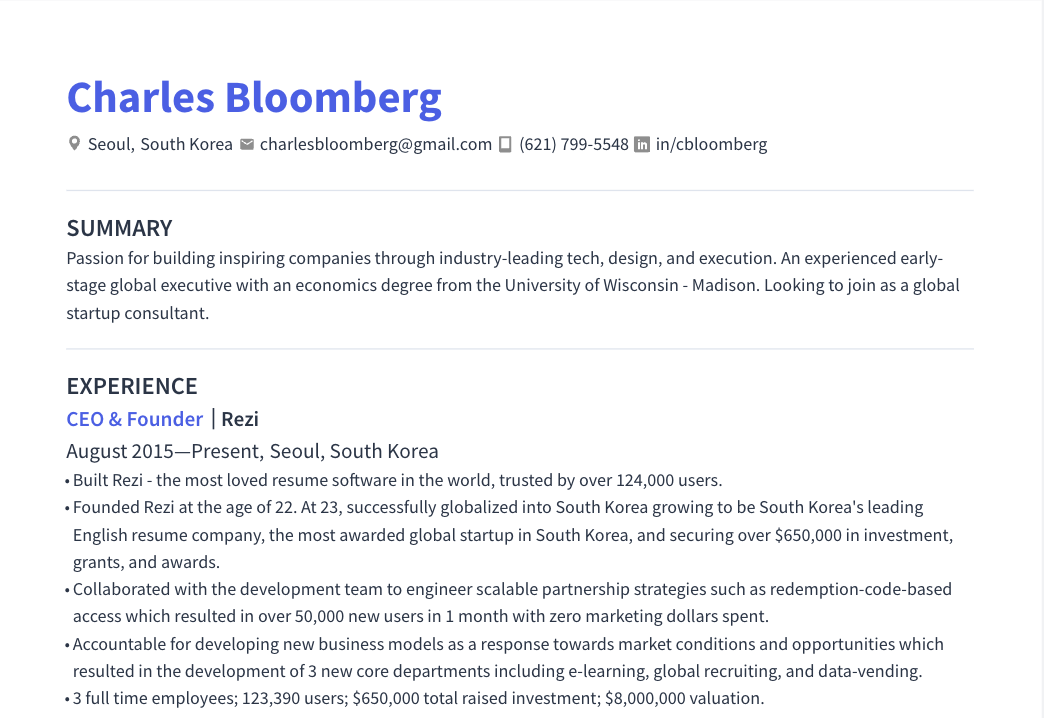
Impress employers and recruiters.
Choose from hundreds of resume examples.
Tailor your resume to this Robotics Perception Engineer – Logistics Division role.
Rezi rewrites your resume against TX/TXO Inc.'s job description. Free.
Tailor your resume to this Robotics Perception Engineer – Logistics Division role.
Rezi rewrites your resume against TX/TXO Inc.'s job description. Free.
Don't guess if your resume is good enough.
See how it scores against the Robotics Perception Engineer – Logistics Division posting at TX/TXO Inc. — free, in seconds.
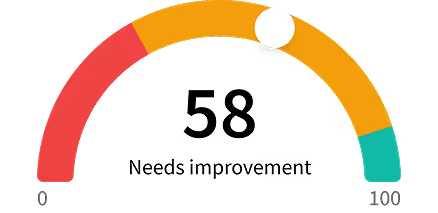
Don't guess if your resume is good enough.
See how it scores against the Robotics Perception Engineer – Logistics Division posting at TX/TXO Inc. — free, in seconds.
About the Role
Develop and improve the perception system that enables custom-made manipulators to automate logistics operations in real-world warehouses at a high success rate by leveraging sensor data and developing new perception algorithms and AI models.
Responsibilities
- Develop and improve perception modules for logistics automation, including object detection, segmentation, keypoint detection, 3D pose estimation, and 3D reconstruction
- Implement perception software in C++ and Python, and integrate it with the robot's control and system software
- Collect sensor data from robots in operation, curate datasets, and continuously improve algorithms based on quantitative results
- Optimize and compress deployed models for real-time inference on limited compute
- Proactively identify and break down issues, investigate logs/metrics, conduct tests, and deliver fixes/features end-to-end
- Break down goals into actionable tasks and manage your own timeline to achieve team objectives
- Work closely with motion planning, system integration, and hardware engineers so perception and control work together as one product
- Analyze field failures and help raise the system's success rate in production, ensuring safety and stability
Requirements
- Master's degree or above in Computer Science, Robotics, or a relevant field
- 3+ years of experience developing perception systems or equivalent (including research)
- Proficiency in both modern C++ (C++14 or above) and Python
- Strong understanding of low-level computer vision, machine learning, and deep learning, with experience implementing state-of-the-art methods from scratch
- Hands-on experience in customized deep learning applications: object detection, segmentation, keypoint detection, 3D pose estimation, or 3D reconstruction
- Hands-on experience with RGB and depth sensors, including multi-sensor setups (e.g., RGB camera + LiDAR)
- Hands-on experience in model performance optimization, such as network layer optimization and TensorRT / TorchScript
- Hands-on experience with deep learning and CV libraries such as PyTorch (and wrapped libraries like mmdetection, fastai), OpenCV, Open3D, and Point Cloud Library
- Hands-on experience with ML experiment tooling such as TensorBoard, MLflow, or Weights & Biases
- Quick and accurate problem-solving skills, and careful issue monitoring / debugging
- Passion to develop a product used in real operations (product mindset)
- Good communication skills and proactive collaboration
- Business level of English
Skills
- Computer vision
- Deep learning
- 3D perception
- C++
- Python
- Object detection
- Segmentation
- Keypoint detection
- 3D pose estimation
- 3D reconstruction
- RGB sensors
- Depth sensors
- Multi-sensor setups
- Model performance optimization
- TensorRT
- TorchScript
- PyTorch
- mmdetection
- fastai
- OpenCV
- Open3D
- Point Cloud Library
- TensorBoard
- MLflow
- Weights & Biases
- Japanese language skill
- ROS / ROS2
- Camera calibration
- Hand-eye calibration
- Domain randomization
- Synthetic data generation
- OpenGL
- Blender
- Isaac Sim
- MuJoCo
- Signal processing
- Network communication
- Docker
- CI/CD
- Automated deployment of ML models
Experience Level
- 3+ years of experience
Education Level
- Master's degree or above