Impress employers and recruiters.
Choose from hundreds of resume examples.
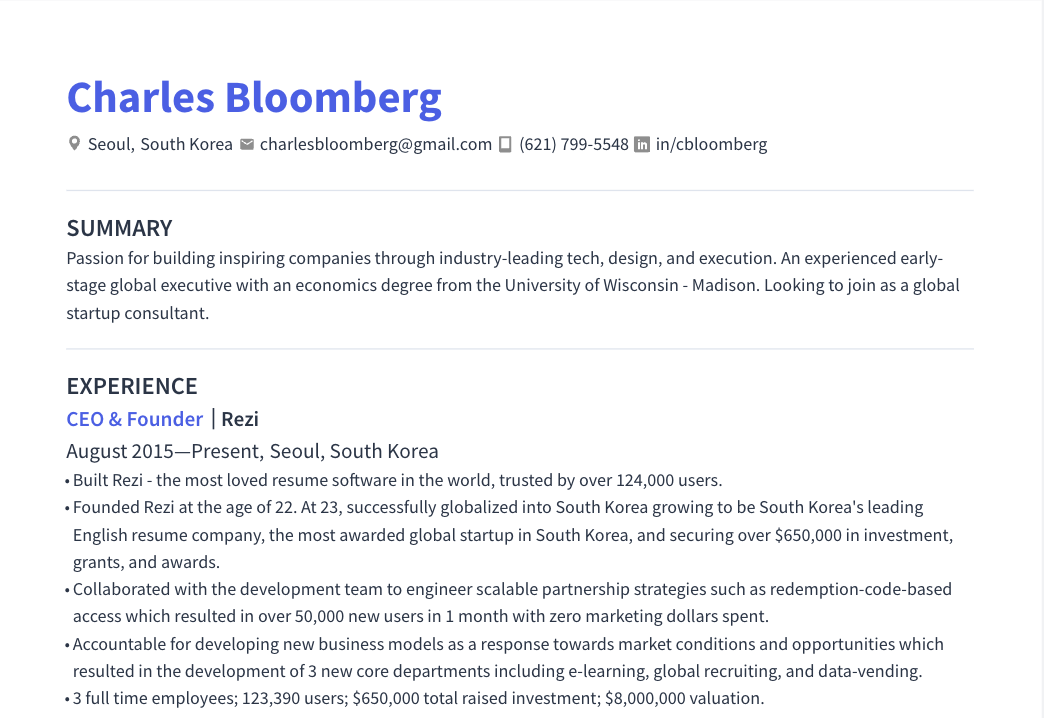
Impress employers and recruiters.
Choose from hundreds of resume examples.
Tailor your resume to this Postdoctoral Fellow - Findlay Lab role.
Rezi rewrites your resume against The Francis Crick Institute's job description. Free.
Tailor your resume to this Postdoctoral Fellow - Findlay Lab role.
Rezi rewrites your resume against The Francis Crick Institute's job description. Free.
Don't guess if your resume is good enough.
See how it scores against the Postdoctoral Fellow - Findlay Lab posting at The Francis Crick Institute — free, in seconds.
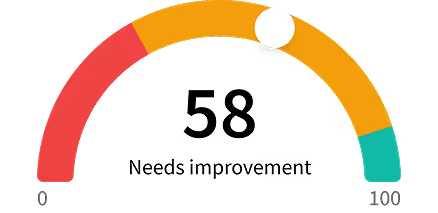
Don't guess if your resume is good enough.
See how it scores against the Postdoctoral Fellow - Findlay Lab posting at The Francis Crick Institute — free, in seconds.
About the Role
As a Postdoctoral Fellow in the Findlay lab, you will lead independent research projects with considerable autonomy to influence the scientific direction, whilst benefiting highly from the environment of the lab and the wider institute. This is a great opportunity to develop critical research skills and make major contributions to the field of genomics.
Responsibilities
- Lead independent research projects with considerable autonomy to influence the scientific direction.
- Reveal new mechanisms of genetic disease by assaying large sets of variants prioritized from human cohorts, leveraging databases such as Genomics England.
- Employ pooled prime editing to produce massive data sets designed to advance computational models that predict gene expression.
- Develop new multiplexed functional assays to study effects of variants on gene regulation.
Requirements
- PhD awarded or in the final stages of PhD submission.
- Strong track record of scientific contribution, as evidenced by publications, preprints, and/or submitted manuscripts.
- Experience writing scripts, running pipelines, analysing omics data, or performing similar large-scale statistical analyses.
- Expertise in human genetics, genomics, bioinformatics, or a closely related field.
- Deep knowledge of molecular biology and/or cell-based assays.
- Ability to clearly document work and communicate results effectively.
- Ability to work efficiently as part of a team.
Skills
- Functional and/or human genomics
- Biotechnology
- Technology development
- Large-scale experimental data analysis
- Human genetics
- Genomics
- Bioinformatics
- Molecular biology
- Cell-based assays
- Scripting
- Pipeline execution
- Omics data analysis
- Large-scale statistical analyses
Location
- UK
Work Type
- Full-time
- Fixed term (4 year)
Experience Level
- Postdoctoral
Education Level
- PhD
Salary/Compensations
- From £47,500
Benefits
- Sponsorship to work in the UK
- 28 days of annual leave, plus three additional days over Christmas and bank holidays
- Defined contribution pension with employer contributions of up to 16%
- 24/7 GP consultation services
- Occupational health services and mental health support programs
- Eye care vouchers and discounted healthcare plans
- Back-up care for dependents
- Childcare support allowance
- Annual leave purchase options
- Crick Networks offering diverse groups’ support, community and inclusive social events
About the Company
- The Francis Crick Institute is Europe’s largest biomedical research institute under one roof.
- Our world-class scientists and staff collaborate on vital research to help prevent, diagnose and treat illnesses such as cancer, heart disease, infectious diseases and neurodegenerative conditions.
- The Crick is a place for collaboration, innovation and exploration across many disciplines.
- A space where the brightest minds can pursue big and bold ideas and discover answers to crucial scientific questions.
- We support them in a dynamic environment which fosters excellence with state-of-the-art infrastructure, cutting-edge facilities, and a creative and curious culture.
- We’ve removed traditional boundaries of departments, divisions and disciplines and instead have an open approach that supports every researcher.
- This gives us the freedom to take risks and carry out high-quality, pioneering research.
- Creating a space for discovery without boundaries helps us to turn our science into benefits for human health and the economy.
- The Crick’s Genome Function Laboratory develops powerful genome editing tools to explore how genetic variants impact phenotypes.
- By systematically dissecting genotype-phenotype relationships, the lab’s work advances the clinical application of human genomics.
- The Findlay lab was established in 2020, and currently is home to 4 postdocs, 4 PhD students and 1 staff scientist.
- The lab is committed to maintaining a highly supportive research environment for scientists in training, strongly valuing collegiality and sharing of expertise.
Equal Opportunity
- At the Francis Crick Institute, we believe that diversity and inclusion are essential to driving innovation and scientific discovery.
- We are committed to creating a workplace where everyone feels valued, respected, and empowered to succeed, regardless of their background, identity, or personal circumstances.
- We actively encourage applications from individuals of all genders, ethnicities, abilities, and experiences.
- We are a Disability Confident: Committed employer and want to ensure that everyone can apply and be part of our recruitment processes and so we'll make reasonable adjustments if you need them - just let us know when you apply.
- If you need assistance with applying (i.e., would like to apply by phone or post) please email: karen.au@crick.ac.uk