Impress employers and recruiters.
Choose from hundreds of resume examples.
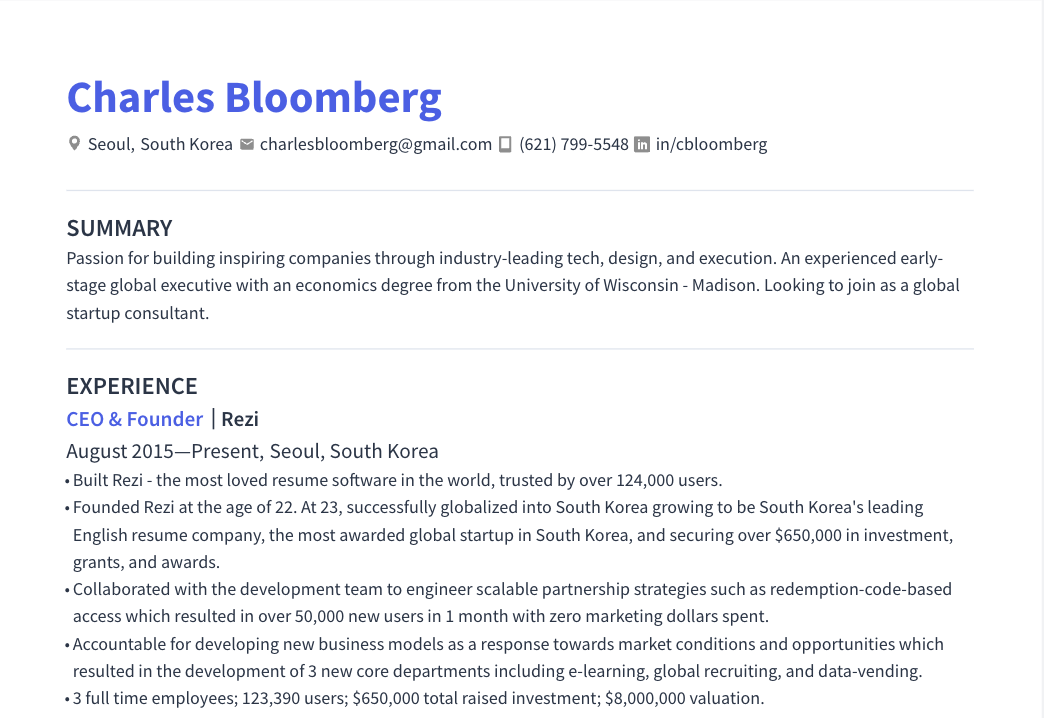
Impress employers and recruiters.
Choose from hundreds of resume examples.
Tailor your resume to this PhD Programme - 2027/2028 Academic Year role.
Rezi rewrites your resume against Quantum Motion Technologies's job description. Free.
Tailor your resume to this PhD Programme - 2027/2028 Academic Year role.
Rezi rewrites your resume against Quantum Motion Technologies's job description. Free.
Don't guess if your resume is good enough.
See how it scores against the PhD Programme - 2027/2028 Academic Year posting at Quantum Motion Technologies — free, in seconds.
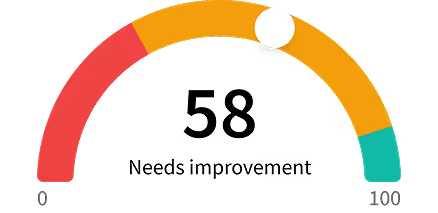
Don't guess if your resume is good enough.
See how it scores against the PhD Programme - 2027/2028 Academic Year posting at Quantum Motion Technologies — free, in seconds.
About the Role
This is a rare and exciting opportunity to be an employee at a scale-up shaping the future of quantum computing. There are vast opportunities for professional growth and to make an impact within the company.
Responsibilities
- Develop new innovative circuits, devices and theoretical methods to tackle the engineering challenges of implementing a large-scale quantum computer in silicon.
- Gain research and industrial experience working with quantum engineers, IC engineers and quantum computing theoreticians.
- Measure qubit properties such as single- and multi- qubit gate fidelities.
- Understand the relation of qubit properties to device design.
- Validate and refine fault-tolerant architectures based on spin qubits in silicon.
- Design and test CMOS circuits and devices at cryogenic temperatures.
- Automate the tune-up of quantum dots in multi-gate quantum dot arrays.
- Optimize silicon qubit architectures to run particular quantum algorithms.
- Map detailed architectures and error models to desired applications through error mitigation protocols.
- Build predictive modelling capabilities that give rapid feedback on the quantum performance of candidate quantum circuit designs.
Requirements
- Minimum 2.1 (or equivalent) Master’s degree in Physics or Electrical Engineering or closely related discipline studied to master’s level.
- Minimum 1st class (or equivalent) Master’s degree in Physics.
- Experience of working in a laboratory environment.
- Demonstrated ability to perform experiments, data analysis and preparation of technical reports and presentations.
- Demonstrated ability to perform data analysis and preparation of technical reports and presentations.
- Demonstrated understanding of software best practices, including unit and integration testing.
- CV
- 1 page personal statement which describes your motivation for pursuing a PhD and explains which topics are of interest to you (in order of preference) and why.
Skills
- Quantum computing
- Measuring quantum devices
- Cryogenic measurements
- Analogue circuit design
- Machine learning
- Microwave engineering
- Scripted data acquisition software, such as Python or Matlab
- Python
- Matlab
- C/C++
- Physics of semiconductors and spins
- Mathematics for physics and analytic techniques
- Theoretical physics
- Numerical skills in programming
- Concepts related to machine learning and optimisation
- Quantum algorithms
- Software best practices, including unit and integration testing
- Excellent communication skills
- Demonstrated experience of working collaboratively in a team environment
Location
- London
- Oxford
- San Sebastián
- Sydney
Work Type
- PhD programme
Experience Level
- PhD
Education Level
- Master’s degree
Benefits
- Be part of a creative, world-leading team
- Central office locations
About the Company
- Since 2021 our team has been listed every year in the “Top 100 Startups worth watching” in the EE Times in 2021 and 2022, and our technology breakthroughs have been featured in The Telegraph, BBC and the New Statesman.
- Our founders are internationally renowned researchers from UCL and Oxford University who have pioneered the development of qubits and quantum computing architectures.
- Our chairman is the co-founder of Cadence and Synopsys, the two leading companies in the area of Electronic Design Automation.
- We’re backed by a team of top-tier investors, and we have recently closed our Series C funding of $160 million.
- We bring together the brightest quantum engineers, integrated circuit (IC) engineers, quantum computing theoreticians and software engineers to create a unique, world-leading team, working together closely to maximise our combined expertise.
- Our collaborative and interdisciplinary culture is an ideal fit for anyone who thrives in a cutting-edge research and development environment focused on tackling big challenges and contributing to the development of scalable quantum computers based on silicon technology.
- Our team of 100+ is based across London, Oxford, San Sebastián and Sydney, with our primary hub in Islington (London).
- Quantum Motion is a fast-growing quantum computing scale-up based in London founded by internationally renowned researchers from UCL and Oxford University with over 40 years’ experience in developing qubits and quantum computing architectures.
- Bringing together state-of-the-art cryogenic facilities and an outstanding interdisciplinary team, we are developing quantum processors based on industrial-grade silicon chips, with the potential to radically transform computing power in areas such as materials modelling, medicine, artificial intelligence and more.
Equal Opportunity
- Quantum Motion is committed to providing equal employment opportunity and does not discriminate based on age, sex, sexual orientation, gender identity, race, colour, religion, disability status, marital status, pregnancy, gender reassignment or any other protected characteristics covered by the Equality Act 2010.