Impress employers and recruiters.
Choose from hundreds of resume examples.
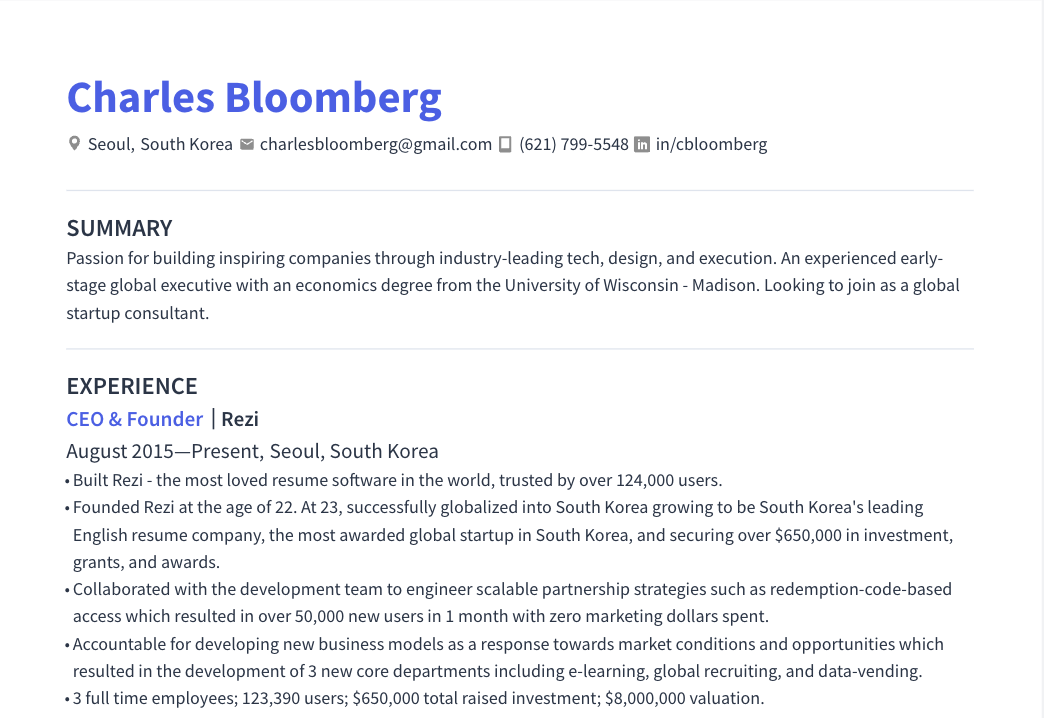
Impress employers and recruiters.
Choose from hundreds of resume examples.
Tailor your resume to this Principal AI Architect role.
Rezi rewrites your resume against LPL Financial's job description. Free.
Tailor your resume to this Principal AI Architect role.
Rezi rewrites your resume against LPL Financial's job description. Free.
Don't guess if your resume is good enough.
See how it scores against the Principal AI Architect posting at LPL Financial — free, in seconds.
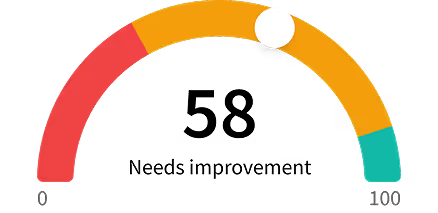
Don't guess if your resume is good enough.
See how it scores against the Principal AI Architect posting at LPL Financial — free, in seconds.
About the Role
The Principal Architect, Artificial Intelligence defines and drives architecture for the enterprise AI portfolio, including advisor-facing AI workspaces, a centralized AI control plane, and agentic solutions. This role provides architecture leadership across the end-to-end AI product development lifecycle.
Responsibilities
- Own and evolve reference architectures for AI-enabled applications.
- Define patterns for durable user work, including conversational and non-conversational sessions, memory and artifact continuity, graceful degradation, and integration into existing web platforms.
- Architect intent routing, context assembly, and delegation between agents and domain services, including human-in-the-loop controls and advisory-only boundaries.
- Define experience architecture with product and UX partners, focusing on structured response rendering, latency budgets, streaming, error recovery, and multi-intent interactions.
- Partner on non-functional requirements such as availability, deployment strategy, capacity, performance testing, and disaster recovery.
- Define how AI products conform to a governed perimeter, including API/SDK integration, AI gateway routing, policy enforcement, managed model inference, audit logging, and cost attribution.
- Architect registry and lifecycle patterns for models, prompts, tools, and agents.
- Establish runtime controls for entitlements, governed tool and agent execution, rate limiting, pause/quarantine/kill mechanisms, and incident evidence capture.
- Specify reusable platform services like memory, knowledge and RAG abstractions, evaluation hooks, and observability contracts.
- Lead or co-own the architecture of a repeatable path from use-case intake through production certification, ongoing change and exception management, periodic review, and retirement.
- Define classification and risk-tiering models to determine evidence, evaluations, approvals, and identity steps required for each solution type.
- Establish production readiness gates, including offline and runtime evaluation requirements, regression suites, red-team and safety standards, release evidence, and operational runbooks.
- Publish onboarding playbooks for internal teams and approved third parties.
- Align AI architecture with Enterprise Architecture, API and event review, security, risk, and compliance forums, and represent AI designs in architecture review cycles.
- Define security architecture for AI solutions, including SSO and token flows, scoped agent identity with delegated authorization, gateway validation, least-privilege tool access, PII protection at egress, content safety, and records retention.
- Set standards for evaluation, including groundedness, hallucination, safety, and agent behavior, and for context and memory, semantic retrieval, and enterprise data access.
- Lead LLMOps and AgentOps, including versioning, deployment, monitoring, release management, FinOps, and continuous improvement driven by production telemetry.
- Define reference architectures for generative AI, agentic AI, RAG, tool-enabled and multi-agent solutions, and MCP/A2A interoperability.
- Run technology radar activities, including POCs for models, agent frameworks, gateways, and evaluation tooling, and transition successful ones into reference implementations and platform roadmap input.
- Mentor solution and software architects, influence roadmaps, and communicate tradeoffs to senior product, engineering, and risk stakeholders.
Requirements
- 10+ years in enterprise, platform, or software architecture (distributed systems, cloud-native, data-intensive systems).
- 2+ years architecting generative AI, agentic AI, or ML platforms from experiment through regulated or enterprise production.
- 2+ years demonstrated ownership of AI product lifecycle outcomes, spanning governance, security, evaluation, and operations in addition to models.
- 2+ years hands-on credibility with AI applications, agents, RAG, APIs, integrations, and technical POCs, and the ability to review code and designs with engineering teams.
- 7+ years strong command of cloud-native design: microservices, APIs, event-driven patterns, containers/Kubernetes, IAM, observability, resilience, and performance.
- Depth in AWS: EKS, Amazon Bedrock, API Gateway, IAM, data stores (e.g., PostgreSQL, DynamoDB, S3), and observability tooling.
- Experience with AI gateways and OpenAI-compatible inference APIs.
- Familiarity with agent protocols and frameworks: tool calling, MCP, A2A, multi-agent orchestration, embeddings, and vector search.
- Experience in financial services or other highly regulated domains: supervisory records, advice-related content controls, entitlement-heavy systems.
- Knowledge of enterprise identity platforms, non-human identity (NHI) for agents, and delegated authorization patterns.
- Proficiency in Python, Java, IaC, CI/CD, and DevSecOps; strong architecture documentation skills (C4, sequence and data-flow diagrams, ADRs).
Skills
- AI solution and user-experience architecture
- Enterprise AI platform and control-plane integration
- AI PDLC, certification, and lifecycle governance
- Generative and agentic systems; RAG and enterprise knowledge access
- AI security, Responsible AI, and runtime policy enforcement
- Evaluation, quality engineering, and continuous assurance
- LLMOps/AgentOps, observability, resilience, and AI FinOps
- Architecture governance, standards, and stakeholder leadership
- Python
- Java
- IaC
- CI/CD
- DevSecOps
Location
- Remote
Work Type
- Full-time
Experience Level
- Principal
- Senior
Education Level
- Bachelor's degree in Computer Science, Engineering, AI, or a related field
- Master's degree in Computer Science, Engineering, AI, or a related field
Salary/Compensations
- $155,942.00 - $259,869.00
Benefits
- 401K matching
- Health benefits
- Employee stock options
- Paid time off
- Volunteer time off
About the Company
- LPL Financial Holdings Inc. (Nasdaq: LPLA) is among the fastest growing wealth management firms in the U.S. As a leader in the financial advisor-mediated marketplace, LPL supports over 32,000 financial advisors and the wealth management practices of approximately 1,100 financial institutions, servicing and custodying approximately $2.3 trillion in brokerage and advisory assets on behalf of approximately 8 million Americans.
- The firm provides a wide range of advisor affiliation models, investment solutions, fintech tools and practice management services, ensuring that advisors and institutions have the flexibility to choose the business model, services, and technology resources they need to run thriving businesses.
- At LPL, independence means that advisors and institution leaders have the freedom they deserve to choose the business model, services, and technology resources that allow them to run a thriving business. They have the flexibility to do business their way. And they have the freedom to manage their client relationships, because they know their clients best. Simply put, we take care of our advisors and institutions, so they can take care of their clients.
Equal Opportunity
- Principals only. EOE.