Impress employers and recruiters.
Choose from hundreds of resume examples.
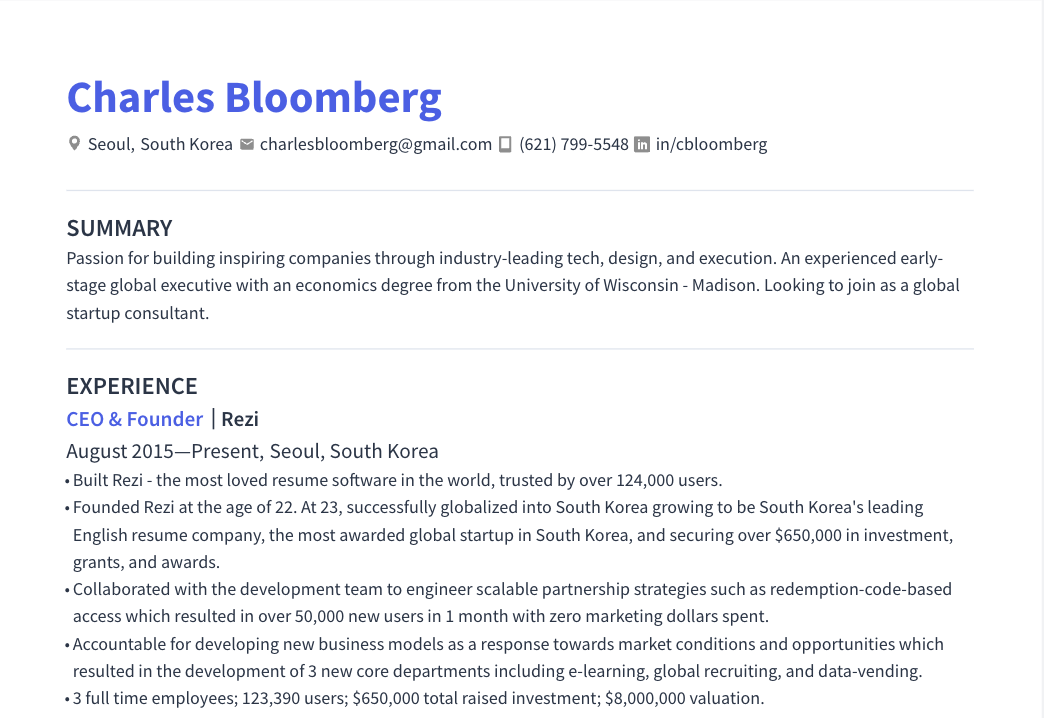
Impress employers and recruiters.
Choose from hundreds of resume examples.
Tailor your resume to this Staff Data Engineer, Applied Data Science III role.
Rezi rewrites your resume against Electric Power Engineers's job description. Free.
Tailor your resume to this Staff Data Engineer, Applied Data Science III role.
Rezi rewrites your resume against Electric Power Engineers's job description. Free.
Don't guess if your resume is good enough.
See how it scores against the Staff Data Engineer, Applied Data Science III posting at Electric Power Engineers — free, in seconds.
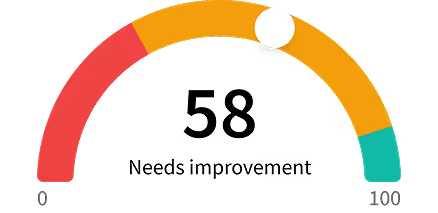
Don't guess if your resume is good enough.
See how it scores against the Staff Data Engineer, Applied Data Science III posting at Electric Power Engineers — free, in seconds.
About the Role
EPE is seeking a Staff Data Engineer, Applied Data Science III to join our consulting practice, supporting analytical and applied data science, data engineering, and data architecture consulting projects for utility and energy-sector clients. This role will help clients translate their data and business requirements into well-designed data pipelines, reliable models, and integrated analytics and data science workflows, spanning data discovery, architecture, integration design, hands-on development, machine learning, and model maintenance.
Responsibilities
- Explore, evaluate, and understand utility data sets including advanced metering infrastructure interval (AMI) energy data, SCADA data, GIS data, utility asset data, customer programs data, and billing data.
- Design, develop, test, and maintain repeatable ETL/ELT pipelines that ingest, transform, reconcile, and deliver data from databases, files, APIs, and other approved sources.
- Develop reusable Python and SQL components for data cleansing, standardization, aggregation, validation, and feature preparation.
- Profile source data and establish automated checks for completeness, validity, consistency, uniqueness, and freshness.
- Develop record-matching and entity-resolution logic to reconcile customer, asset, device, program, and operational records.
- Investigate pipeline failures, data discrepancies, and performance issues; document corrective actions.
- Translate business, analytical, and operational requirements into documented data architecture and integration designs for defined solutions or components.
- Develop conceptual, logical, and physical data models, entity relationship diagrams, schemas, data dictionaries, and source-to-target mappings.
- Design data flows connecting source systems, staging and storage layers, analytical datasets, models, and downstream applications.
- Evaluate and document design tradeoffs involving relational databases, warehouses or lakehouses, batch or API integration, performance, scalability, maintainability, and cost.
- Incorporate client requirements for data ownership, access controls, sensitive information, retention, lineage, and auditability into solution designs.
- Develop and validate forecasting models, classification schemas, anomaly-detection analysis, clustering approaches, and prioritization models as appropriate to the application.
- Address overfitting, class imbalance, sampling bias, and time-dependent validation requirements.
- Monitor model performance and support documented recalibration, retraining, and model updates.
- Connect analytical models to reliable data pipelines and reproducible datasets, working with client deployment teams where appropriate.
- Communicate assumptions, uncertainty, limitations, and the distinction between observed, inferred, and predicted results.
- Participate in requirements workshops, technical interviews, architecture reviews, and client working sessions.
- Prepare clear technical reports, process maps, design documentation, and analytical presentations.
- Deliver assigned work within agreed scope, schedule, budget, and quality expectations.
- Identify and escalate data-access constraints, technical dependencies, methodological limitations, and delivery risks.
- Contribute to peer reviews, reusable technical methods, and guidance for less-experienced colleagues.
- Use AI-assisted development responsibly, validating outputs and protecting client information.
Requirements
- Bachelor’s degree in computer science, data science, statistics, mathematics, engineering, or a closely related quantitative discipline.
- 4–5 years of relevant professional experience, including within the utility sector, with hands-on work in data engineering and applied data science, with demonstrated contributions to data architecture or integration design.
- Experience building and maintaining repeatable data pipelines or integrations beyond one-time data preparation and exploratory notebooks.
- Experience designing data models, schemas, relationships, and source-to-target mappings, and explaining the rationale behind design decisions.
- Strong Python and SQL proficiency, including maintainable programming, complex queries, data transformation, and troubleshooting.
- Experience with pipeline testing, scheduling or orchestration, logging, data-quality validation, and failure investigation.
- Working experience with at least one cloud or distributed-data platform, such as Databricks, Azure, AWS, Google Cloud, or an equivalent environment.
- Strong understanding of probability, sampling, statistical inference, regression, confidence and prediction intervals, and uncertainty.
- Practical experience developing and evaluating statistical or machine learning models, including appropriate validation and interpretation of results.
- Experience with Git, code review, testing, technical documentation, and reproducible analyses.
- Ability to communicate technical designs, analytical findings, assumptions, and limitations to technical and nontechnical audiences.
- Experience with Databricks, Spark/PySpark, or comparable distributed-data technologies.
- Experience with dimensional modeling, warehouse/lakehouse design, metadata management, or data catalogs.
- Experience with workflow orchestration, CI/CD, model versioning, experiment tracking, or model monitoring.
- Experience with time-series or probabilistic forecasting, Bayesian methods, simulation, or optimization.
- Familiarity with XGBoost, LightGBM, PyMC, PyTorch, or TensorFlow, without an expectation of expertise in every framework.
- Experience with utility datasets, DER registries, load forecasting, sensor analytics, or engineering automation.
- Master’s degree in a relevant quantitative or technical discipline.
Skills
- Python
- SQL
- Databricks
- Spark/PySpark
- Cloud platforms (Azure, AWS, Google Cloud)
- Data modeling
- ETL/ELT
- Machine learning
- Statistical inference
- Git
- XGBoost
- LightGBM
- PyMC
- PyTorch
- TensorFlow
Location
- Remote (U.S.)
Work Type
- Remote
- Full-time
Experience Level
- Staff
- 4-5 years
Education Level
- Bachelor's degree
- Master's degree
Benefits
- Comprehensive health and wellness benefits including medical, dental, and vision with 100% premium coverage for you
- Generous PTO and paid holidays
- MyShare Employee Ownership Program
- 401K, up to a 4% match (100% vested from day 1)
About the Company
- EPE has partnered with power and energy clients across the globe, providing consulting expertise and energy intelligence software solutions for complex engineering and grid modeling challenges.
- As leaders in the renewables space, we are focused on building a modern, secure, and resilient grid.
- Join us in making an impact on the communities we serve and the environment in which we live.
- Together we can transform the future of energy.
Equal Opportunity
- EPE is an equal opportunity/AA/Disability/Veteran employer.