Impress employers and recruiters.
Choose from hundreds of resume examples.
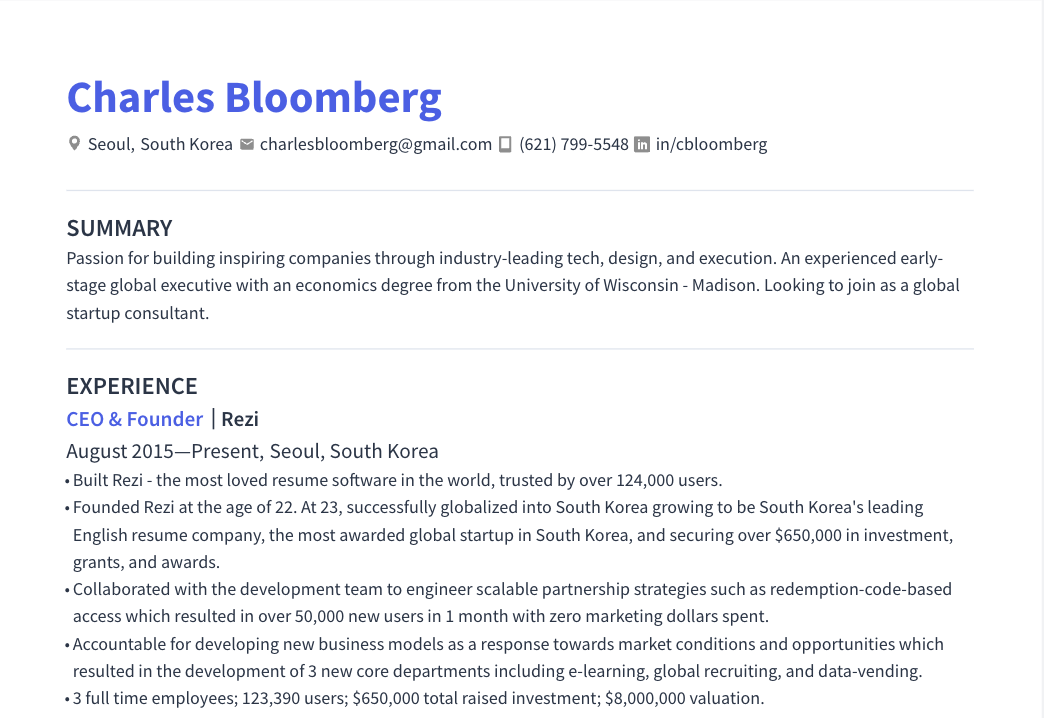
Impress employers and recruiters.
Choose from hundreds of resume examples.
Tailor your resume to this Compiler Engineer for AI DSLs role.
Rezi rewrites your resume against Intel Corporation's job description. Free.
Tailor your resume to this Compiler Engineer for AI DSLs role.
Rezi rewrites your resume against Intel Corporation's job description. Free.
Don't guess if your resume is good enough.
See how it scores against the Compiler Engineer for AI DSLs posting at Intel Corporation — free, in seconds.
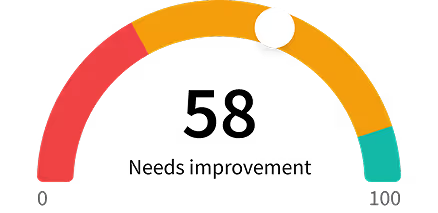
Don't guess if your resume is good enough.
See how it scores against the Compiler Engineer for AI DSLs posting at Intel Corporation — free, in seconds.
About the Role
As a Compiler Engineer, you will design, develop, optimize, and maintain compiler tools for Intel's processor platforms (CPUs, GPUs, accelerators), enabling breakthroughs in AI, high-performance computing, and other transformative technologies.
Responsibilities
- Develop new compiler features and optimizations tailored to Intel architectures.
- Collaborate with hardware engineering teams to support new processor features and improve compiler integration.
- Contribute to the development and maintenance of compiler frameworks like LLVM, Clang, SYCL, and Fortran.
- Conduct functional and performance experiments, debugging, and defect resolution.
- Participate in upstream collaboration with open-source communities.
- Investigate opportunities for code parallelization, vectorization, and performance enhancements.
- Analyze application and benchmark performance to identify and implement improvements.
- Work closely with cross-geo engineering and validation teams to ensure quality and performance standards.
Requirements
- Bachelor's degree in Computer Science, Applied Mathematics, Electronic Engineering, Informatics, or a closely related technical discipline.
- 2+ years of experience with C/C++, SYCL, CUDA, DSLs programming, object-oriented design principles, and complex data structures.
- 2+ years of experience with compiler technologies and LLVM compiler infrastructure.
- 2+ years of experience developing and maintaining production-grade compilers.
- Familiarity with LLVM framework components, including IR generation, passes, and backend development.
- Experience with vectorization techniques, parallel programming models like OpenMP and SYCL, and GPU compiler optimizations.
- Strong understanding of processor architectures, performance analysis, and memory optimizations.
- Demonstrated experience collaborating with language standards groups or contributing to standards development.
- Knowledge of MLIR and TileIR representation and compiler infrastructure for DSL programming languages in AI domains.
Skills
- C/C++
- SYCL
- CUDA
- DSLs programming
- Object-oriented design
- Complex data structures
- Compiler technologies
- LLVM compiler infrastructure
- Vectorization techniques
- Parallel programming models
- OpenMP
- GPU compiler optimizations
- Processor architectures
- Performance analysis
- Memory optimizations
- MLIR
- TileIR
Location
- US, California, Santa Clara
- US, Massachusetts, Beaver Brook
- US, Oregon, Hillsboro
- US, Texas, Austin
Work Type
- Hybrid
- College Grad
Experience Level
- Entry level
Education Level
- Bachelor's degree
Salary/Compensations
- $128,880.00-181,940.00 USD
Benefits
- Competitive pay
- Stock bonuses
- Health benefits
- Retirement benefits
- Vacation benefits
About the Company
- The Compiler Engineering team within Intel's Data Center Group (DCG) is dedicated to creating robust software tools that empower the development of innovative and high-performing applications.
- The team plays an essential role in supporting Intel's broader mission to deliver scalable solutions that shape the future of computing.
- Intel is committed to Responsible Business Alliance (RBA) compliance and ethical hiring practices.
Equal Opportunity
- All qualified applicants will receive consideration for employment without regard to race, color, religion, religious creed, sex, national origin, ancestry, age, physical or mental disability, medical condition, genetic information, military and veteran status, marital status, pregnancy, gender, gender expression, gender identity, sexual orientation, or any other characteristic protected by local law, regulation, or ordinance.