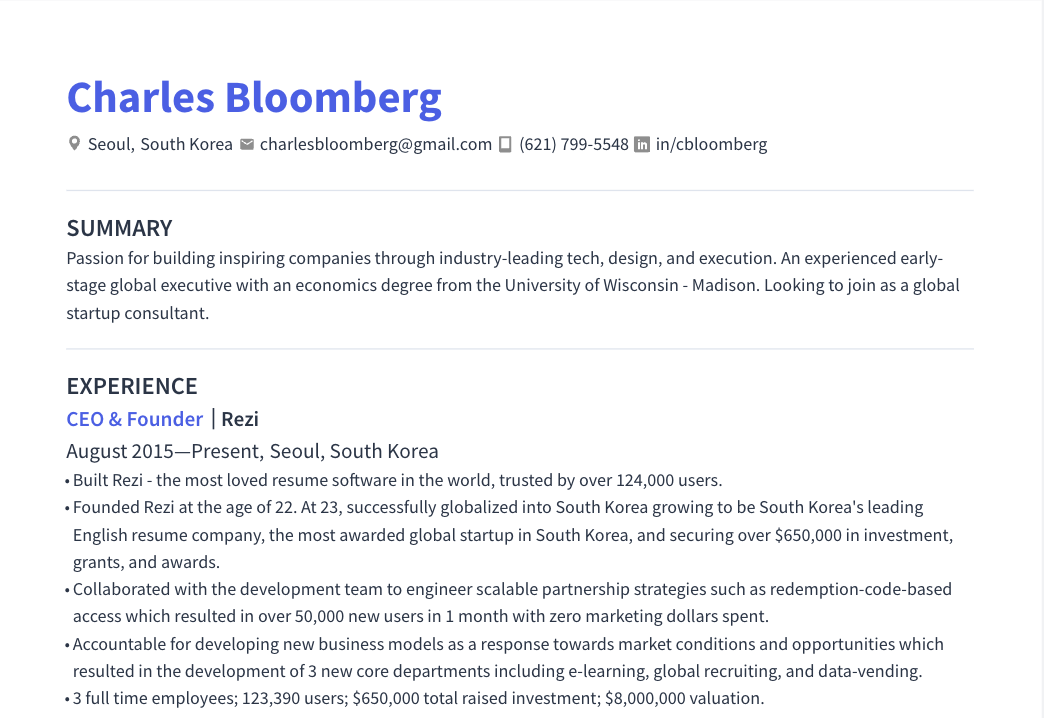
Impress employers and recruiters.
Choose from hundreds of resume examples.
Impress employers and recruiters.
Choose from hundreds of resume examples.
Tailor your resume to this Research Engineer, Privacy and Anonymization role.
Rezi rewrites your resume against Clera's job description. Free.
Tailor your resume to this Research Engineer, Privacy and Anonymization role.
Rezi rewrites your resume against Clera's job description. Free.
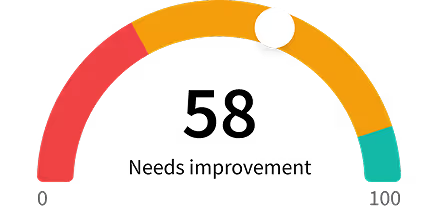
Don't guess if your resume is good enough.
See how it scores against the Research Engineer, Privacy and Anonymization posting at Clera — free, in seconds.
Don't guess if your resume is good enough.
See how it scores against the Research Engineer, Privacy and Anonymization posting at Clera — free, in seconds.
About the Role
Build privacy and anonymization systems for an AI infrastructure team, helping make sensitive real-world data safe and useful for model training. You will own production methods that protect private information while preserving the structure and signal needed for training and evaluation.
Responsibilities
- Build systems to detect PII, quasi-identifiers, credentials, and other sensitive information, and choose transformations suited to each data type and use case.
- Develop and benchmark detection methods combining rules, statistical models, classifiers, and LLM-based approaches.
- Create production pipelines that anonymize raw data before downstream processing, training, evaluation, or synthetic data generation.
- Build evaluation frameworks for privacy risk and retained utility, including recall-weighted metrics, leakage tests, and adversarial re-identification attempts.
- Design robust systems for new data sources, schema drift, unusual formats, and sensitive information in unexpected fields.
- Partner with engineering, research, operations, and customers to turn privacy requirements into practical policies and safeguards.
Requirements
- At least 2 years of experience building production data or ML systems in Python.
- Hands-on experience detecting, removing, or anonymizing PII while preserving useful data characteristics.
- Experience with information extraction, named-entity recognition, classification, or related techniques for detecting sensitive or rare content.
- Experience building end-to-end data processing pipelines and benchmarking approaches across recall, precision, latency, cost, and data utility.
- Understanding of redaction, masking, pseudonymization, anonymization, and synthetic data generation.
- Strong experimental skills and experience handling schema drift, unusual formats, and edge cases.
- Technical education or equivalent background; experience with privacy-enhancing technologies or sensitive data in healthcare, finance, or security is valuable.
Skills
- Python
- Information extraction
- Named-entity recognition
- Classification
- LLM-based approaches
- Privacy-enhancing technologies
Location
- San Francisco, California, United States
Work Type
- On-site
- Full-time
Experience Level
- Mid-level
Education Level
- Technical degree or equivalent background
Salary/Compensations
- $130,000 to $225,000 annually
Benefits
- Visa sponsorship