Impress employers and recruiters.
Choose from hundreds of resume examples.
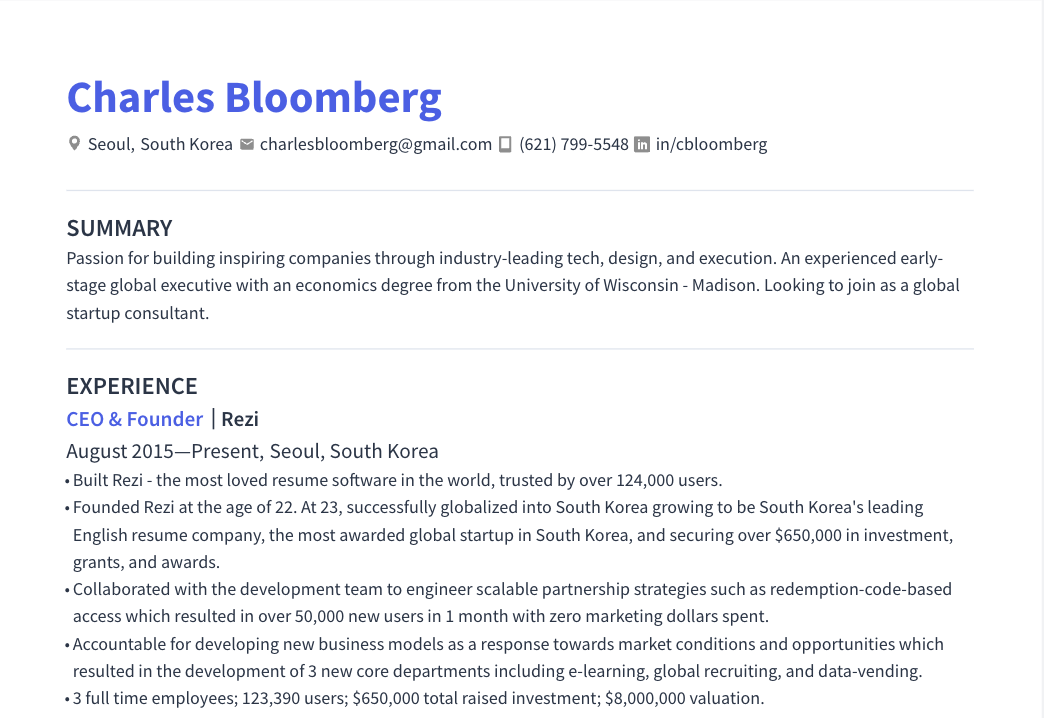
Impress employers and recruiters.
Choose from hundreds of resume examples.
Tailor your resume to this Supply Demand Planning role.
Rezi rewrites your resume against Apple's job description. Free.
Tailor your resume to this Supply Demand Planning role.
Rezi rewrites your resume against Apple's job description. Free.
Don't guess if your resume is good enough.
See how it scores against the Supply Demand Planning posting at Apple — free, in seconds.
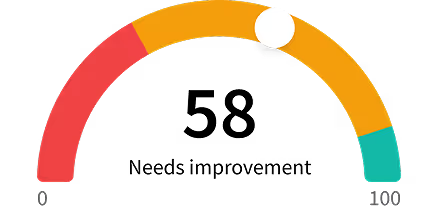
Don't guess if your resume is good enough.
See how it scores against the Supply Demand Planning posting at Apple — free, in seconds.
About the Role
Transforming complex datasets into impactful business insights with a blend of creativity, technical prowess, and strategic focus. Spearheading data-driven efforts, crafting sophisticated models and interactive visualizations to illuminate the dynamics of our retail supply chain.
Responsibilities
- Collaborate with cross-functional stakeholders to understand domain-specific requirements.
- Apply data science to uncover insights, drive informed decision-making, and implement automation initiatives.
- Enhance team efficiency by eliminating non-value-added tasks.
- Communicate findings in relatable terms to senior leadership, highlighting business impact and guiding strategic choices.
- Navigate ambiguity with ease in a fast-paced, dynamic environment to deliver innovative business analytics.
- Use advanced Python and SQL coding skills to script machine learning algorithms regarding supply chain performance to detect issues and help drive proactive resolutions.
- Build applications using Streamlit, Python, and prompt engineering to generate resources for teams that enable improved efficiency and accuracy.
Requirements
- Utilize Python programming (including pandas, NumPy, multiprocessing libraries) to develop automated data extraction, transformation, and loading (ETL) pipelines that consolidate retail supply chain data from multiple enterprise sources for inventory and fulfillment operations analysis.
- Write and optimize complex SQL queries in relational and cloud-based database platforms, including Snowflake and MySQL, using multi-table joins, window functions, and aggregation logic to analyze supply chain inventory, demand planning, and shipment data.
- Develop predictive machine learning models using Python libraries (including scikit-learn or XGBoost) for supply chain store supply forecasting, including feature engineering, model training with time-series data, and forecast accuracy evaluation.
- Build interactive web-based data applications using Python and Streamlit for operational decision support, including data upload interfaces, user data logging, session state management with real-time enterprise data integration.
- Utilize Tableau and Python visualization libraries (including Plotly or Matplotlib) to design analytical dashboards and automated reporting pipelines for retail supply chain performance metrics, including inventory health, service levels, and fulfillment rates.
- Design and implement automated, scheduled data pipelines using Python and Jupyter notebooks for recurring supply chain reporting, including data extraction, transformation, validation, and multi-channel distribution via email, cloud storage, and messaging platforms.
- Generate updating, formatted, multi-sheet Excel workbooks programmatically using Python libraries (openpyxl, XlsxWriter) with calculated fields, conditional formatting, and embedded business logic for supply chain planning and inventory control analysis.
- Integrate enterprise data systems through Python-based RESTful API connectors (including Tableau Server integration), cloud storage APIs, and webhook-based messaging services, including secure credential management, error handling, and retry logic for automated supply chain data workflows.
- Utilize Git and GitHub for version-controlled collaborative development of data analytics codebases, including branch management, pull requests, code documentation, and maintaining reproducible data pipeline logic for supply chain applications.
- Design and deploy machine-readable API connectors and structured knowledge databases that enable AI-assisted automation of supply chain analytical workflows, including Retrieval Augmented Generation (RAG) modeling, natural language query interfaces, and automated data retrieval pipelines.
Skills
- Python
- SQL
- Streamlit
- Prompt Engineering
- pandas
- NumPy
- multiprocessing
- scikit-learn
- XGBoost
- Tableau
- Plotly
- Matplotlib
- Jupyter notebooks
- openpyxl
- XlsxWriter
- RESTful API
- Git
- GitHub
- Retrieval Augmented Generation (RAG)
Location
- Austin, Texas
Work Type
- 40 hours/week
Experience Level
- 3 years of experience
Education Level
- Bachelor’s degree or foreign equivalent in Logistics and Supply Chain Management, Quantitative Management, or related field
About the Company
- Apple is a place where extraordinary people gather to do their lives best work.
- Together we create products and experiences people once couldn't have imagined, and now, can't imagine living without.
- It's the diversity of those people and their ideas that inspires the innovation that runs through everything we do.