Impress employers and recruiters.
Choose from hundreds of resume examples.

Impress employers and recruiters.
Choose from hundreds of resume examples.
Tailor your resume to this Manager, Infrastructure Engineering (Linux Platforms) role.
Rezi rewrites your resume against Colt Technology Services's job description. Free.
Tailor your resume to this Manager, Infrastructure Engineering (Linux Platforms) role.
Rezi rewrites your resume against Colt Technology Services's job description. Free.
Don't guess if your resume is good enough.
See how it scores against the Manager, Infrastructure Engineering (Linux Platforms) posting at Colt Technology Services — free, in seconds.
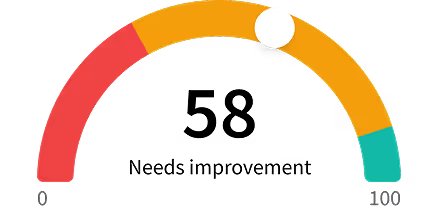
Don't guess if your resume is good enough.
See how it scores against the Manager, Infrastructure Engineering (Linux Platforms) posting at Colt Technology Services — free, in seconds.
About the Role
Leads the team responsible for designing, deploying, automating, and maintaining the secure Linux-based infrastructure that supports critical telecommunications network services. The platform scope includes DNS, routing control infrastructure, authentication and identity services, network observability, monitoring, and related network-management capabilities. The role combines people leadership, service ownership, and technical governance, accountable for team capability, technology roadmaps, platform lifecycle, operational performance, security, resilience, automation, and managed-service outcomes. Manages a team of approximately four Linux specialists and managed-service resources supporting a distributed estate of hundreds of Linux systems.
Responsibilities
- Lead, recruit, mentor, and develop Linux engineers and managed-service resources.
- Set clear accountabilities, priorities, and objectives.
- Foster a culture of ownership, collaboration, technical excellence, and continuous improvement.
- Maintain sufficient technical depth to lead engineering decisions and support major incidents.
- Allocate resources across operational, project, and lifecycle demand.
- Ensure effective knowledge sharing across UK and India locations.
- Own the strategy, roadmap, and service lifecycle for Linux-based network infrastructure and associated services.
- Set platform standards, reference architectures, operating procedures, and governance for technical exceptions.
- Own service performance, availability, capacity, continuity, recoverability, and operational readiness outcomes.
- Manage platform currency, technical debt, upgrades, obsolescence, and decommissioning plans.
- Prioritize investment and demand across Network Engineering, Security, Infrastructure, Architecture, and Operations.
- Govern managed-service and supplier performance.
- Drive standardization and automation using Ansible, scripting, and infrastructure-as-code principles.
- Ensure monitoring, logging, security controls, backup, and support documentation are included in platform builds.
- Define measurable objectives for availability, capacity, recoverability, vulnerability remediation, lifecycle risk, and automation coverage.
- Ensure critical services have tested backup, restoration, failover, continuity, and disaster-recovery arrangements.
- Lead major-incident response, risk escalation, and stakeholder communications.
- Ensure effective problem, change, capacity, availability, and continuity management.
- Own the platform security roadmap, control outcomes, risk posture, and governance of security exceptions.
- Ensure secure-by-design practices, threat modeling, and appropriate segregation of administrative access.
- Oversee vulnerability remediation, privileged access, secrets, keys, certificates, centralized audit logging, and software repository security.
- Ensure the team can support security incidents while preserving relevant operational and forensic evidence.
- Ensure compliance evidence is complete, repeatable, and available for audit and regulatory review.
- Partner with Network Engineering, Security, Infrastructure, Architecture, Operations, and application teams.
- Ensure technical designs, service documentation, support models, runbooks, and audit evidence are maintained.
- Communicate technical risk, performance, investment needs, and roadmap progress clearly.
- Participate in the Infrastructure Operations on-call rota.
- Provide leadership for priority incidents.
Requirements
- Extensive experience leading or engineering enterprise Linux platforms such as RHEL and Ubuntu.
- Proven people leadership, coaching, resource planning, and cross-functional stakeholder management skills.
- Strong understanding of service ownership, platform lifecycle, operational governance, and managed-service delivery.
- Strong Linux automation skills using Ansible, Bash, or Python and infrastructure-as-code principles.
- Strong understanding of TCP/IP, IPv4/IPv6, DNS, routing principles, and BGP.
- Knowledge of network segmentation, firewalls, load balancing, NTP, PKI, TLS, certificate lifecycle, authentication, and identity services.
- Experience managing high availability, backup, restoration, continuity, and disaster recovery.
- Strong knowledge of ISO 27001 and CIS benchmarks, including vulnerability, privileged-access, and audit controls.
- Excellent analytical, problem-solving, and communication skills.
- Takes responsibility for service outcomes, team effectiveness, and technical excellence.
- Influences and collaborates effectively across teams.
- Focuses on measurable results aligned with business and network objectives.
- Aligns technical decisions with network and business strategy.
- Develops solutions for current needs while supporting future scale and evolution.
- Communicates clearly with technical, non-technical, and senior leadership audiences.
- Builds strong relationships across architecture, security, infrastructure, network engineering, and operations.
- Responds effectively to change and identifies continuous improvement opportunities.
Skills
- Linux Platforms (RHEL, Ubuntu, CentOS)
- Ansible
- Bash scripting
- Python scripting
- Infrastructure-as-code
- TCP/IP
- IPv4/IPv6
- DNS
- Routing principles
- BGP
- Network segmentation
- Firewalls
- Load balancing
- NTP
- PKI
- TLS
- Certificate lifecycle management
- Authentication services
- Identity services
- High availability
- Backup and restoration
- Business continuity
- Disaster recovery
- ISO 27001
- CIS benchmarks
- Vulnerability management
- Privileged access management
- Audit controls
- Network observability
- Monitoring
- Metrics
- Logs
- Telemetry
- Alerting
- Capacity management
- VMware
- KVM
- Docker
- Podman
- Kubernetes
- SAN storage
- NAS storage
- Oracle databases
- Windows Server
- Microsoft Azure
- Google Cloud Platform
Experience Level
- Seven or more years of Linux or infrastructure engineering experience, including leadership responsibility.
Education Level
- Degree in Computer Science, Network Engineering or a related discipline, or equivalent industry experience.
About the Company
- The team designs, deploys, automates, and maintains Linux infrastructure supporting critical telecommunications network services.