Impress employers and recruiters.
Choose from hundreds of resume examples.
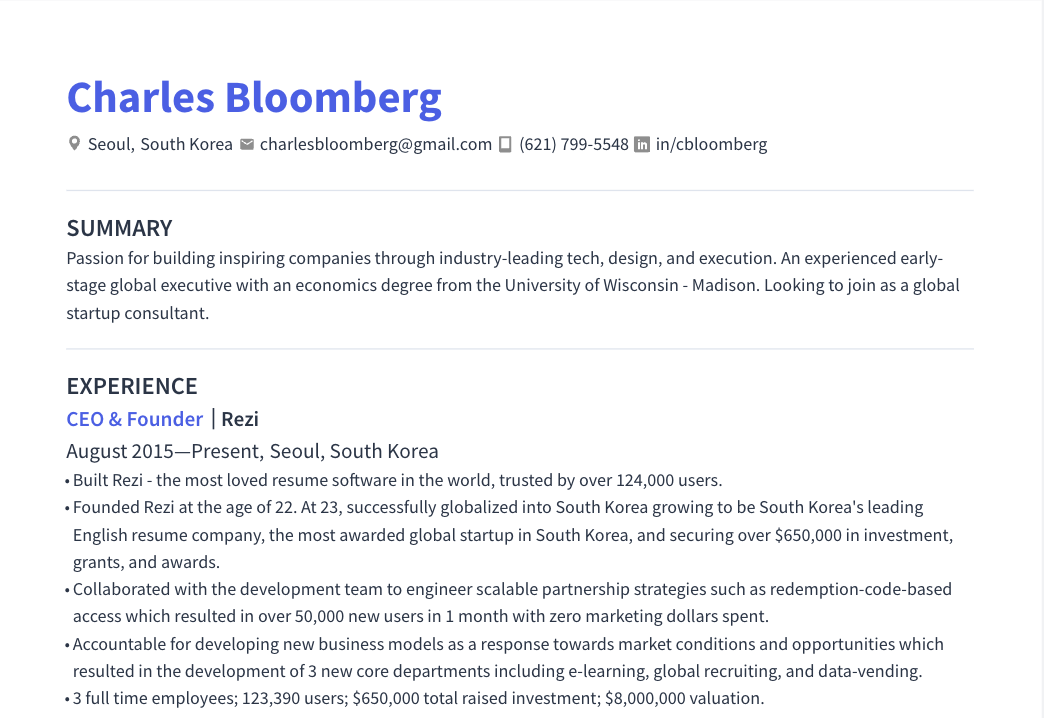
Impress employers and recruiters.
Choose from hundreds of resume examples.
Tailor your resume to this Technical Program Manager, Research Compute Services role.
Rezi rewrites your resume against OpenAI's job description. Free.
Tailor your resume to this Technical Program Manager, Research Compute Services role.
Rezi rewrites your resume against OpenAI's job description. Free.
Don't guess if your resume is good enough.
See how it scores against the Technical Program Manager, Research Compute Services posting at OpenAI — free, in seconds.
Don't guess if your resume is good enough.
See how it scores against the Technical Program Manager, Research Compute Services posting at OpenAI — free, in seconds.
About the Role
You will be part of an engineer-first TPM team, partnering closely with the Research Compute Services team. Your primary responsibility will be to build and own the tools, data, and platform that turn Research plans and workload signals into concrete compute demand and manage allocations across the fleet. This is a hands-on technical role where you will build alongside researchers and engineers, working directly with code and data to prototype solutions, automate workflows, and deliver tools that teams use every day. You will combine technical judgment and program leadership to connect capacity planning with the deployment, scheduling, and optimization systems that make allocated compute usable. You will work across a broad range of Research workloads, understanding their different requirements and ensuring those needs shape the platform. Success means researchers can express their needs, understand their allocations, and use compute effectively as priorities and workloads change.
Responsibilities
- Build with Research: Work directly with researchers across pretraining, research inference, and other workloads, treating these communities as core users and translating their needs into improvements across compute services, tooling, and scheduling.
- Own Research demand and allocation systems: Own the roadmap and delivery of the tools, data, and platform used to capture demand, support allocation decisions, and manage allocations, carrying this work from requirements and design through adoption and ongoing improvement.
- Turn research plans into actionable demand: Develop systems that translate evolving plans and workload requirements into concrete capacity needs, including resource requirements, timing, and constraints.
- Connect capacity supply and demand: Partner with Capacity Planning, Research, and infrastructure teams to reconcile demand with available supply, building the tools and workflows needed to evaluate scenarios, manage changes, and make allocation tradeoffs visible to decision makers.
- Build reliable data and useful tools: Create data models, views, and automation that show what researchers need, what capacity is available, what has been allocated, and how it is being used. Improve self-service workflows for requesting and managing compute.
- Connect allocations to workload execution: Partner with engineers working on Kubernetes deployments and scheduling systems so allocation plans reflect workload constraints and translate into resources that researchers can use.
- Improve allocation and scheduling efficiency: Work with engineers to evaluate optimization approaches, including solvers operating at fleet and local scheduling levels. Help define constraints and objectives, assess tradeoffs, and measure improvements in fleet utilization.
- Find and address systemic gaps: Use workload and fleet data to identify bottlenecks, unused capacity, and recurring manual work. Build durable improvements to the tools and systems behind those problems.
- Lead technical delivery across teams: Own plans, dependencies, and decisions across Research, Research Compute Services, Capacity Planning, and infrastructure engineering. Keep teams aligned on what needs to be built, how it will be adopted, and who will operate it.
- Make progress and tradeoffs clear: Give working teams and leadership a clear view of demand, allocation constraints, delivery progress, and decisions that need attention.
Requirements
- Have a strong engineering foundation, developed through relevant education or demonstrated technical experience.
- Have led and delivered complex technical programs involving large-scale compute, distributed systems, infrastructure platforms, or research environments.
- Have practical experience with capacity planning, including supply and demand management, compute allocations, and the tools and data that support those decisions.
- Have personally built or materially contributed to tools, data systems, or automation used by engineering or research teams. You are comfortable working directly with code and operational data.
- Are familiar with Kubernetes deployments and scheduling systems, and understand how resource constraints and placement decisions affect workload execution.
- Understand optimization solvers and can reason about their use in fleet-wide allocation and local scheduling. You can evaluate constraints, objectives, and tradeoffs without losing sight of researcher needs.
- Can work closely with researchers to understand evolving requirements and translate them into systems that are practical to build and useful in daily work.
- Can take ownership of ambiguous technical problems, establish a clear path forward, and bring complex work through delivery and adoption.
- Communicate technical decisions, constraints, and priorities clearly across engineering, Research, and leadership.
- Are resourceful, comfortable with changing priorities, and motivated by improving both researcher productivity and compute efficiency.
- Are interested in and thoughtful about the impacts of AGI.
Skills
- Kubernetes deployments
- Scheduling systems
- Optimization solvers
- Capacity planning
- Supply and demand management
- Compute allocations
- Data systems
- Automation
Location
- Remote
Work Type
- Full-time
Experience Level
- Mid-level
- Senior
Education Level
- Bachelor's degree or equivalent experience
Benefits
- Health insurance
- Dental insurance
- Vision insurance
- Life insurance
- Disability insurance
- 401(k) plan
- Paid time off
- Holidays
- Parental leave
- Commuter benefits
- Wellness programs
- Professional development opportunities
About the Company
- OpenAI is an AI research and deployment company dedicated to ensuring that general-purpose artificial intelligence benefits all of humanity.
- We push the boundaries of the capabilities of AI systems and seek to safely deploy them to the world through our products.
- AI is an extremely powerful tool that must be created with safety and human needs at its core, and to achieve our mission, we must encompass and value the many different perspectives, voices, and experiences that form the full spectrum of humanity.
- At OpenAI, we believe artificial intelligence has the potential to help people solve immense global challenges, and we want the upside of AI to be widely shared.
- Join us in shaping the future of technology.
Equal Opportunity
- We are an equal opportunity employer, and we do not discriminate on the basis of race, religion, color, national origin, sex, sexual orientation, age, veteran status, disability, genetic information, or other applicable legally protected characteristic.
- For additional information, please see OpenAI’s Affirmative Action and Equal Employment Opportunity Policy Statement.
- Background checks for applicants will be administered in accordance with applicable law, and qualified applicants with arrest or conviction records will be considered for employment consistent with those laws, including the San Francisco Fair Chance Ordinance, the Los Angeles County Fair Chance Ordinance for Employers, and the California Fair Chance Act, for US-based candidates.
- For unincorporated Los Angeles County workers: we reasonably believe that criminal history may have a direct, adverse and negative relationship with the following job duties, potentially resulting in the withdrawal of a conditional offer of employment: protect computer hardware entrusted to you from theft, loss or damage; return all computer hardware in your possession (including the data contained therein) upon termination of employment or end of assignment; and maintain the confidentiality of proprietary, confidential, and non-public information. In addition, job duties require access to secure and protected information technology systems and related data security obligations.
- We are committed to providing reasonable accommodations to applicants with disabilities, and requests can be made via this link.