Impress employers and recruiters.
Choose from hundreds of resume examples.
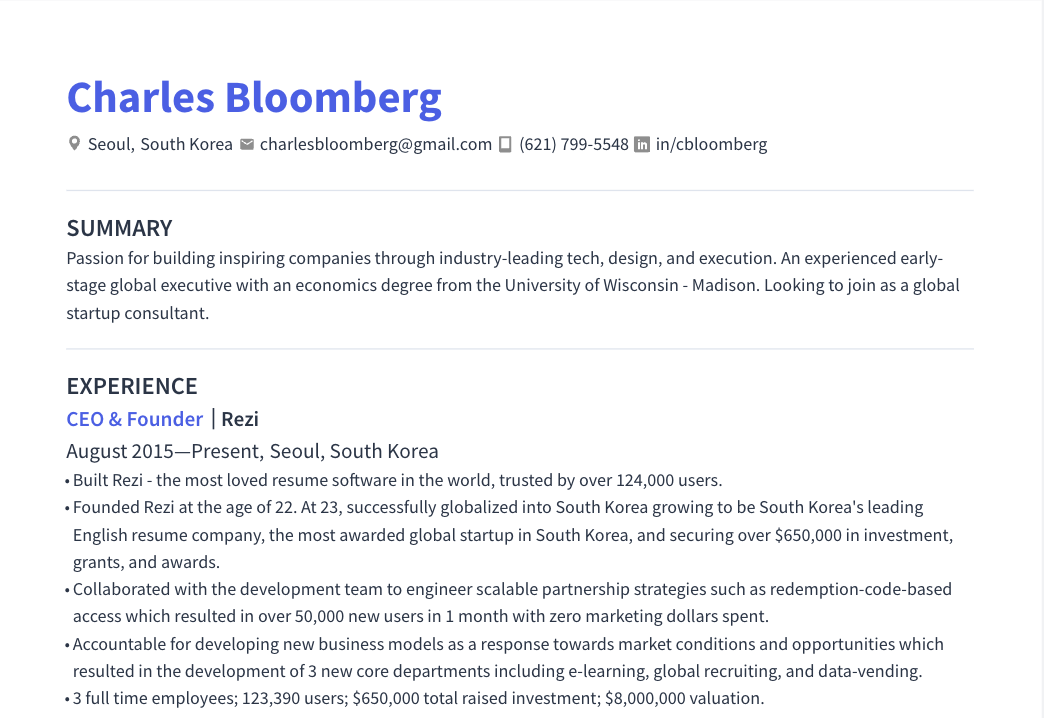
Impress employers and recruiters.
Choose from hundreds of resume examples.
Tailor your resume to this Scientist, Cell Biology role.
Rezi rewrites your resume against Axiom's job description. Free.
Tailor your resume to this Scientist, Cell Biology role.
Rezi rewrites your resume against Axiom's job description. Free.
Don't guess if your resume is good enough.
See how it scores against the Scientist, Cell Biology posting at Axiom — free, in seconds.
Don't guess if your resume is good enough.
See how it scores against the Scientist, Cell Biology posting at Axiom — free, in seconds.
About the Role
Build human cell models and multiplexed high-content assays to reveal how drugs cause toxicity and predict their effects in people. Partner with robotics engineers, computational scientists, and ML researchers to generate large-scale biological datasets that power frontier AI agents for translational drug discovery.
Responsibilities
- Build human cell models that accurately predict drug-induced toxicity in the liver, kidney, heart, immune system, and pharmacokinetics like exposure and metabolisms.
- Design and optimize physiologically relevant systems using primary human cells, multicellular cultures, organoids, and other advanced models.
- Develop high-content assays that reveal how drugs disrupt cellular function and cause injury.
- Combine live-cell imaging, transcriptomics, proteomics, and mass spectrometry to connect changes in cell behavior with underlying molecular mechanisms.
- Work with robotics engineers to build a generalizable robotics platform for assay development and turning complex assays into reproducible, high-throughput experimental workflows.
- Establish rigorous validation and quality control standards to ensure consistent results across cell batches, plates, operators, and laboratories.
- Investigate mechanisms of drug-induced injury and design experiments that distinguish meaningful biological effects from measurement artifacts.
- Partner with computational scientists and drug discovery teams to generate large-scale biological datasets with the quality and depth needed to predict toxicity and guide drug development.
- Partner with leading pharmaceutical companies and AI labs to interpret Axiom’s data, uncover the biochemical mechanisms behind observed effects, and guide drug discovery decisions.
Requirements
- Exceptional experimental scientist with a deep understanding of cell biology and human physiology.
- Invent and refine biological models and assays to answer questions that established protocols cannot.
- Care deeply about reproducibility, biological relevance, and data quality, with the attention to detail needed to catch subtle sources of error.
- Hold work to extremely rigorous scientific standards, designing decisive experiments with strong controls and drawing conclusions supported by the evidence.
- Can interpret complex biological phenotypes and distinguish meaningful effects from noise, confounding factors, and experimental artifacts.
- Challenge the limits of conventional cell models and develop systems that better predict human biology and drug responses.
- Deeply curious about cell biology, experimental technologies, and drug discovery, and eager to master new methods.
- Communicate complex science clearly, make a compelling case for ideas, and inspire scientists and collaborators to pursue ambitious questions.
Skills
- Primary human cell culture
- iPSC culture and differentiation
- Cell engineering
- Physiologically relevant models (co-cultures, organoids, spheroids, engineered tissues)
- Cell biology
- Molecular biology
- Physiology
- Pharmacology
- High-content imaging
- Cell Painting
- Fluorescence microscopy
- Live-cell imaging
- Image-based phenotypic screening
- Assay development
- Miniaturization
- Automation for high-throughput screening
- Cell viability measurement
- Mitochondrial function measurement
- Oxidative stress measurement
- ER stress measurement
- Apoptosis measurement
- Inflammation measurement
- Functional response measurement
- RNA sequencing
- Proteomics
- Metabolomics
- Methods combining multiple biological measurements
- Experimental design
- Quantitative analysis
- Dose-response analysis
- Statistical methods
- Assay validation
- Quality control
About the Company
- Axiom’s mission is to eliminate unexpected drug toxicity and unlock an abundance of ultra safe medicines.
- We are starting with the liver, where toxicity remains a leading cause of drug failure.
- Our high-throughput human liver safety platform combines advanced human cell systems with imaging, transcriptomics, mass spectrometry, and drug metabolism measurements.
- Our AI agents integrate these data with chemical structure, human exposure, and thousands of clinical reference compounds to predict whether a drug will be toxic in humans, why, and how to make it safer.
- We work with seven of the world’s top twenty pharmaceutical companies to design safety into molecules from the earliest stages.
- This applied work feeds directly into our partnerships with leading frontier AI labs, turning real discovery challenges and experimental feedback loops into scientific skill trees and reinforcement learning environments that train increasingly superhuman scientists.
- We then deploy these frontier models to make cancer therapies safer, unlock treatments for chronic diseases that demand exceptional safety, revive promising drugs abandoned because of toxicity, and much more.
- Our ultimate ambition is to build a superhuman AI agent that predicts how a drug will behave across all major human organ systems before the first patient receives it.
- With insanely accurate safety predictions, we aim to enable rapid, high-throughput testing of novel drugs in humans with zero risk of toxicity.
- This is the key to unlocking an abundance of ultra safe, effective medicines.