Community Engagement Fellowship
Research Foundation of The City University of New York · NY, US
9 days agoImpress employers and recruiters.
Choose from hundreds of resume examples.

Impress employers and recruiters.
Choose from hundreds of resume examples.
Tailor your resume to this Community Engagement Fellowship role.
Rezi rewrites your resume against Research Foundation of The City University of New York's job description. Free.
Tailor your resume to this Community Engagement Fellowship role.
Rezi rewrites your resume against Research Foundation of The City University of New York's job description. Free.
Don't guess if your resume is good enough.
See how it scores against the Community Engagement Fellowship posting at Research Foundation of The City University of New York — free, in seconds.
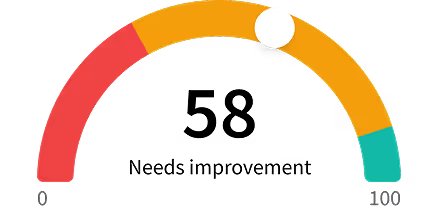
Don't guess if your resume is good enough.
See how it scores against the Community Engagement Fellowship posting at Research Foundation of The City University of New York — free, in seconds.
About the Role
The Community Engagement Fellowship is a full-time, paid professional opportunity that combines neighborhood-based program implementation with structured knowledge- and skills-building. Fellows will be assigned to a portfolio of blocks across the City where hyper-local strategies will be implemented, serving as residents' primary point of contact with City government and as the connective tissue between community members, City agencies, and program partners. This is not a desk job; Fellows will spend a significant amount of time in communities working directly with residents. The Fellowship offers full-time employment with comprehensive benefits, meaningful government and community experience, and a pathway to deeper engagement in New York City's community safety ecosystem.
Responsibilities
- Build and sustain trusted, long-term relationships with residents, community leaders, natural supporters, local businesses, and other stakeholders on assigned blocks, serving as a consistent and visible presence in the community.
- Conduct initial resident engagement on each assigned block, introducing the program model, identifying community strengths and challenges, and cultivating relationships with residents, informal block connectors, and natural supporters.
- Facilitate biweekly block huddles with residents and community leaders, managing scheduling, note-taking, action item tracking, and follow-up to promote accountability.
- Attend and represent the City’s programming at community events, precinct council meetings, community board and block association meetings, and other relevant convenings.
- Facilitate ongoing community outreach and resident engagement to raise awareness of program activities and support collective problem identification and problem solving.
- Assist in developing and maintaining community engagement protocols for each assigned block, with clear strategies, benchmarks and outcomes that reflect community priorities, co-develop solutions to identified block problems, and program goals.
- Contribute to the development and refinement of program protocols, tools, and materials based on field experience and lessons learned.
- Coordinate joint CPTED safety walkthroughs on assigned blocks in partnership with residents, City agency staff, and technical experts, documenting findings, developing prioritized action lists, and tracking follow-up.
- Support residents in the identification, design, and implementation of block-level action plans that respond to the conditions identified through the CPTED audit process.
- Assist in monitoring and tracking implementation progress across program components on assigned blocks, flagging challenges, adapting strategies, and escalating issues as needed.
- Complete activity logs documenting community engagement activities, resident interactions, and implementation progress on assigned blocks.
- Produce regular implementation reports and other written materials outlining strategies, challenges, outcomes and lessons learned across program components.
- Support effective data collection and input across program components in accordance with data collection protocols.
- Collaborate closely with ISLG research and policy teams to ensure field-based observations and community knowledge inform program learning, reporting, and continuous improvement.
- Attend and actively participate in all Fellowship-related activities, including but not limited to an onboarding intensive, skill-building trainings, and professional development workshops.
- Participate in structured peer learning sessions with fellow cohort members to share challenges, strategies, and best practiced from the field.
- Other duties, as necessary.
Requirements
- At least seven years of experience in community organizing, engagement, outreach, or a related field, OR a bachelor’s degree in a relevant field plus five years of relevant work experience.
- Minimum high school diploma or equivalency required.
- Demonstrated ability to build and sustain trusted relationships with diverse community members, community-based organizations, government, and nonprofit partners.
- Strong facilitation skills and experience leading community meetings, working groups, or resident engagement processes and driving toward clear, actionable outcomes.
- Excellent organizational and project management skills, including the ability to manage multiple workstreams simultaneously, meet tight deadlines, and maintain organized documentation.
- Strong written and verbal communication skills, with the ability to engage effectively with residents, community partners, and government agencies.
- Commitment to equity-centered and community-led participatory approaches to public safety and neighborhood wellbeing.
- Ability to work a flexible schedule, including occasional evenings and weekends, to accommodate community events and resident engagement activities.
- Bachelor or Advanced degree preferred.
- Fluency in Spanish or another language, other than English, that would improve ability to build relationships with residents in communities impacted by gun violence.
- Experience working within or in close partnership with government systems, City agencies, or public sector initiatives.
- Lived experience in or strong ties to New York City communities most impacted by gun violence and outdoor crime.
Skills
- Community Organizing
- Community Engagement
- Outreach
- Facilitation
- Project Management
- Written Communication
- Verbal Communication
Location
- CUNY INSTITUTE FOR STATE & LOCAL GOVERNANCE
Work Type
- Full-time
Experience Level
- 7 years of experience in community organizing, engagement, outreach, or a related field
- Bachelor's degree in a relevant field plus 5 years of relevant work experience
Education Level
- Minimum high school diploma or equivalency
- Bachelor degree preferred
- Advanced degree preferred
Salary/Compensations
- $80,000 - $90,000
Benefits
- Comprehensive benefits
About the Company
- The team at RFCUNY is made up of dedicated, talented professionals committed to providing the services that allow CUNY researchers, faculty, and staff to focus on their intellectual curiosity and scientific discoveries.
- The CUNY Institute for State and Local Governance has a mission to improve the financing, delivery, and measurement of critical public services through research, technical assistance, and education. We lead projects aimed at reforming the criminal justice system, measuring urban inequality, expanding the reach of social service providers, and more.
- We strive to foster an office environment and an approach to work that welcomes and respects different perspectives, backgrounds, and life experiences.
- We are working towards our goal of continuing to recruit and retain staff and board members who are diverse in terms of race, national origin, sexual orientation, gender identity or expression, age, religion, veteran status, socioeconomic status, disability, and justice system involvement.
- The NYC Mayor's Office of Community Safety (OCS), the NYC Mayor’s Office of Criminal Justice (MOCJ) and ISLG are working in partnership to strengthen community safety and wellbeing on the city blocks with the highest concentrations of serious outdoor crime.
- These efforts are grounded in research that demonstrates a disproportionate share of violent crime in New York City is concentrated in a small fraction of city blocks; blocks that are home to residents, families and community members who hold deep knowledge of their neighborhoods and a stake in making them safer.
- ISLG serves as the implementation and technical assistance partner for the City’s hyper-local strategy, which will include: establishing block-level safety partnerships between City government and residents; enhancing the physical environment of blocks using Crime Prevention Through Environmental Design (CPTED) principles and community-led investments in physical improvements; and elevating the leadership of block residents and other natural supporters.
- The model draws on lessons from the Mayor's Action Plan for Neighborhood Safety (MAP), evidence from community violence intervention research, and a public health approach to gun violence that centers resident leadership, community investment and hyper-local interventions.
Equal Opportunity
- The Research Foundation of the City University of New York is an Equal Opportunity/Affirmative Action/Americans with Disabilities Act/E-Verify Employer.
- It is the policy of the Research Foundation of CUNY to provide equal employment opportunities free of discrimination based on race, color, age, religion, sex, pregnancy, childbirth, national origin, disability, marital status, veteran status, sexual orientation, gender identity, genetic information, marital status, domestic violence victim status, arrest record, criminal conviction history, or any other protected characteristic under applicable law.