Impress employers and recruiters.
Choose from hundreds of resume examples.
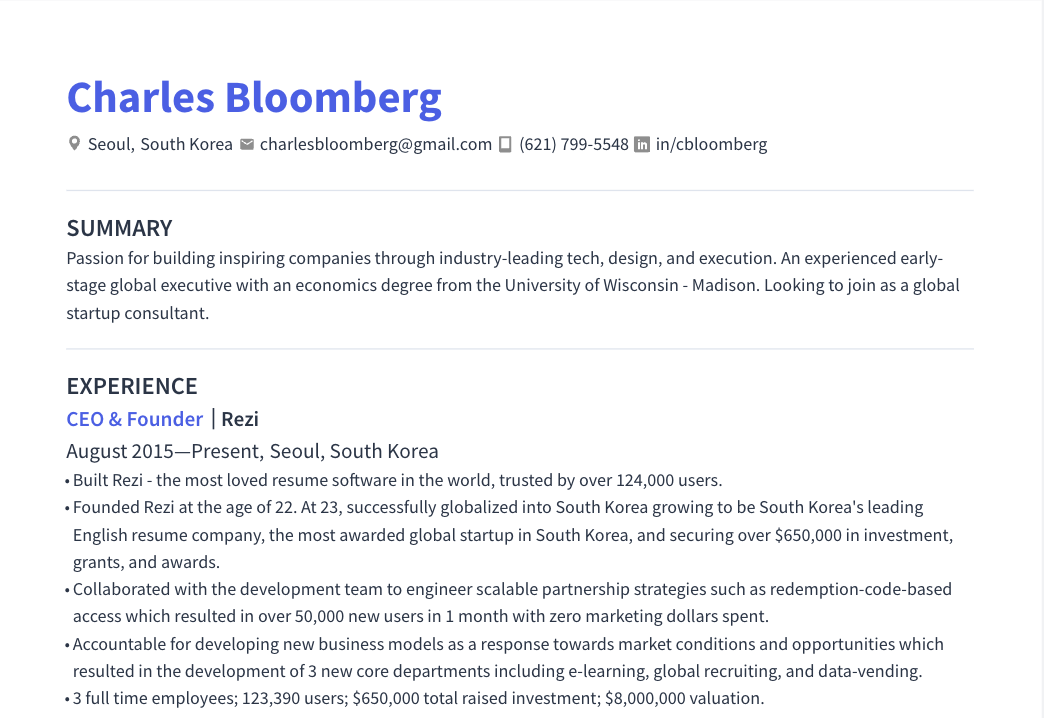
Impress employers and recruiters.
Choose from hundreds of resume examples.
Tailor your resume to this Research Engineer - AI Safety Systems and Guardrails role.
Rezi rewrites your resume against Meta's job description. Free.
Tailor your resume to this Research Engineer - AI Safety Systems and Guardrails role.
Rezi rewrites your resume against Meta's job description. Free.
Don't guess if your resume is good enough.
See how it scores against the Research Engineer - AI Safety Systems and Guardrails posting at Meta — free, in seconds.
Don't guess if your resume is good enough.
See how it scores against the Research Engineer - AI Safety Systems and Guardrails posting at Meta — free, in seconds.
About the Role
This role focuses on researching and developing advanced machine learning models, novel algorithms, and scalable systems to enhance the safety of Meta's AI products. You will translate AI safety research into practical product safeguards, focusing on guardrails, risk detection, adversarial robustness, and safe agent behavior. This is a hands-on technical leadership position with end-to-end ownership of a significant safety area.
Responsibilities
- Research and develop state-of-the-art machine learning models and novel algorithms for AI safety, focusing on guardrails, risk detection, policy adherence, and adversarial robustness.
- Design, prototype, and implement safety systems for language models, multimodal models, and AI agents, addressing various safety concerns.
- Set the technical direction and research roadmap for a significant system safety area, leading complex initiatives across multiple teams.
- Architect and optimize reusable safety components and machine learning pipelines, delivering scalable, low-latency safeguards.
- Develop high-quality training data and conduct rigorous experimentation to improve safety, generalization, and robustness.
- Measure the effectiveness of safeguards within the deployed system, balancing risk reduction with other performance metrics.
- Collaborate with cross-functional partners to translate product needs and safety requirements into validated solutions.
- Monitor, maintain, and iterate on deployed safety models and systems to drive improvements.
- Stay at the forefront of AI safety research, reproducing and extending promising methods for product deployment.
- Mentor engineers and researchers, influence architecture and research decisions, and communicate findings.
Requirements
- Bachelor's degree in Computer Science, Computer Engineering, relevant technical field, or equivalent practical experience.
- Proven track record of research in AI safety, deep learning, adversarial robustness, language models, multimodal machine learning, or agentic AI.
- 3+ years of experience in deploying machine learning models and systems at scale in an industry setting.
- Demonstrated up-to-date expertise in relevant machine learning research advancements.
- Hands-on programming experience in Python and deep-learning frameworks such as PyTorch.
- Demonstrated experience independently defining technical direction and leading complex research or machine learning initiatives end-to-end.
- Proven ability to communicate complex technical concepts and influence cross-functional technical decisions.
- Experience developing AI safety guardrails, policy-adaptable classifiers, reliable model-based judges, or adversarial defenses for deployed AI systems.
- Advanced degree (MS or PhD) in Computer Science, Machine Learning, AI, or a related technical field, or equivalent advanced research experience.
- Expertise in safety data generation, adversarial evaluation, calibration, or in multilingual and multimodal safety modeling.
- Experience with agent safety, prompt-injection defense, multi-turn risk detection, tool-use controls, or security-informed threat modeling.
- A strong record of relevant research contributions, such as peer-reviewed publications, adopted open-source methods, or widely used systems supported by rigorous evaluation.
- Experience with efficient model inference, distillation, cascaded models, or distributed ML systems under latency, throughput, cost, and reliability constraints.
Skills
- AI safety
- Deep learning
- Adversarial robustness
- Language models
- Multimodal machine learning
- Agentic AI
- Python
- PyTorch
- Machine learning model deployment
- Technical leadership
- Research roadmap definition
- System architecture
- ML pipeline optimization
- Data development
- Experimentation
- Evaluation
- Cross-functional collaboration
- Model monitoring
- Model maintenance
- Research trend analysis
- Mentoring
- Technical documentation
- Internal presentations
- External publications
- AI safety guardrails
- Policy-adaptable classifiers
- Model-based judges
- Adversarial defenses
- Safety data generation
- Adversarial evaluation
- Calibration
- Multilingual safety modeling
- Multimodal safety modeling
- Agent safety
- Prompt-injection defense
- Multi-turn risk detection
- Tool-use controls
- Security-informed threat modeling
- Efficient model inference
- Model distillation
- Cascaded models
- Distributed ML systems
Location
- Meta Superintelligence Labs
Work Type
- Full-time
Experience Level
- Experienced
- 3+ years of experience
Education Level
- Bachelor's degree in Computer Science, Computer Engineering, relevant technical field, or equivalent practical experience
- Advanced degree (MS or PhD) in Computer Science, Machine Learning, AI, or a related technical field, or equivalent advanced research experience
Salary/Compensations
- $183,997/year to $257,000/year
Benefits
- bonus
- equity
- benefits
About the Company
- Meta Superintelligence Labs is part of the Product & Applied Research org at Meta.