Senior Applied Research Scientist – Computational Geometry and Meshingmill
NVIDIA · BE, DE
9 days agoImpress employers and recruiters.
Choose from hundreds of resume examples.
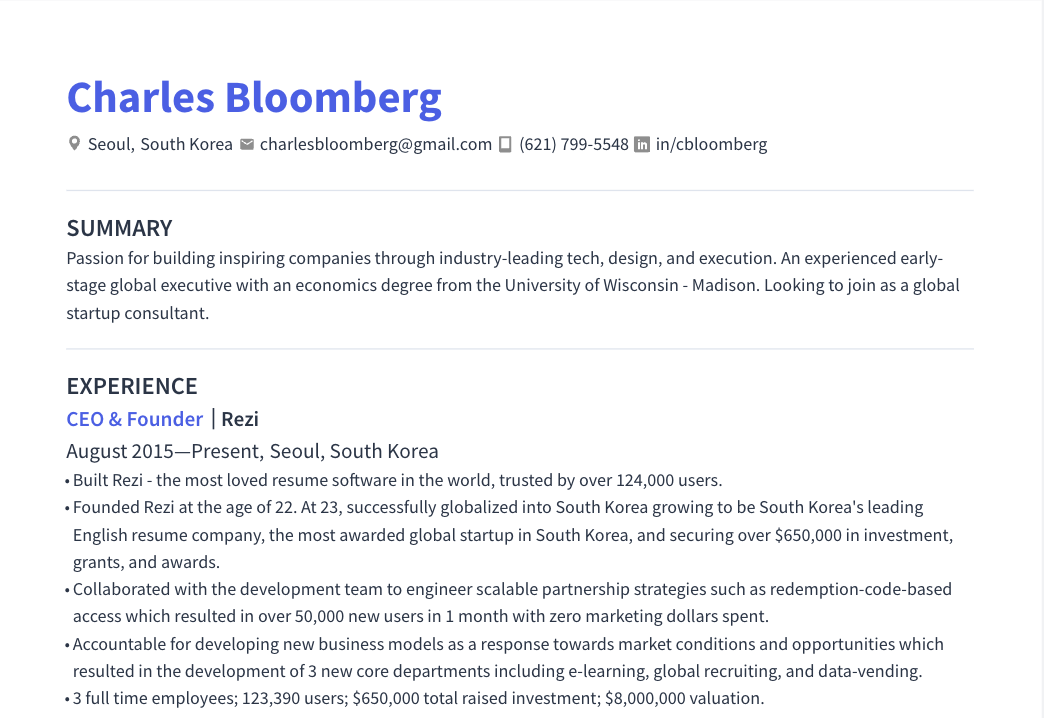
Impress employers and recruiters.
Choose from hundreds of resume examples.
Tailor your resume to this Senior Applied Research Scientist – Computational Geometry and Meshingmill role.
Rezi rewrites your resume against NVIDIA's job description. Free.
Tailor your resume to this Senior Applied Research Scientist – Computational Geometry and Meshingmill role.
Rezi rewrites your resume against NVIDIA's job description. Free.
Don't guess if your resume is good enough.
See how it scores against the Senior Applied Research Scientist – Computational Geometry and Meshingmill posting at NVIDIA — free, in seconds.
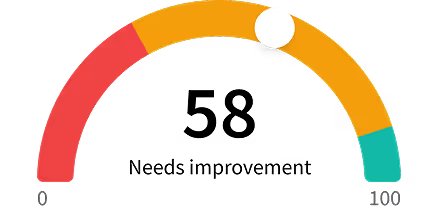
Don't guess if your resume is good enough.
See how it scores against the Senior Applied Research Scientist – Computational Geometry and Meshingmill posting at NVIDIA — free, in seconds.
About the Role
This role will advance computational geometry, meshing, simulation-ready representations, and AI-native algorithms for NVIDIA GPU platforms. You will develop geometry, meshing, and discretization algorithms that improve robustness, numerical accuracy, and end-to-end performance across CAE, EDA, semiconductor, and scientific-computing workflows. Join us in reinventing the geometric foundation of engineering simulation!
Responsibilities
- Build algorithms for computational geometry, computer-aided engineering and design interoperability, mesh generation, mesh adaptation, spatial data structures, and curved discretization.
- Investigate differentiable geometry, AI-native geometry processing, learning-based meshing and discretization, and design-to-simulation workflows for inverse design, simulation-ready digital twins, and autonomous engineering workflows.
- Explore solver- and hardware-aware geometry and discretization methods that jointly optimize mesh quality, numerical accuracy, robustness, and comprehensive simulation efficiency.
- Define benchmarks for mesh quality, geometry conversion, discretization accuracy, robustness, downstream solver impact, and end-to-end simulation performance.
- Collaborate with teams across Omniverse, OpenUSD, Warp, solver engineering, NVIDIA Research, universities, and industrial partners involved in computer-aided engineering, electronic design automation, chip manufacturing, electronics, and digital twin workflows.
Requirements
- PhD or equivalent experience in computer science, computational geometry, scientific computing, graphics, applied mathematics, computational mechanics, engineering, or a related field.
- 5+ years of experience.
- Background in computational geometry, geometry processing, mesh generation, adaptive discretization, CAD and CAE algorithms, or simulation-ready representations with 5+ years proven experience working in computational engineering.
- C++ and Python skills, with experience building algorithms for sophisticated geometry.
- Understanding of boundary representations, topology, mesh quality, discretization error, numerical robustness, and solver requirements, supported by research, software, or industrial impact.
Skills
- Computational geometry
- Computer-aided engineering and design interoperability
- Mesh generation
- Mesh adaptation
- Spatial data structures
- Curved discretization
- Differentiable geometry
- AI-native geometry processing
- Learning-based meshing
- Learning-based discretization
- Design-to-simulation workflows
- Inverse design
- Simulation-ready digital twins
- Autonomous engineering workflows
- Solver-aware geometry methods
- Hardware-aware geometry methods
- Mesh quality optimization
- Numerical accuracy optimization
- Robustness optimization
- Simulation efficiency optimization
- Geometry conversion
- Discretization accuracy
- Downstream solver impact analysis
- End-to-end simulation performance analysis
- C++
- Python
- Boundary representations
- Topology
- Discretization error
- Numerical robustness
- Solver requirements
- CAD kernels
- Parasolid
- ACIS
- Open Cascade
- CATIA
- NX
- Creo
- SOLIDWORKS
- STEP
- IGES
- B-Rep
- NURBS
- Spline-based representations
- Tetrahedral mesh generation
- Hexahedral mesh generation
- Polyhedral mesh generation
- Anisotropic mesh generation
- Adaptive mesh generation
- Boundary-layer mesh generation
- Curved mesh generation
- High-order mesh generation
- Isogeometric analysis
- Remeshing
- Meshless methods
- Topology optimization
- Shape optimization
- Differentiable geometry
- AI-native mesh generation
- Geometry repair
- Feature recognition
- Simulation-intent recognition
- Parameterization
- Persistent correspondence
- Learning-based geometry representations
- GPU spatial algorithms
- Solver-aware adaptation
Experience Level
- 5+ years of experience
Education Level
- PhD or equivalent experience in computer science, computational geometry, scientific computing, graphics, applied mathematics, computational mechanics, engineering, or a related field.
About the Company
- Industrial simulation depends on turning product and device geometry into valid, efficient discretizations.
- NVIDIA GPU platforms.