Impress employers and recruiters.
Choose from hundreds of resume examples.
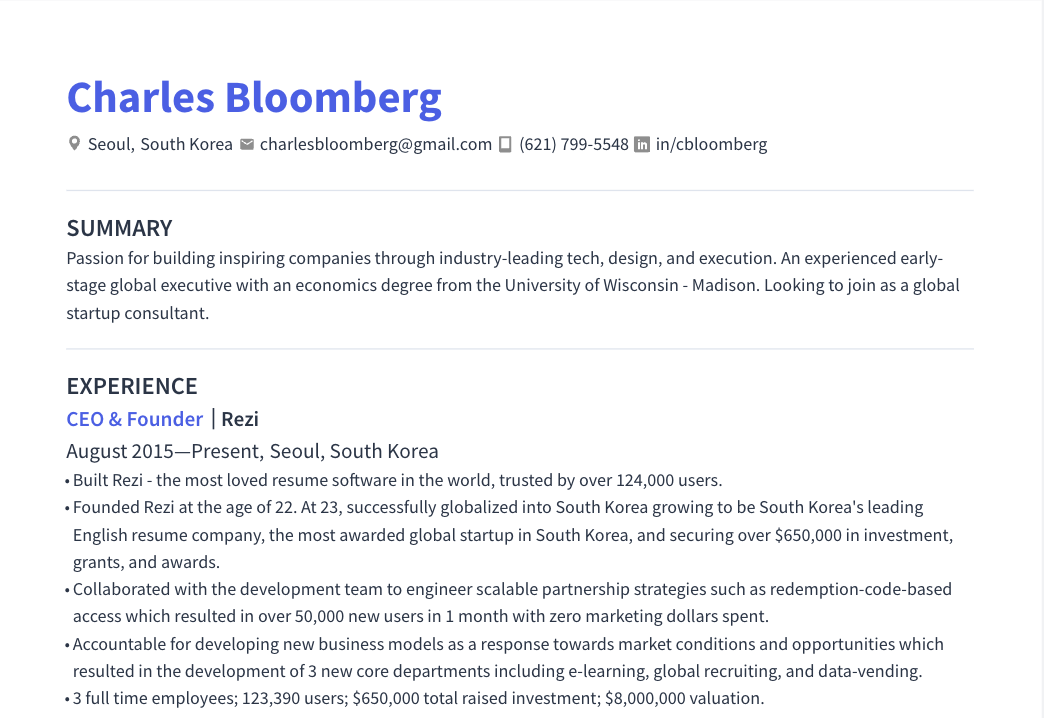
Impress employers and recruiters.
Choose from hundreds of resume examples.
Tailor your resume to this Principal Product Manager, Content Services & API role.
Rezi rewrites your resume against Condé Nast Germany's job description. Free.
Tailor your resume to this Principal Product Manager, Content Services & API role.
Rezi rewrites your resume against Condé Nast Germany's job description. Free.
Don't guess if your resume is good enough.
See how it scores against the Principal Product Manager, Content Services & API posting at Condé Nast Germany — free, in seconds.
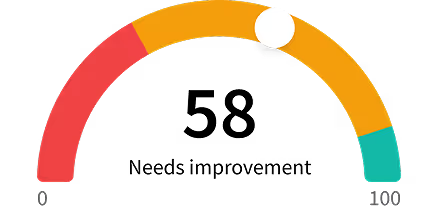
Don't guess if your resume is good enough.
See how it scores against the Principal Product Manager, Content Services & API posting at Condé Nast Germany — free, in seconds.
About the Role
We are hiring a technical Product Manager to own the strategy and roadmap for the REST Content API, GraphQL Content Service, GraphQL Federated Gateway, Content API Search and Games Service. This role requires systems thinking, architectural design, and scalability, with a focus on how a content platform should function and making difficult tradeoffs.
Responsibilities
- Own the product direction for content APIs and shared services.
- Align consuming teams' needs into a unified roadmap, clarifying priorities, API contracts, and service expectations.
- Maintain a holistic view of content models, schemas, search, federation, performance, reliability, and developer experience.
- Understand the impact of decisions across editorial tools, audience platforms, mobile apps, and brand delivery.
- Determine where common capabilities add value versus where specific use cases require flexibility.
- Collaborate with engineering on architectural choices, including service boundaries, schema evolution, gateway behavior, and migration paths.
- Weigh the effects on consumers, operating costs, and future scale to inform product decisions.
- Understand developer needs by engaging with engineering teams to identify integration workflows, workarounds, and unmet needs.
- Translate findings into shared capabilities and a roadmap that simplifies content experience development and delivery.
- Map dependencies and ownership across services, tracing content from creation through delivery.
- Assess the implications of schema or gateway changes on consumers, content freshness, permissions, and failure behavior.
- Actively participate in design discussions for REST and GraphQL, federated schemas, service boundaries, and data access patterns.
- Evaluate build, buy, and evolve options, making the product consequences of consistency, coupling, caching, and technical debt explicit.
- Define service expectations with engineering and consuming teams, balancing latency, availability, throughput, content freshness, and cost.
- Plan for traffic peaks, query complexity, rate limits, and failures in dependent services, incorporating resilience and capacity into roadmap decisions.
- Set clear direction for schemas, versioning, backward compatibility, and deprecation.
- Improve search and retrieval, documentation, examples, onboarding, and error behavior to ensure predictable contracts and facilitate adoption.
- Establish baselines and targets for key metrics like latency, errors, availability, content freshness, search quality, and cost.
- Track metrics such as time to first successful integration, adoption, and support burden to guide prioritization and assess platform improvement.
- Sequence improvements and migrations across consumers while maintaining production service health.
- Make ownership, dependencies, and rollout plans explicit, using pilots, compatibility checks, and rollback plans to minimize disruption.
- Apply AI where it enhances the platform, evaluating opportunities in content discovery, metadata enrichment, and developer tooling.
- Define quality, permissions, provenance, latency, and cost requirements before expanding AI-enabled capabilities.
Requirements
- A track record of owning technical products, APIs, or shared platform services from discovery through delivery and adoption.
- Clear explanation of strategy set, tradeoffs made, and outcomes achieved.
- Real technical depth in API design, REST, GraphQL, schema evolution, and versioned contracts.
- Ability to read an API specification, inspect a payload, and challenge a proposed design.
- Demonstrated systems thinking, including mapping dependencies, identifying upstream/downstream effects, and using this understanding for product decisions.
- Architectural judgment, with meaningful contributions to decisions about distributed systems, service boundaries, federation, caching, indexing, or data consistency.
- Ability to explain alternatives and justify chosen approaches.
- Experience with scalability and reliability in production, understanding the impact of traffic, query patterns, bottlenecks, and dependency failures on performance and cost.
- Prioritization of improvements with engineering based on production experience.
- Developer product instincts, with experience improving integration, documentation, or onboarding for technical users.
- Ability to demonstrate reduced friction or increased adoption through previous work.
- Experience leading API changes or platform migrations, managing compatibility, deprecation, and rollout across multiple consuming teams.
- Strong communication skills and product judgment.
- Ability to write clear requirements and decision documents.
- Skill in aligning teams with competing needs.
- Capacity to explain technical tradeoffs to business stakeholders.
- Hands-on analytical ability, using API tools, logs, dashboards, or SQL to investigate problems and test hypotheses with technical partners.
- Experience defining useful platform metrics and using them for investment decisions.
- Ability to connect service health and developer productivity to customer and business outcomes.
- Understanding of structured content, metadata, taxonomy, content relationships, and publishing lifecycles.
- Experience with a CMS, headless content platform, or digital asset system is valuable.
- Experience serving multiple brands, markets, or products from shared infrastructure (media or publishing preferred).
- Direct experience with GraphQL federation, content search, or services consumed by both web and mobile applications.
- Experience prototyping or delivering AI-enabled retrieval, content enrichment, or developer tools, with a clear approach to evaluation and controlled access.
Skills
- API design
- REST
- GraphQL
- Schema evolution
- Versioned contracts
- Systems thinking
- Distributed systems
- Service boundaries
- Federation
- Caching
- Indexing
- Data consistency
- Scalability
- Reliability
- Developer product management
- Platform migrations
- Communication
- Product judgment
- Analytical ability
- API tools
- Logs
- Dashboards
- SQL
- Platform metrics
- Structured content
- Metadata
- Taxonomy
- Content relationships
- Publishing lifecycles
- CMS
- Headless content platform
- Digital asset system
- GraphQL federation
- Content search
- AI-enabled retrieval
- Content enrichment
- Developer tooling
Location
- New York, NY
Work Type
- Full-time
Experience Level
- Individual contributor
Salary/Compensations
- $185,000 - $215,000
About the Company
- Condé Nast is one of the world's most renowned media publishing companies, creating and distributing all types of media across print and digital formats.
- The company has a portfolio of influential brands and continues to grow its audience through a global operational and content infrastructure.
- Condé Nast operates in 12 markets including China, France, Germany, India, Italy, Japan, Mexico & Latin America, Spain, Taiwan, UAE/Dubai, the U.K., and the U.S., with additional license partners globally.
- Lead brands include Vogue, The New Yorker, GQ, Architectural Digest, Condé Nast Traveler, Vanity Fair, Wired, Allure, Ars Technica, Bon Appétit, House & Garden, Pitchfork, Tatler, and Vogue Business.
Equal Opportunity
- Condé Nast is an equal opportunity employer. We evaluate qualified applicants without regard to race, color, religion, sex, sexual orientation, gender identity, national origin, disability, veteran status, age, familial status and other legally protected characteristics.