Impress employers and recruiters.
Choose from hundreds of resume examples.
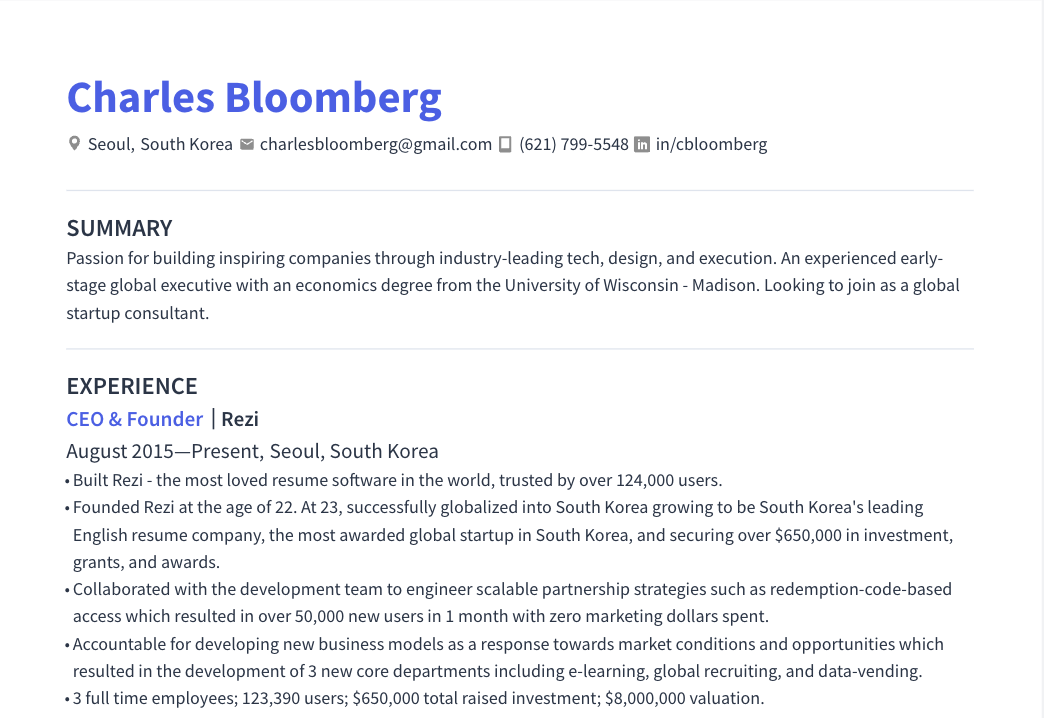
Impress employers and recruiters.
Choose from hundreds of resume examples.
Tailor your resume to this AI for Science Residency - Computational Chemistry role.
Rezi rewrites your resume against Microsoft's job description. Free.
Tailor your resume to this AI for Science Residency - Computational Chemistry role.
Rezi rewrites your resume against Microsoft's job description. Free.
Don't guess if your resume is good enough.
See how it scores against the AI for Science Residency - Computational Chemistry posting at Microsoft — free, in seconds.
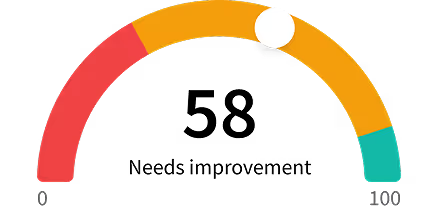
Don't guess if your resume is good enough.
See how it scores against the AI for Science Residency - Computational Chemistry posting at Microsoft — free, in seconds.
About the Role
Microsoft Research AI for Science is seeking a postdoctoral researcher in computational chemistry to help generate data for Skala, a deep-learning exchange-correlation functional for DFT. You will join a collaborative team working on data generation, including diverse chemical structures, and have access to substantial computational resources. Results will be shared through publications and open-source releases.
Responsibilities
- Design, implement, and scale methods for generating chemically diverse molecular structures, including covalent and non-covalent structures, bond-dissociation paths, and reaction geometries/transition states.
- Combine and extend structure-generation approaches such as graph-based and fragment-based construction, conformer and reaction-path sampling, and molecular dynamics/metadynamics-based exploration.
- Use fast approximate methods (e.g., tight-binding) to explore and screen candidate structures.
- Define sampling and selection strategies to ensure new data fills gaps in chemical space and quantify overlap with existing datasets.
- Build and maintain robust, automated, reproducible data-generation workflows in Python on shared codebases, collaborating with team members running high-accuracy wavefunction calculations.
- Collaborate with colleagues to translate insights from Skala training and benchmarking into priorities for future datasets.
- Contribute to the efficiency of the data-generation pipeline, including GPU-accelerated electronic-structure methods.
- Prepare technical papers, presentations, and open-source releases of research code and data.
Requirements
- PhD in computational chemistry, theoretical chemistry, computational condensed-matter physics, or a related area, completed or expected within 6 months of the start date, or comparable research experience.
- Hands-on research experience with electronic-structure methods (DFT and/or semiempirical/tight-binding methods).
- Hands-on research experience with generating, optimizing, or sampling molecular structures.
- Proficiency in Python.
- Experience with collaborative code development on shared codebases.
- At least one peer-reviewed publication or preprint in computational chemistry or a related field.
- Experience developing or contributing to open-source scientific software.
- Experience with extended tight-binding (xTB/GFN) methods.
- Experience with conformer, reaction-path, or molecular-dynamics-based structure exploration.
- Experience building computational-chemistry datasets for training machine-learning models.
- Experience with GPU-accelerated or high-performance computing for quantum chemistry.
- Familiarity with wavefunction-based methods (e.g., coupled cluster).
- Familiarity with thermochemistry or reaction-energy benchmarks.
- Experience integrating methods into existing quantum-chemistry codes (e.g., ORCA, PySCF, CP2K).
Skills
- Python
- Collaborative code development
- Electronic-structure methods
- DFT
- Semiempirical methods
- Tight-binding methods
- Generating molecular structures
- Optimizing molecular structures
- Sampling molecular structures
- Graph-based construction
- Fragment-based construction
- Conformer sampling
- Reaction-path sampling
- Molecular dynamics
- Metadynamics
- GPU-accelerated electronic-structure methods
- Open-source scientific software development
- Extended tight-binding (xTB/GFN)
- Wavefunction-based methods
- Coupled cluster
- Quantum chemistry codes integration
Location
- Berlin Germany
- Cambridge UK
- Amsterdam Netherlands
Work Type
- Residency
- Contract
Experience Level
- Postdoctoral researcher
- PhD
Education Level
- PhD in computational chemistry, theoretical chemistry, computational condensed-matter physics or a related area
Salary/Compensations
- € 8,191.00 per month
- £ 6,655.00 per month
- € 6,811.00 per month
Benefits
- Certain roles may be eligible for benefits and other compensation.
About the Company
- Microsoft Research AI for Science is seeking a postdoctoral researcher in computational chemistry to help generate the data behind Skala, our deep-learning exchange-correlation functional for DFT.
- You will join a collaborative team of quantum chemists and machine-learning researchers working on data generation for Skala, including the generation of diverse chemical structures.
- You will work closely with colleagues across data generation, model development and deployment, and you will have access to substantial computational resources.
- Where possible, results are shared through publications and open-source releases.
Equal Opportunity
- Microsoft is an equal opportunity employer. All qualified applicants will receive consideration for employment without regard to age, ancestry, citizenship, color, family or medical care leave, gender identity or expression, genetic information, immigration status, marital status, medical condition, national origin, physical or mental disability, political affiliation, protected veteran or military status, race, ethnicity, religion, sex (including pregnancy), sexual orientation, or any other characteristic protected by applicable local laws, regulations and ordinances. If you need assistance with religious accommodations and/or a reasonable accommodation due to a disability during the application process, read more about requesting accommodations.