Impress employers and recruiters.
Choose from hundreds of resume examples.
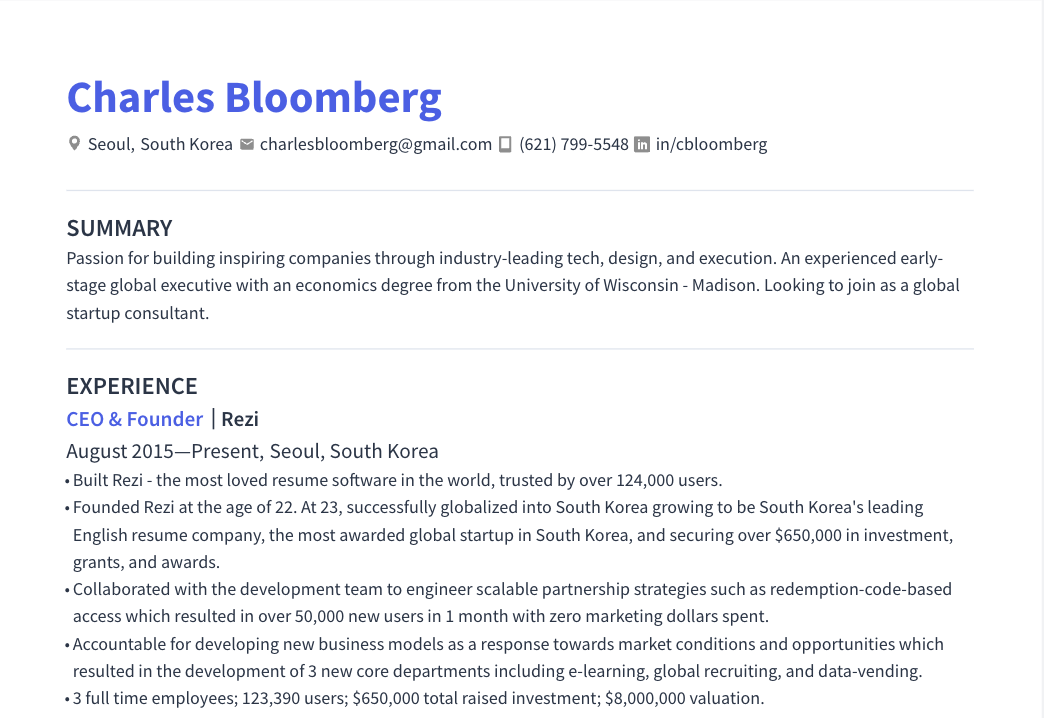
Impress employers and recruiters.
Choose from hundreds of resume examples.
Tailor your resume to this VP of AI role.
Rezi rewrites your resume against Applied Computing's job description. Free.
Tailor your resume to this VP of AI role.
Rezi rewrites your resume against Applied Computing's job description. Free.
Don't guess if your resume is good enough.
See how it scores against the VP of AI posting at Applied Computing — free, in seconds.
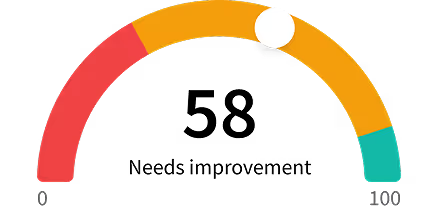
Don't guess if your resume is good enough.
See how it scores against the VP of AI posting at Applied Computing — free, in seconds.
About the Role
The VP of AI owns the direction, leadership, and commercial relevance of our AI function. This role connects a deep understanding of industrial operations with AI capabilities to identify valuable problems, anticipate customer needs, and set priorities for research and product development. You will work alongside the CEO in strategic discussions, represent AI at board level, and take responsibility for AI decisions, people, and budget.
Responsibilities
- Set AI strategy, innovation priorities, and research agenda alignment with commercial needs.
- Make decisions about which industrial problems are worth solving and what solutions must achieve.
- Lead customer, executive, and board-level communication on AI.
- Take overall accountability for AI commitments and outcomes.
- Lead the AI function, including hiring, budget, and people management.
- Manage the working relationship between AI, Product, and Technology.
- Anticipate opportunities across refining, petrochemicals, and adjacent industrial sectors.
- Translate company strategy, industrial needs, and commercial opportunities into clear AI priorities.
- Identify emerging customer problems and steer research to address them.
- Balance near-term delivery commitments with investment in future capabilities.
- Define operational problems, intended users, required outcomes, and success metrics for AI initiatives.
- Make clear decisions about what AI initiatives to pursue, defer, or stop.
- Understand how energy and industrial businesses operate, user decision-making, and where technology creates value.
- Distinguish technically interesting opportunities from problems customers will prioritize and adopt.
- Apply practical judgment about operational constraints, deployment conditions, and user expectations to AI decisions.
- Build on experience in refining, petrochemicals, or related energy domains, and develop expertise in adjacent areas.
- Ground research priorities in how solutions will be used in real operating environments.
- Partner with the CEO on customer calls, strategic relationships, and commercial opportunities.
- Explain AI capabilities, limitations, and delivery approaches to various stakeholders.
- Make informed feasibility decisions for established applications and approaches.
- Work with the Director of AI Research to assess unfamiliar technical problems before making commitments.
- Translate customer requests into well-defined problems and credible plans.
- Surface uncertainty, dependencies, and trade-offs early to maintain trust.
- Manage and support the Director of AI Research, who leads technical execution.
- Own organizational planning, hiring priorities, budget, performance, and people responsibilities for the AI function.
- Provide the Director of AI Research with clear priorities, context, and authority.
- Handle stakeholder demands, corporate responsibilities, and escalations to allow researchers to focus on development.
- Resolve competing priorities and prevent unfiltered customer requests from disrupting work.
- Hold the AI function accountable for delivery, quality, and operational relevance.
- Work with the VP of Product and VP of Technology to deliver usable, reliable systems.
- Establish clear responsibilities, decision processes, and working arrangements across AI, Product, and Technology.
- Ensure AI priorities reflect product needs, engineering capacity, and deployment constraints.
- Maintain oversight from problem definition through deployment and user adoption.
- Address delivery risks and cross-functional dependencies early.
- Represent AI strategy, progress, investment needs, and risks to the CEO and board.
Requirements
- Strong understanding of oil and gas, petrochemicals, or the wider energy sector, including operational users and commercially valuable problems.
- Experience taking industrial technology from problem identification through deployment and user adoption.
- A track record of leading technical teams and owning strategy, hiring, and budget.
- Sufficient understanding of AI and technology delivery to assess established applications, challenge assumptions, and recognise when deeper technical validation is required.
- Experience leading customer discussions and translating operational needs into actionable technical priorities.
- Ability to communicate clearly with industrial users, researchers, commercial leaders, and board-level stakeholders.
- Sound judgement under ambiguity, with the confidence to make decisions and take responsibility for commitments.
- Willingness to learn new industrial domains and travel to customers and sites.
Skills
- AI strategy
- Innovation
- Research agenda management
- Commercial acumen
- Industrial operations understanding
- Customer needs anticipation
- Product development prioritization
- AI decision-making
- Budget management
- People management
- Customer communication
- Board-level communication
- Technical feasibility assessment
- Risk management
- Cross-functional collaboration
- AI capabilities explanation
- Technical validation
- Operational problem definition
- User adoption
- Stakeholder management
- Organizational planning
- Hiring
- Performance management
- Delivery accountability
- System development oversight
- Deployment strategy
- User adoption tracking
Location
- Remote
- Onsite
- Hybrid
Work Type
- Full-time
Experience Level
- VP level
- Leadership experience
About the Company
- Applied Computing has built Orbital, a physics-grounded AI copilot that operates inside heavy industrial systems such as refineries, upstream assets, and energy-intensive plants.
- Orbital combines real-time sensor data, physics-based models, and domain-trained language models to deliver interpretable predictions, anomaly detection, and optimisation recommendations in live production environments.