Impress employers and recruiters.
Choose from hundreds of resume examples.
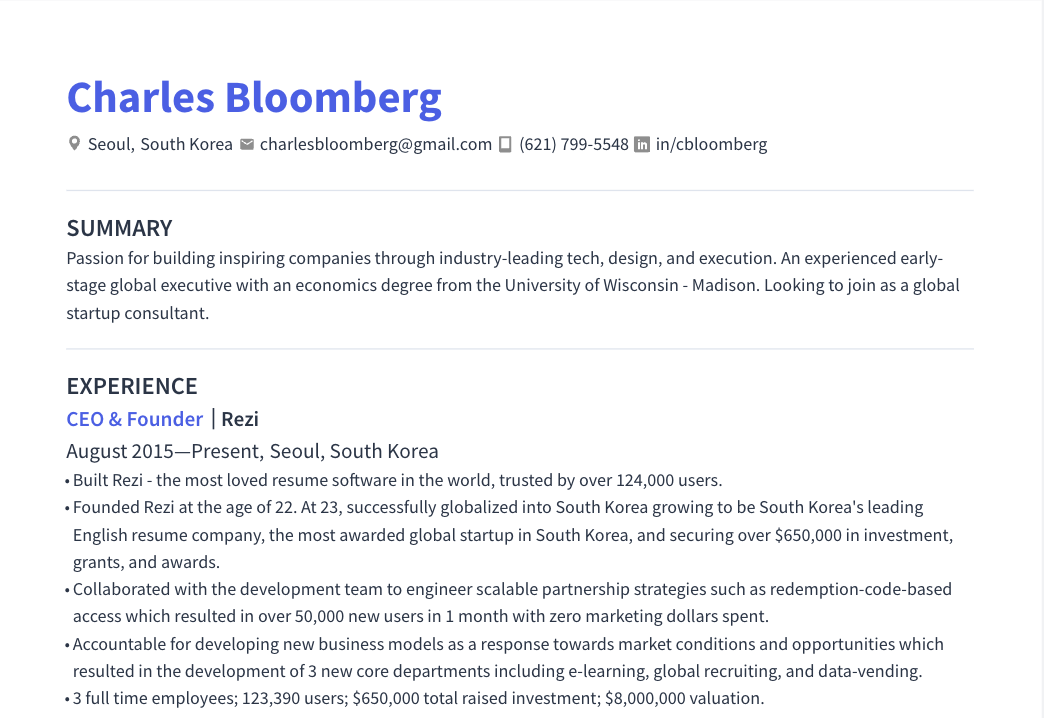
Impress employers and recruiters.
Choose from hundreds of resume examples.
Tailor your resume to this Software Engineer, AI Integration role.
Rezi rewrites your resume against Perimeter Medical Imaging AI's job description. Free.
Tailor your resume to this Software Engineer, AI Integration role.
Rezi rewrites your resume against Perimeter Medical Imaging AI's job description. Free.
Don't guess if your resume is good enough.
See how it scores against the Software Engineer, AI Integration posting at Perimeter Medical Imaging AI — free, in seconds.
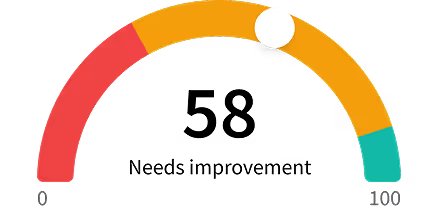
Don't guess if your resume is good enough.
See how it scores against the Software Engineer, AI Integration posting at Perimeter Medical Imaging AI — free, in seconds.
About the Role
Perimeter Medical Imaging AI is seeking a Software Engineer, AI Integration to integrate validated AI models and workflows into regulated medical device software. This role involves building, testing, and maintaining reliable software, collaborating with AI, Data, Systems, and Quality/Regulatory teams. The position focuses on hands-on delivery within a regulated medical device QMS environment, emphasizing well-tested Python development, AI automation, and regulatory compliance.
Responsibilities
- Design, implement, and maintain software features, interfaces, services, and internal engineering tools.
- Package and integrate validated AI models and data-processing components into product software and controlled engineering workflows.
- Develop robust interfaces between AI components, imaging systems, and other product software.
- Diagnose and resolve software defects across component and system boundaries.
- Participate in software design discussions, code reviews, technical planning, and release activities.
- Translate product and system needs into clear, testable software requirements and acceptance criteria.
- Develop and maintain unit, integration, regression, and system-level test automation.
- Support software verification and validation planning, protocols, execution, results, and defect resolution.
- Maintain requirements traceability and objective evidence throughout the software lifecycle.
- Work within Perimeter's Quality Management System, including design controls, risk management, configuration management, change control, and release documentation.
- Build and maintain reproducible pipelines for AI training, evaluation, packaging, versioning, and delivery.
- Improve traceability across source data, annotations, code, experiments, model versions, test results, and product releases.
- Automate cumbersome or repetitive engineering workflows while maintaining appropriate controls and review.
- Support data ingestion, OCT labelling infrastructure, clinical QA workflows, and internal developer tools.
- Maintain containerized development and deployment environments using tools such as Docker and applicable cloud services.
- Partner with AI scientists and research interns to move validated models and prototypes into tested, supportable product components.
- Partner with Systems and Quality and Regulatory teams to identify integration risks, support design reviews, and drive release readiness.
- Communicate technical decisions, risks, and trade-offs clearly to technical and non-technical stakeholders.
Requirements
- Bachelor's degree in Computer Science, Software Engineering, Biomedical Engineering, or a related technical field, or equivalent practical experience.
- 3+ years of hands-on software engineering experience building, testing, and maintaining production-quality systems.
- 3+ years of experience developing software within a medical device QMS or a comparably regulated environment.
- Practical experience with software requirements, traceability, risk controls, verification and validation, defect management, and release documentation.
- Familiarity with IEC 62304, ISO 13485, ISO 14971, or related medical device software and quality standards.
- Experience with ML lifecycle practices such as reproducible training pipelines, experiment tracking, dataset and model versioning, deployment, and monitoring preferred.
- Experience with PyTorch or TensorFlow and tools such as MLflow preferred.
- Experience working in Linux-based environments is a plus.
- Exposure to medical imaging, OCT, ultrasound, or histopathology, including frameworks such as MONAI or ITK, is a plus.
- Experience building internal dashboards, annotation tools, data tooling, or developer infrastructure is a plus.
- Experience with AWS, GCP, LambdaLabs or comparable cloud infrastructure is a plus.
Skills
- Strong proficiency in Python and the ability to write clean, maintainable, well-tested code.
- Proficiency and experience with C++.
- Experience with the Qt framework is a strong plus.
- Experience with unit, integration, regression, and automated testing.
- Experience with Git-based development, code review, automated build and test workflows, and containerization using Docker.
- Experience integrating software components, services, data pipelines, or machine-learning models.
- Strong debugging and problem-solving skills across complex systems.
- Clear written and verbal communication, and the ability to work effectively across multiple technical disciplines.
- Sound judgment in balancing delivery speed, automation, and regulatory controls.
Location
- Remote
Work Type
- Full-time
Experience Level
- 3+ years of hands-on software engineering experience
- 3+ years of experience developing software within a medical device QMS or a comparably regulated environment
Education Level
- Bachelor's degree in Computer Science, Software Engineering, Biomedical Engineering, or a related technical field, or equivalent practical experience.
About the Company
- Perimeter Medical Imaging AI is a medical technology company transforming cancer surgery with ultra-high-resolution, real-time imaging and AI-enabled technologies.
- Our mission is to advance the standard of care, improve patient outcomes, and reduce healthcare costs by giving surgeons enhanced visualization of microscopic tissue structures in the operating room.