Impress employers and recruiters.
Choose from hundreds of resume examples.
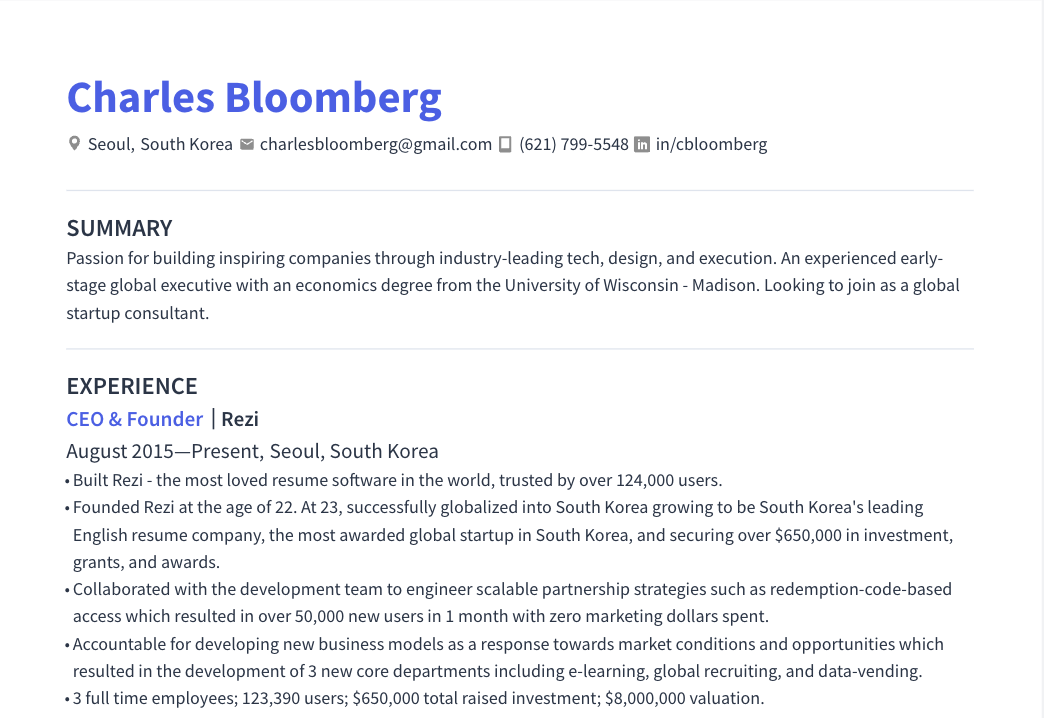
Impress employers and recruiters.
Choose from hundreds of resume examples.
Tailor your resume to this Data Scientist - Experimental Physics role.
Rezi rewrites your resume against Xanadu's job description. Free.
Tailor your resume to this Data Scientist - Experimental Physics role.
Rezi rewrites your resume against Xanadu's job description. Free.
Don't guess if your resume is good enough.
See how it scores against the Data Scientist - Experimental Physics posting at Xanadu — free, in seconds.
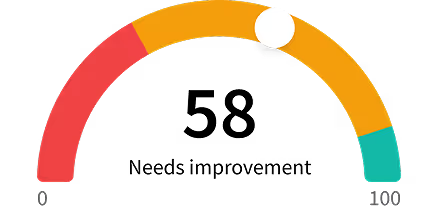
Don't guess if your resume is good enough.
See how it scores against the Data Scientist - Experimental Physics posting at Xanadu — free, in seconds.
About the Role
Join the cross-functional Data Analysis team to develop statistical models and measurement strategies that guide photonic component design. Partner with photonics designers and experimentalists to distinguish measurement uncertainty from fabrication variability and translate experimental data into actionable design decisions.
Responsibilities
- Develop statistical models to infer the characteristics of photonic devices from experimental datasets.
- Partner with photonics designers to develop measurement methods and test structures that distinguish competing explanations, reveal systematic errors, and improve parameter-estimation precision.
- Investigate reported uncertainties by finding and quantifying unknown systematics, building models to account for them, and devising methods to reduce errors.
- Build and maintain robust Python-based code to analyze measured data.
Requirements
- MSc or PhD in physics, statistics, applied mathematics, engineering, or a related quantitative discipline.
- At least two years of experience analyzing experimental or observational data to answer scientific or engineering questions (relevant graduate research counts toward this experience).
- Demonstrated ability to formulate statistical models connecting physical processes and measurement systems to observed data, identify dominant effects, and evaluate model assumptions.
- Strong applied knowledge of parameter estimation and uncertainty quantification, including identifying and modeling systematic effects, accounting for correlated errors, and propagating uncertainties into derived quantities.
- Experience solving inverse problems and assessing the reliability of inferred parameters through model diagnostics, sensitivity analysis, and validation against simulations or independent measurements.
- Experience designing or improving experiments, measurement procedures, or validation studies to distinguish competing explanations and reduce uncertainty.
- Proficiency in Python for scientific computing and data analysis, with experience developing reproducible, maintainable analysis code using version control, documentation, and appropriate tests.
- Ability to work with scientists and engineers across disciplines, translate open-ended hardware questions into tractable analyses, and communicate conclusions, limitations, and recommended next steps.
- Ability to prioritize work according to its expected impact on research and engineering decisions.
- Experience with hierarchical or multilevel models to distinguish sources of variation, such as measurement repeatability, device-to-device differences, and fabrication variability.
- Experience with Bayesian inference and computational methods such as Markov chain Monte Carlo, including assessing convergence and validating inference results.
- Experience with precision measurements, calibration, or metrology, including diagnosing systematic effects and using knowledge of the measurement apparatus to improve analysis.
- Familiarity with photonic integrated circuits, optical component characterization, semiconductor fabrication, or quantum optics.
- Experience turning research analyses into reusable software or automated workflows used by other scientists and engineers.
Skills
- Python
- Version control
- Documentation
- Testing
- Scientific computing
- Data analysis
- Statistical modeling
- Parameter estimation
- Uncertainty quantification
- Inverse problems
- Model diagnostics
- Sensitivity analysis
- Hierarchical models
- Bayesian inference
- Markov chain Monte Carlo
- Precision measurements
- Calibration
- Metrology
- Photonic integrated circuits
- Optical component characterization
- Semiconductor fabrication
- Quantum optics
- Software development
- Automated workflows
Location
- Remote
Work Type
- Full-time
Experience Level
- At least two years of experience
Education Level
- MSc or PhD
Salary/Compensations
- 100,000 - 140,000 CAD
Benefits
- Equity
About the Company
- Xanadu’s mission is to build quantum computers that are useful and available to people everywhere.
- At Xanadu, we are learners, innovators, researchers, collaborators and problem solvers.
- We are creating something that has never been built before.
- Few people in their life will be able to be a part of something like this, where if we are successful, the technologies we develop will solve some of the world’s most challenging problems, and literally change the world.
- Learn more about our values here. [https://xanadu.ai/values]
Equal Opportunity
- We are an equal opportunity employer and encourage candidates of all backgrounds to apply.
- We are committed to building an inclusive, safe, and equitable culture and fostering an environment where our employees feel included, valued, and heard.
- We are committed to meeting the needs of all individuals and support a barrier-free workplace.
- Should you require accommodations at any point during the recruitment process please contact Recruiting at recruiting@xanadu.ai.
- Please be advised that we may use artificial intelligence (AI) tools to assist in the screening and assessment of applicants for this position. These tools assist our recruitment team but do not replace human judgment. Final hiring decisions are ultimately made by humans. If you would like more information about how your data is processed, please contact us.