Impress employers and recruiters.
Choose from hundreds of resume examples.

Impress employers and recruiters.
Choose from hundreds of resume examples.
Tailor your resume to this Design Verification Engineer, Silicon role.
Rezi rewrites your resume against Meta's job description. Free.
Tailor your resume to this Design Verification Engineer, Silicon role.
Rezi rewrites your resume against Meta's job description. Free.
Don't guess if your resume is good enough.
See how it scores against the Design Verification Engineer, Silicon posting at Meta — free, in seconds.
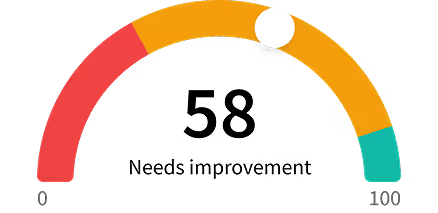
Don't guess if your resume is good enough.
See how it scores against the Design Verification Engineer, Silicon posting at Meta — free, in seconds.
About the Role
Meta Reality Labs is building custom silicon for next-generation AR/VR devices. As a Design Verification Engineer, you will ensure the quality of complex custom chips that enable immersive AR/VR experiences by developing and executing verification strategies for digital logic blocks and subsystems.
Responsibilities
- Develop and own verification plans for digital logic blocks, subsystems or SoCs within custom AR/VR and AI silicon, covering functional coverage, corner cases, and compliance requirements
- Design and implement constrained-random UVM testbenches to verify complex RTL designs including processors, interconnects, memory controllers, multimedia accelerators, AI accelerators and full SoCs
- Define and close functional coverage models and code coverage metrics to ensure thorough verification of design intent
- Collaborate with cross functional teams to define verification plans and close coverage
- Develop and maintain simulation infrastructure, regression frameworks, and automated test frameworks to support continuous integration of design changes
- Perform formal verification and property checking on critical design blocks to complement simulation-based verification
- Debug failing simulations and regressions by analyzing waveforms, log files, and RTL code to root-cause design or testbench issues
- Partner with post-silicon validation and firmware teams to develop pre-silicon test content that transitions to hardware bring-up
- Contribute to verification methodology improvements, including reusable verification collaterals and shared infrastructure across the silicon team
- Track and report verification progress, coverage closure status, and risk areas to design and program management stakeholders
Requirements
- Bachelor's degree in Computer Science, Computer Engineering, relevant technical field, or equivalent practical experience
- 6+ years of experience in digital design verification, including development of UVM-based constrained-random testbenches for RTL blocks, subsystems or SoCs
- 6+ years of experience with hardware description and verification languages including SystemVerilog and/or VHDL
- Experience with defining and closing functional coverage models and code coverage metrics for complex digital designs
- Experience with debugging RTL simulations using waveform analysis tools and log-based root-cause analysis
- Experience with scripting languages such as Python or Perl for test automation, regression management, or coverage analysis
Skills
- SystemVerilog
- VHDL
- UVM
- Python
- Perl
- Formal verification
- RTL simulation
- Waveform analysis
- HW/SW interoperability verification
- Firmware validation
- Post-silicon validation
- Hardware bring-up
- Low-power design verification
- Performance verification
- AI accelerators
- Security verification
- Interconnect verification
- Memory controller verification
- SoC verification
- Bare metal frameworks
Location
- Remote
Work Type
- Full-time
Experience Level
- 6+ years
Education Level
- Bachelor's degree
Salary/Compensations
- $146,000/year to $209,000/year
Benefits
- Bonus
- Equity
About the Company
- Meta Reality Labs is building custom silicon to power the next generation of augmented and virtual reality devices, including headsets and wearables.