Impress employers and recruiters.
Choose from hundreds of resume examples.
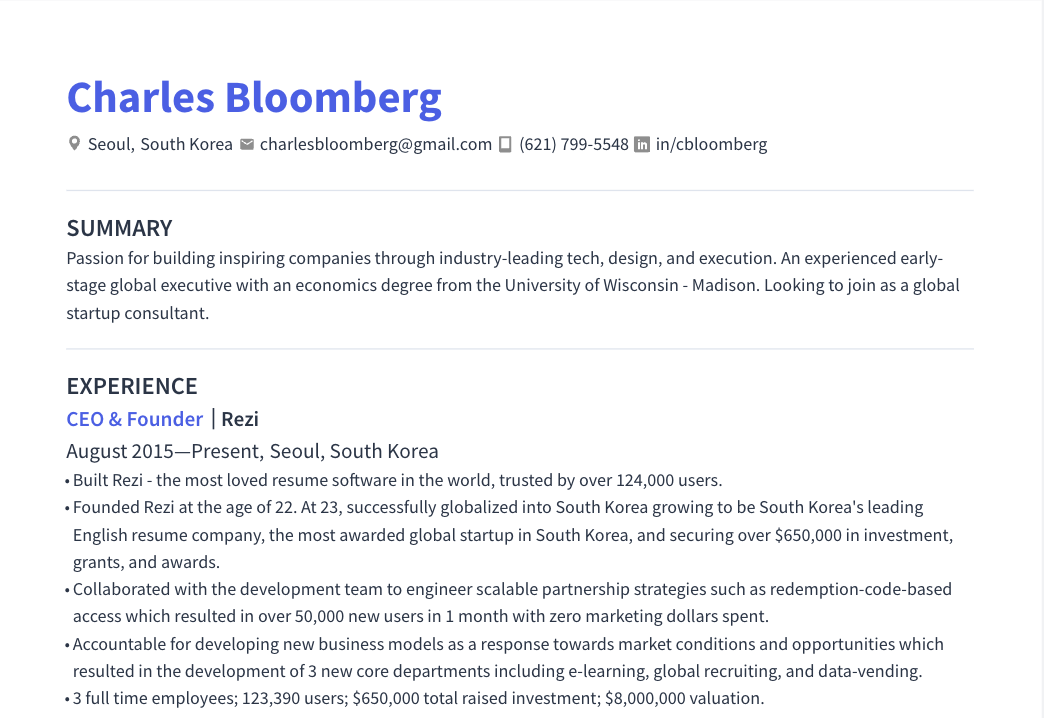
Impress employers and recruiters.
Choose from hundreds of resume examples.
Tailor your resume to this Data Scientist I Roslindale 24 hours role.
Rezi rewrites your resume against Hebrew SeniorLife's job description. Free.
Tailor your resume to this Data Scientist I Roslindale 24 hours role.
Rezi rewrites your resume against Hebrew SeniorLife's job description. Free.
Don't guess if your resume is good enough.
See how it scores against the Data Scientist I Roslindale 24 hours posting at Hebrew SeniorLife — free, in seconds.
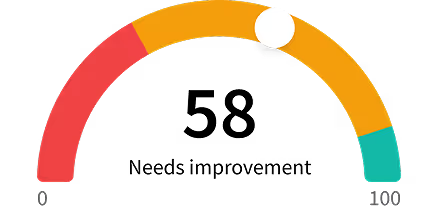
Don't guess if your resume is good enough.
See how it scores against the Data Scientist I Roslindale 24 hours posting at Hebrew SeniorLife — free, in seconds.
About the Role
Biomedical researcher with specialized training in quantitative methodology and a research focus on the biology of aging. This role involves managing, cleaning, harmonizing, and analyzing complex data structures, constructing visualizations, and contributing to the scientific direction of projects, particularly in the development and validation of epigenetic clocks and aging biomarkers.
Responsibilities
- Manages, cleans, harmonizes, and analyzes complex data structures, including DNA methylation and other multi-omic aging biomarker data.
- Constructs visualizations to depict trends and associations, conducts exploratory data analyses, and develops reports.
- Works within a biomedical research team to facilitate the production of scientific work product.
- Contributes to the scientific direction of projects by generating research questions, proposing study designs, and interpreting findings.
- Develops and applies algorithms for summary and analysis of complex, multi-dataset data structures.
- Conducts statistical analysis for assessment of association and in service of causal inference.
- Participates in the design and development of custom software and reproducible analysis pipelines.
- Provides data analytic support to ongoing aging studies.
- Contributes to funding applications and provides on-demand assistance with data analysis and interpretation.
- Provide data management, manipulation, cleaning, and analysis support for biomedical aging research projects.
- Contribute to study design, including selection of cohorts, outcomes, and validation strategies.
- Participate as a team member in development of algorithms and software tools.
- Generate analysis pipelines and automated functions for repetitive summaries and analyses.
- Develop and present reports of analytic findings.
- Lead or co-lead the development of abstracts and manuscripts, contribute to funding applications, and present findings internally and at scientific meetings.
- Maintain current knowledge of the geroscience and biomarker literature and propose new analyses or research directions.
Requirements
- Familiarity with statistical analysis, software development, visualization, algorithm development, supervised and unsupervised learning, and predictive analytics.
- Advanced skills in data management, manipulation, and summarization are critical, particularly for harmonizing DNA methylation and other omics datasets across multiple cohorts.
- Skills in natural language processing and emerging AI-assisted data harmonization tools are a plus.
- Existing, or ability to develop, comfort with rigorous version control and the principles of reproducible research are required.
- The ability to work in a team-based research environment is essential.
- Ability to manage, manipulate and clean complex multi-omic data structures.
- Ability to conduct statistical, machine learning and predictive analyses including benchmarking and validation of aging biomarkers.
- Ability to formulate research questions and testable hypotheses in aging biology, and to design analyses that address them.
- Ability to write and publish peer-reviewed scientific manuscripts from analysis to submission and revision.
- Ability to organize analytic tasks and documentation files in a rigorous and reproducible fashion.
- Ability to develop exploratory analyses and analytic summaries in visual and written form.
- Ability to speak and present in English to communicate scientific results.
- Ability to work collaboratively within multidisciplinary teams.
- Requires a doctoral degree in a quantitative biomedical science field such as bioinformatics, biostatistics, quantitative epidemiology, computational neuroscience, statistical genetics, econometrics, systems biology, or data science.
- At least 2 years of experience as a professional quantitative scientist (postdoctoral research training in a related quantitative field will satisfy this requirement).
- Experience equivalent to academic training may be substituted in relevant cases.
- Knowledge of statistical and quantitative modeling (regression / GLM / GAM, simulation, cluster analysis, neural networks, decision trees, bagging, boosting, dynamical systems modeling, etc.).
- Demonstrated proficiency in R and/or Python for large-scale DNA methylation and other omics data processing.
- Experience developing and maintaining harmonized, multi-dataset analytic platforms, and benchmarking or validating aging biomarkers across cohorts, is highly valued.
- Experience contributing to team leadership in quantitative analysis or machine learning is helpful.
- Specialized training and experience in more than one quantitative programming language (R/Python/Matlab) is essential.
- Experience with database technologies (SQL, REDCap) is helpful.
- Familiarity with emerging AI-agent-based and foundation-model approaches to biomedical data harmonization is a plus.
- Experience with web services and distributed computing tools is preferred.
- Experience using high performance computing systems running Linux or UNIX OS and experience with cloud-computing platforms such as Amazon Web Services (AWS) or Google Cloud are a plus.
- The ability to acquire new knowledge and skills to be able to perform analytical tasks using newly developed statistical methods/tools is of utmost importance.
- A passion for work in biomedical science and hands-on experience in aging and geroscience research, including epigenetic clocks or multi-omic aging biomarkers, are strongly preferred.
- Ability to work simultaneously on multiple projects with strict attention to detail.
- Ability to work independently as well as part of a team.
- A sustained record of peer-reviewed publication, including first-author work.
- Strong oral and written English language skills.
Skills
- Quantitative methodology
- Data management
- Data cleaning
- Data harmonization
- Data analysis
- DNA methylation data analysis
- Multi-omic data analysis
- Aging biomarker analysis
- Data visualization
- Exploratory data analysis
- Report development
- Scientific communication
- Algorithm development
- Software development
- Reproducible research
- Statistical analysis
- Machine learning
- Predictive analytics
- Benchmarking
- Validation
- Epigenetic clock development
- Causal inference
- Natural language processing
- AI-assisted data harmonization
- Version control
- R
- Python
- Matlab
- SQL
- REDCap
- Web services
- Distributed computing
- High performance computing
- Linux
- UNIX
- Amazon Web Services (AWS)
- Google Cloud
Work Type
- Hybrid
Experience Level
- At least 2 years of experience as a professional quantitative scientist
Education Level
- Doctoral degree in a quantitative biomedical science field
Salary/Compensations
- $67,133.00 - $100,699.00