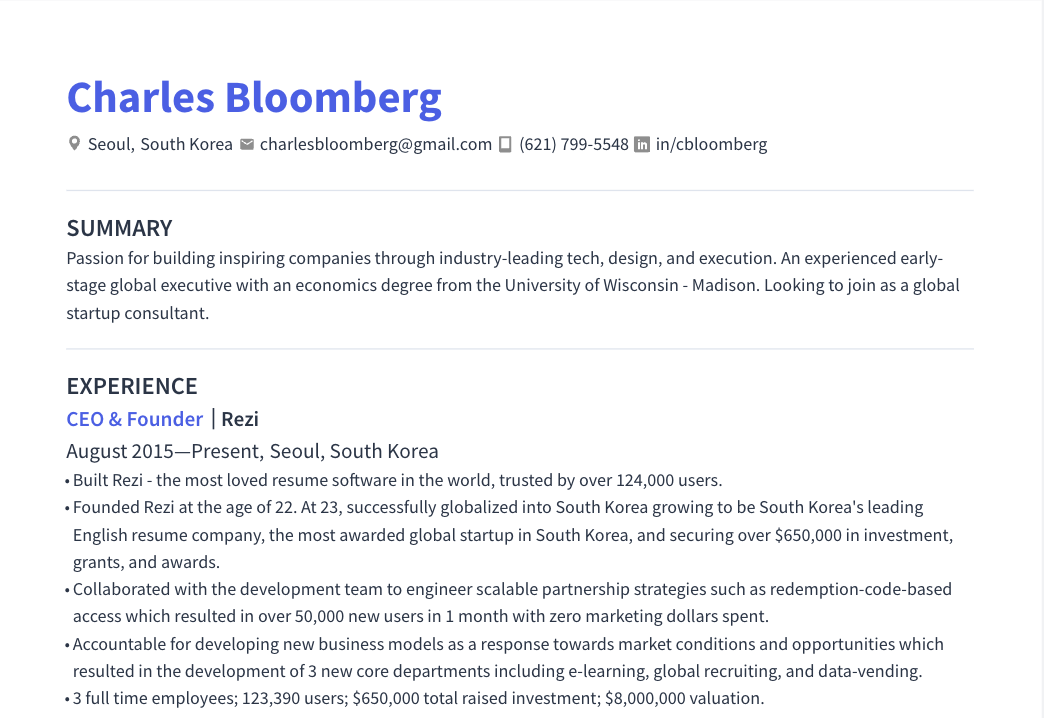
Impress employers and recruiters.
Choose from hundreds of resume examples.
Impress employers and recruiters.
Choose from hundreds of resume examples.
Tailor your resume to this Associate Applied AI - Deep Learning/Time Series role.
Rezi rewrites your resume against Goldman Sachs's job description. Free.
Tailor your resume to this Associate Applied AI - Deep Learning/Time Series role.
Rezi rewrites your resume against Goldman Sachs's job description. Free.
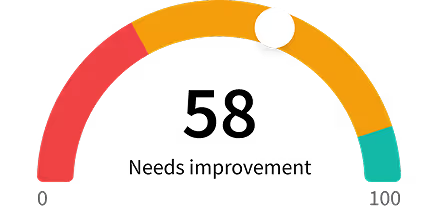
Don't guess if your resume is good enough.
See how it scores against the Associate Applied AI - Deep Learning/Time Series posting at Goldman Sachs — free, in seconds.
Don't guess if your resume is good enough.
See how it scores against the Associate Applied AI - Deep Learning/Time Series posting at Goldman Sachs — free, in seconds.
About the Role
We are seeking a deeply hands-on researcher to lead the design, training, and evaluation of deep learning models for financial time series. This is an individual contributor role for someone who is equally comfortable deriving a likelihood, writing a distributed training loop across a multi-node GPU cluster, and defending an evaluation methodology to a room of quantitative researchers. You will own research problems end-to-end: framing the question, curating and engineering the data, designing the model architecture, running large-scale training experiments, building the evaluation harness, and partnering with quant and engineering teams to bring models into production. Because our output serves multiple desks and asset classes, you will be expected to build models and abstractions that generalize — not one-off solutions. This is a fast-moving research space. You thrive in ambiguity, you are skeptical of results that look too good, and you bring the same rigor to evaluation methodology that you bring to model design.
Responsibilities
- Design, implement, and train modern deep learning architectures for forecasting, representation learning, and generative modelling of financial time series.
- Build and benchmark against specialized sequence architectures and rigorously baseline them against classical econometric methods.
- Own large-scale model training across the firm's GPU clusters and cloud compute environment.
- Optimize inference through quantization, distillation, and ONNX-based deployment paths.
- Build robust evaluation frameworks tailored to financial data.
- Partner with quantitative researchers and strategists across desks on alpha research, signal generation, portfolio optimization, and backtesting.
- Contribute reusable models, datasets, benchmarks, and tooling to a shared research platform.
- Mentor junior researchers and engineers, review research designs and code, and present findings to senior technical and business stakeholders.
- Ensure all models adhere to the firm's model risk management, data privacy, ethics, and safety standards, with full documentation, lineage, and auditability.
Requirements
- A Bachelor's, Master's, or Ph.D. degree in Computer Science, Machine Learning, Statistics, Mathematics, Physics, Electrical Engineering, Quantitative Finance, or a related quantitative discipline.
- A minimum of 3+ years of industry experience building, training, and deploying deep learning models, with a substantial portion focused on sequential or time series data.
- Deep expertise across modern deep learning architectures: CNNs and TCNs, Transformers, autoencoders, GANs, diffusion models, GNNs, Bayesian methods, and reinforcement learning.
- Strong working knowledge of classical time series and econometric modelling — ARIMA, GARCH, Kalman filtering, state space models — and clear judgment on when deep learning does and does not beat them.
- Practical experience with modern time series architectures such as WaveNet, N-BEATS / N-HiTS, DeepAR, PatchTST, or Time Series Foundation Models.
- Expert-level Python and deep proficiency in PyTorch, TensorFlow / Keras and/or JAX / Flax.
- Demonstrated experience with distributed and accelerated training (DDP, FSDP, multi-node GPU training) and model export and optimization workflows including ONNX.
- Rigorous foundations in statistics, probability, stochastic processes, optimization, and signal processing.
- Excellent oral and written communication skills, with the ability to articulate research trade-offs to both PhD researchers and non-technical business stakeholders.
- Comfort operating in a quickly evolving environment with a high degree of ambiguity and rapid change.
- Publications at top-tier venues such as NeurIPS, ICML, ICLR, AISTATS, or KDD, or in leading quantitative finance journals.
- Prior machine learning or data science experience at a hedge fund, asset manager, proprietary trading firm, or systematic trading desk.
- Experience across multiple asset classes — equities, fixed income, FX, commodities, or multi-asset.
- Familiarity with Bayesian deep learning, probabilistic programming, or conformal prediction for uncertainty quantification.
- Experience with cloud platforms and containerized training environments (AWS, Kubernetes, Docker).
- Exposure to model risk management or regulatory frameworks in financial services.
- Contributions to open-source machine learning or time series libraries.
Skills
- Deep learning
- Financial time series
- Sequence modelling
- Probabilistic forecasting
- CNNs
- Temporal convolutional networks
- Transformers
- Attention-based sequence models
- Autoencoders
- GANs
- Diffusion models
- Graph neural networks
- Bayesian networks
- Reinforcement learning
- WaveNet
- N-BEATS / N-HiTS
- DeepAR
- PatchTST
- Time Series Foundation Models (TSFMs)
- ARIMA
- GARCH
- Kalman filters
- State space models
- Distributed data parallel (DDP)
- Fully sharded data parallel (FSDP)
- Mixed precision
- Hyperparameter search
- Experiment tracking
- Quantization
- Distillation
- ONNX
- Walk-forward and purged cross-validation
- Embargo periods
- Regime-conditional analysis
- Uncertainty quantification and calibration
- Ablations
- Significance testing
- Alpha research
- Signal generation
- Portfolio optimization
- Backtesting
- Model risk management
- Data privacy
- Ethics
- Safety standards
- Python
- PyTorch
- TensorFlow / Keras
- JAX / Flax
- Statistics
- Probability
- Stochastic processes
- Optimization
- Signal processing
- Cloud platforms
- Containerized training environments
- AWS
- Kubernetes
- Docker
- Bayesian deep learning
- Probabilistic programming
- Conformal prediction
Location
- New York, NY
Work Type
- Full-time
Experience Level
- Associate
- 3+ years of industry experience
Education Level
- Bachelor's degree
- Master's degree
- Ph.D. degree
Salary/Compensations
- $100,000-$200,000
Benefits
- Discretionary bonus
- Training and development opportunities
- Firmwide networks
- Wellness and personal finance offerings
- Mindfulness programs
About the Company
- At Goldman Sachs, our Engineers don't just make things – we make things possible. Change the world by connecting people and capital with ideas. Solve the most challenging and pressing engineering problems for our clients. Join our engineering teams that build massively scalable software and systems, architect low latency infrastructure solutions, proactively guard against cyber threats, and leverage machine learning alongside financial engineering to continuously turn data into action. Create new businesses, transform finance, and explore a world of opportunity at the speed of markets.
- Engineering, which is comprised of our Technology Division and global strategists groups, is at the critical center of our business, and our dynamic environment requires innovative strategic thinking and immediate, real solutions.
- The AI Research group is the firm's dedicated research organization, operating at the intersection of frontier machine learning and quantitative finance.
- We build, train, and rigorously evaluate deep learning models on some of the richest financial time series data in the industry — market microstructure, cross-asset pricing, macroeconomic indicators, transaction flows, and alternative data.
- Our mandate is to advance the state of the art in sequence modelling and probabilistic forecasting for noisy, non-stationary, low signal-to-noise financial data, and to deliver that research as a firmwide platform that quantitative researchers, strategists, and engineering teams across the organization can build on.
- We operate with research rigor and engineering discipline — every model we ship is reproducible, benchmarked against strong baselines, and evaluated under realistic out-of-sample and out-of-regime conditions.
- At Goldman Sachs, we commit our people, capital and ideas to help our clients, shareholders and the communities we serve to grow. Founded in 1869, we are a leading global investment banking, securities and investment management firm. Headquartered in New York, we maintain offices around the world.
Equal Opportunity
- We believe who you are makes you better at what you do. We're committed to fostering and advancing diversity and inclusion in our own workplace and beyond by ensuring every individual within our firm has a number of opportunities to grow professionally and personally, from our training and development opportunities and firmwide networks to benefits, wellness and personal finance offerings and mindfulness programs.
- We’re committed to finding reasonable accommodations for candidates with special needs or disabilities during our recruiting process. Learn more: https://www.goldmansachs.com/careers/footer/disability-statement.html