Impress employers and recruiters.
Choose from hundreds of resume examples.
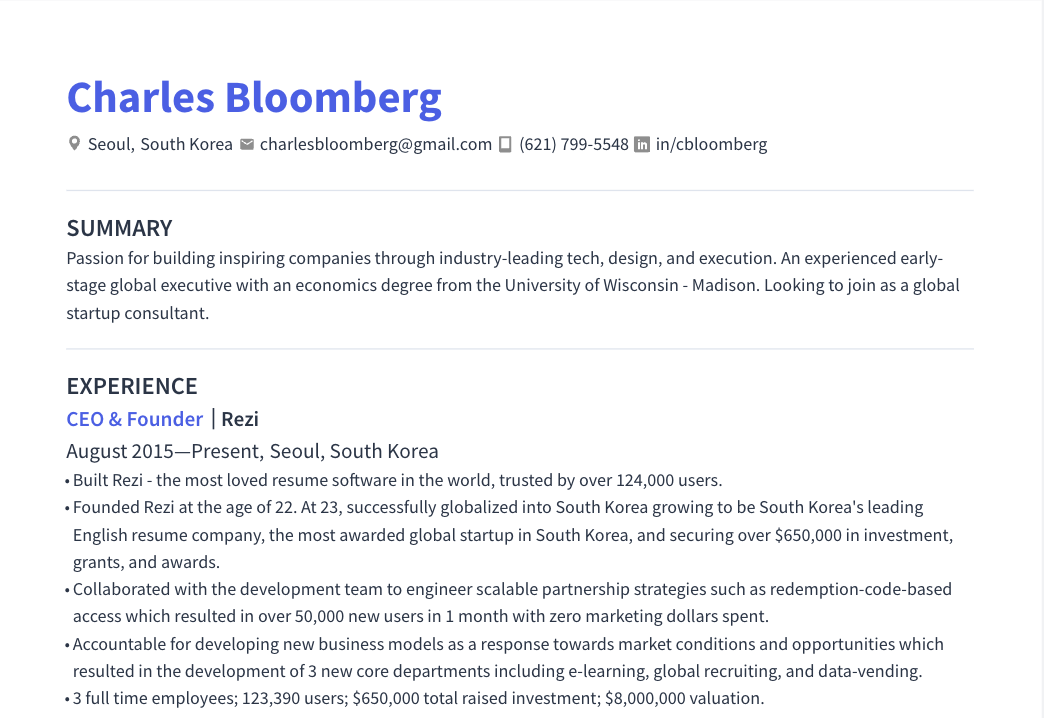
Impress employers and recruiters.
Choose from hundreds of resume examples.
Tailor your resume to this Decision Support Data Scientist role.
Rezi rewrites your resume against HP's job description. Free.
Tailor your resume to this Decision Support Data Scientist role.
Rezi rewrites your resume against HP's job description. Free.
Don't guess if your resume is good enough.
See how it scores against the Decision Support Data Scientist posting at HP — free, in seconds.
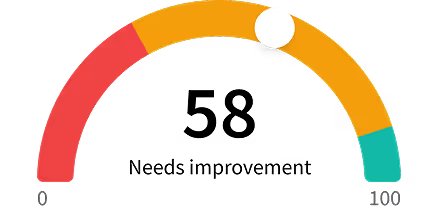
Don't guess if your resume is good enough.
See how it scores against the Decision Support Data Scientist posting at HP — free, in seconds.
About the Role
HP is seeking a Decision Support Data Scientist to apply advanced analytics, statistical methods, and decision science to complex supply chain planning problems. The role focuses on translating planning challenges into structured analytical problems, diagnosing performance drivers, evaluating scenarios and trade-offs, and developing evidence-based recommendations to improve planning decisions. This is a hands-on analytical role positioned between supply chain planning and technical data science, requiring strong quantitative problem-solving skills and the ability to communicate analytical conclusions clearly to both technical and business stakeholders.
Responsibilities
- Translate complex and sometimes ambiguous supply chain planning challenges into structured analytical problems.
- Define the decisions to be made, relevant objectives, constraints, assumptions, uncertainties and measures of success.
- Develop hypotheses and analytical approaches to investigate planning problems and identify underlying drivers.
- Determine the appropriate analytical methodology based on the business problem rather than applying predefined tools or techniques.
- Work with planning stakeholders to understand operational context and ensure analytical approaches reflect real-world business constraints.
- Analyze large and complex supply chain datasets using Python, SQL and statistical techniques.
- Conduct diagnostic and root-cause analyses across demand, supply, inventory, forecast performance and planning processes.
- Identify relationships, patterns and drivers that explain planning performance and business outcomes.
- Establish analytical baselines and compare performance across products, markets, segments and time horizons.
- Apply appropriate statistical methods to distinguish meaningful business signals from normal operational variation.
- Develop clear analytical narratives that explain what happened, why it happened and what actions should be considered.
- Develop and evaluate planning scenarios to support decisions involving inventory, supply availability, demand uncertainty, cost, responsiveness and operational risk.
- Conduct what-if, sensitivity and trade-off analyses to evaluate alternative planning strategies.
- Quantify the expected benefits, risks and consequences associated with different courses of action.
- Evaluate decisions under uncertainty and identify assumptions or conditions that materially change the recommended action.
- Develop repeatable decision frameworks for recurring planning problems.
- Support planners and business leaders in understanding available options and making evidence-based decisions.
- Translate analytical findings into clear and actionable recommendations.
- Develop recommendations based on quantitative evidence, business constraints, uncertainty and trade-offs rather than reporting analytical results alone.
- Present scenarios, assumptions, alternatives, risks and expected outcomes clearly to business stakeholders.
- Work with Planning Decision Science leaders to challenge and refine recommendations before implementation.
- Track the outcomes of implemented recommendations and compare realised results against expected benefits.
- Use observed outcomes to improve future analytical approaches and decision frameworks.
- Collaborate with Data Science teams developing forecasting, optimisation, simulation and predictive models.
- Translate planning and decision requirements into analytical and modelling requirements.
- Understand and critically evaluate model outputs, assumptions, limitations and business implications.
- Conduct business validation of model recommendations against operational constraints and planning objectives.
- Identify situations where predictive modelling, optimisation, simulation or other advanced analytical techniques could materially improve decision quality.
- Integrate outputs from technical models into broader business recommendations and decision frameworks.
- Partner with Data Scientists on experimentation and analytical prototypes where appropriate.
- Develop analytical solutions using Python, SQL and other quantitative tools.
- Build reusable analytical methodologies, scenario models and decision-support frameworks.
- Perform data preparation, feature analysis, statistical testing and exploratory modelling required to support planning decisions.
- Prototype analytical approaches before handing repeatable technical requirements to Data Science or Analytics Automation teams where appropriate.
- Collaborate with Analytics Automation teams to operationalise recurring analytical workflows into scalable tools, applications or automated processes.
- Maintain appropriate analytical documentation, assumptions and quality controls.
- Work closely with regional and global supply chain planning stakeholders to understand business challenges and decision requirements.
- Collaborate across Planning Decision Science & Analytics, Data Science, Analytics Automation and Portfolio & Adoption teams.
- Communicate complex quantitative findings clearly to technical and non-technical stakeholders.
- Challenge assumptions constructively and use evidence to influence planning decisions.
- Support continuous improvement of planning processes, analytical capabilities and decision-making practices.
Requirements
- Bachelor's or Master's degree in Data Science, Statistics, Applied Mathematics, Operations Research, Industrial Engineering, Computer Science, Supply Chain Analytics, Engineering or a related quantitative discipline.
- Typically 4–7 years of relevant experience in data science, decision science, advanced analytics, operations research, supply chain analytics or another quantitative analytical function.
- Demonstrated experience independently analysing complex datasets and translating analytical findings into business recommendations.
- Experience structuring ambiguous business problems and determining appropriate analytical approaches.
- Strong quantitative and statistical problem-solving capabilities.
- Demonstrated ability to evaluate alternatives, quantify trade-offs and communicate recommendations to business stakeholders.
- Experience applying analytics to business or operational decision-making.
- Supply chain planning experience is strongly preferred, particularly within demand planning, supply planning, inventory management or supply-demand balancing.
- Understanding of common planning trade-offs involving inventory, availability, service, cost, responsiveness and risk.
- Experience within technology, electronics, semiconductor, manufacturing or another complex global supply chain environment is advantageous.
- Familiarity with enterprise planning platforms such as SAP, Kinaxis, o9, Blue Yonder or equivalent is advantageous.
Skills
- Decision Science
- Structured Problem Solving
- Statistical & Quantitative Analysis
- Scenario & Sensitivity Analysis
- Trade-off Analysis
- Data Science
- Supply Chain Analytics
- Business Acumen
- Analytical Communication
- Critical Thinking
- Stakeholder Management
- Cross-Functional Collaboration
- Learning Agility
- Python
- SQL
- Pandas
- NumPy
- SciPy
- Scikit-learn
- Statistical analysis
- Hypothesis testing
- Quantitative modelling
- Scenario modelling
- Sensitivity analysis
- Simulation
- Predictive modelling
- Machine-learning concepts
- Data visualisation
- Power BI
- Tableau
- Optimisation
- Operations research
- Mathematical modelling
- Git
Location
- Singapore
Work Type
- Full time
Experience Level
- 4-7 years
Education Level
- Bachelor's or Master's degree in Data Science, Statistics, Applied Mathematics, Operations Research, Industrial Engineering, Computer Science, Supply Chain Analytics, Engineering or a related quantitative discipline.
About the Company
- HP, Inc. provides equal employment opportunity to all employees and prospective employees, without regard to race, color, religion, sex, national origin, ancestry, citizenship, sexual orientation, age, disability, or status as a protected veteran, marital status, familial status, physical or mental disability, medical condition, pregnancy, genetic predisposition or carrier status, uniformed service status, political affiliation or any other characteristic protected by applicable national, federal, state, and local law(s).
Equal Opportunity
- HP, Inc. provides equal employment opportunity to all employees and prospective employees, without regard to race, color, religion, sex, national origin, ancestry, citizenship, sexual orientation, age, disability, or status as a protected veteran, marital status, familial status, physical or mental disability, medical condition, pregnancy, genetic predisposition or carrier status, uniformed service status, political affiliation or any other characteristic protected by applicable national, federal, state, and local law(s).
- Please be assured that you will not be subject to any adverse treatment if you choose to disclose the information requested.
- This information is provided voluntarily.
- The information obtained will be kept in strict confidence.
- For more information, review HP’s EEO Policy or read about your rights as an applicant under the law here: “Know Your Rights: Workplace Discrimination is Illegal"