Impress employers and recruiters.
Choose from hundreds of resume examples.
Impress employers and recruiters.
Choose from hundreds of resume examples.
Tailor your resume to this Software Enabling and Optimization Engineer role.
Rezi rewrites your resume against Intel Corporation's job description. Free.
Tailor your resume to this Software Enabling and Optimization Engineer role.
Rezi rewrites your resume against Intel Corporation's job description. Free.
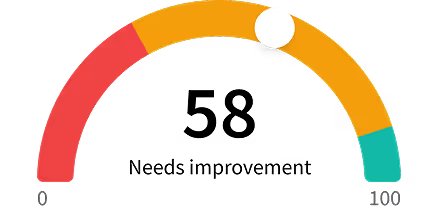
Don't guess if your resume is good enough.
See how it scores against the Software Enabling and Optimization Engineer posting at Intel Corporation — free, in seconds.
Don't guess if your resume is good enough.
See how it scores against the Software Enabling and Optimization Engineer posting at Intel Corporation — free, in seconds.
About the Role
As a Software Enabling and Optimization Engineer, you will develop, validate, and optimize software components for Intel Open Edge platforms (OEP). You will collaborate with cross-functional teams to enable robotics and AI applications on ODM platforms, ensuring smooth integration and optimal performance on Intel Architecture systems.
Responsibilities
- Deploy and debug issues with OEP software components for seamless functionality on Intel architecture systems for physical AI and edge AI.
- Design, develop, and optimize AI applications (e.g., physical AI, generative AI, visual analytics) to highlight Intel Edge Platform capabilities.
- Provide edge customers with sample codes, demos, technical documentation, and installation guidance for OEP components.
- Troubleshoot and resolve software installation issues within Linux environments.
- Offer technical guidance to optimize AI pipelines for efficient operation across Intel platforms, including CPUs, GPUs, and NPUs.
- Support customers across the APJ region, delivering high-quality solutions and technical services.
- Analyze AI application benchmark reports and provide comparative insights to emphasize Intel's competitive advantages.
- Address real-time processing needs for robotics and physical AI applications.
Requirements
- Bachelor's degree in computer science or related field with 3+ years of relevant experience, OR Master's degree in computer science or related field with 2+ years of relevant experience, OR PhD in computer science with no prior professional experience.
- Proficiency in programming languages such as Python, Node.js, JavaScript, and shell scripting.
- Hands-on experience in troubleshooting within Linux environments.
- Strong understanding of AI tools and domains, including OpenCV, GStreamer, ROS programming, and physical AI applications.
- Experience with version control systems and open-source platforms, such as Git and GitHub.
- Familiarity with Intel software components like OpenVINO and DL Streamer.
- Knowledge of AI benchmarking activities and ability to interpret benchmark reports for competitive analysis.
- Understanding of real-time protocols such as RTSP, TCC, and TSN for robotics applications.
- Strong problem-solving skills and attention to detail.
- Proactive communication and collaboration skills to work effectively across teams.
Skills
- Python
- Node.js
- JavaScript
- Shell scripting
- Linux
- OpenCV
- GStreamer
- ROS programming
- Physical AI
- Git
- GitHub
- OpenVINO
- DL Streamer
- RTSP
- TCC
- TSN
Location
- South Korea, Seoul
Work Type
- On-site
Experience Level
- Experienced Hire
Education Level
- Bachelor's degree
- Master's degree
- PhD
About the Company
- The Software and Solutions Group focuses on driving innovation and delivering cutting-edge solutions across domains such as AI, cloud, edge computing, and high-performance computing.
- By developing software tools and optimizations that unlock the full potential of Intel products, the group fosters ecosystem adoption and differentiation.
- Joining this team offers the opportunity to contribute to Intel's mission of enabling breakthrough technologies and shaping the future of computing.
Equal Opportunity
- All qualified applicants will receive consideration for employment without regard to race, color, religion, religious creed, sex, national origin, ancestry, age, physical or mental disability, medical condition, genetic information, military and veteran status, marital status, pregnancy, gender, gender expression, gender identity, sexual orientation, or any other characteristic protected by local law, regulation, or ordinance.