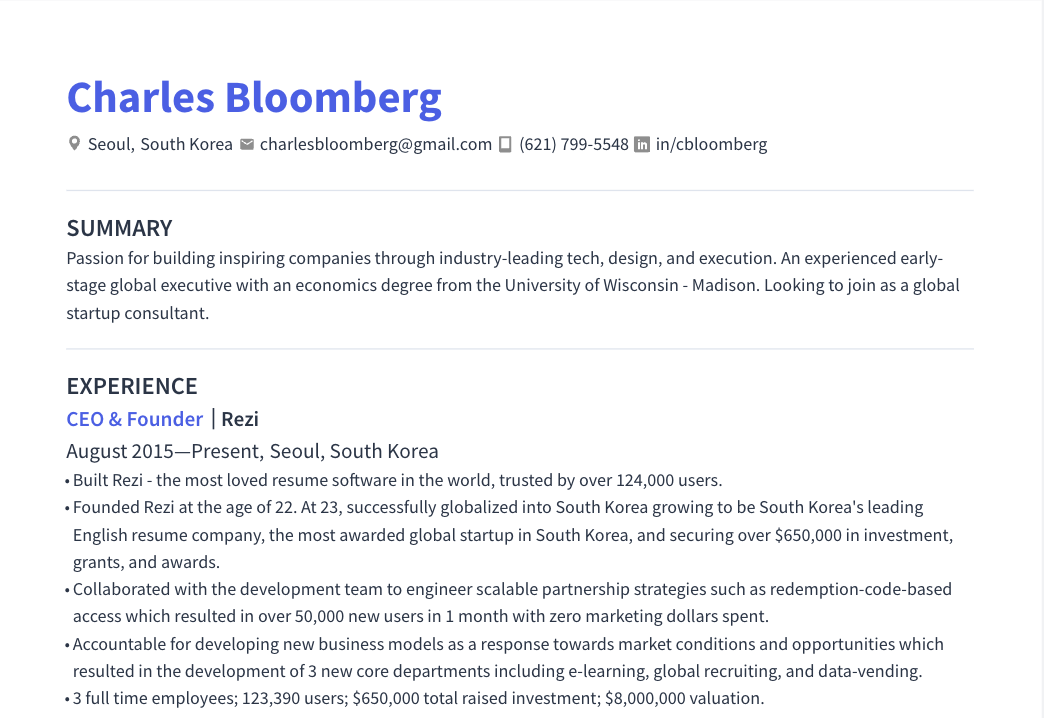
Impress employers and recruiters.
Choose from hundreds of resume examples.
Impress employers and recruiters.
Choose from hundreds of resume examples.
Tailor your resume to this Postdoctoral Associate | Vertebrate Genome Laboratory role.
Rezi rewrites your resume against Rockefeller University's job description. Free.
Tailor your resume to this Postdoctoral Associate | Vertebrate Genome Laboratory role.
Rezi rewrites your resume against Rockefeller University's job description. Free.
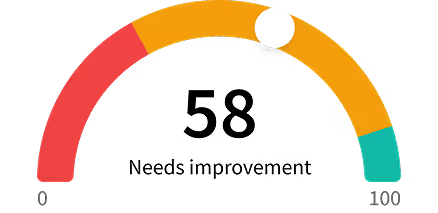
Don't guess if your resume is good enough.
See how it scores against the Postdoctoral Associate | Vertebrate Genome Laboratory posting at Rockefeller University — free, in seconds.
Don't guess if your resume is good enough.
See how it scores against the Postdoctoral Associate | Vertebrate Genome Laboratory posting at Rockefeller University — free, in seconds.
About the Role
The Vertebrate Genome Laboratory (VGL) at The Rockefeller University seeks a Postdoctoral Associate with expertise in conservation genomics, population genetics, and computational biology to join GAIA—Genomic Artificial Intelligence Applications. This initiative aims to develop next-generation AI systems for genome assembly and conservation decision-making, focusing on building an AI Genome Curation Assistant and an AI system for assessing extinction risk and generating genetic-rescue strategies. The role involves applying genomic research to biodiversity conservation and species recovery, guiding the technical development, validation, and application of these AI systems.
Responsibilities
- Lead computational analyses in population, evolutionary, and conservation genomics across non-human species.
- Identify biologically meaningful questions, genomic features, and conservation use cases to guide GAIA tool development and evaluation.
- Review and synthesize historical applications of genomic data in conservation, linking evidence, interventions, and outcomes.
- Develop and apply methods to quantify genomic diversity, heterozygosity, runs of homozygosity, demographic history, effective population size, genetic load, deleterious variation, population structure, and signatures of selection or adaptation, with emphasis on AI interpretability.
- Integrate chromosome-level reference genomes with population resequencing, functional annotation, ecological, phenotypic, demographic, and conservation-status data.
- Organize, curate, and evaluate genomic datasets for GAIA systems.
- Critically assess the biological validity, robustness, uncertainty, and interpretability of AI model outputs.
- Compare conclusions from individual reference genomes with population-level datasets and identify needs for additional sampling.
- Develop real-world conservation-genomics case studies in collaboration with partners.
- Translate genomic findings into scientifically rigorous and practically useful interpretations for conservation researchers and practitioners.
- Work closely with machine-learning scientists, software engineers, genome-assembly specialists, and conservation biologists.
- Contribute to scientific manuscripts, conservation-genomics reports, software and data releases, presentations, and collaborative grant activities.
- Mentor junior researchers and contribute to the broader scientific activities of the VGL, GAIA, the Vertebrate Genomes Project, and the Earth BioGenome Project.
Requirements
- Ph.D. or equivalent degree in non-human population genetics, conservation genomics, evolutionary genomics, computational biology, bioinformatics, or a related field.
- Strong research experience in the analysis of genomic variation within or among non-human populations.
- Demonstrated knowledge of population-genetic and evolutionary-genomic theory and methods.
- Experience working with genome assemblies, whole-genome resequencing data, genomic variants, and functional annotations.
- Proficiency in at least one scientific programming language, preferably Python or R.
- Experience developing reproducible computational workflows in Linux and high-performance or cloud-computing environments.
- Strong quantitative, analytical, and scientific-writing skills.
- A record of scientific productivity appropriate to the candidate’s career stage.
- Ability to work effectively in a highly interdisciplinary and cross-institutional collaborative environment.
- Research experience in conservation genetics or genomics involving threatened, endangered, managed, or non-model species, and ability to work in large, multispecies projects.
- Experience estimating demographic history, inbreeding, genetic load, effective population size, population structure, gene flow, or adaptive variation.
- Experience integrating genomic data with ecological, environmental, phenotypic, geographic, or life-history information.
- Familiarity with long-read genome assemblies, telomere-to-telomere genomes, genome annotation, comparative genomics, or pangenomics.
- Experience with commonly used population-genomics and variant-analysis tools and workflows.
- Familiarity with conservation-management frameworks, genetic rescue, population viability, or recovery planning.
- Experience collaborating with field biologists, wildlife agencies, zoos, biobanks, conservation organizations, or species-recovery teams.
- Interest in evaluating or interpreting machine-learning models, multimodal datasets, or foundation-model outputs.
- Experience communicating complex genomic findings to collaborators without specialized computational or genomics training.
- Experience with systematic reviews, evidence synthesis, meta-analysis, or the development of structured datasets linking conservation interventions to biological or management outcomes.
Skills
- Conservation genomics
- Population genetics
- Computational biology
- Genomic variation analysis
- Population-genetic theory
- Evolutionary-genomic theory
- Genome assemblies
- Whole-genome resequencing data analysis
- Genomic variant analysis
- Functional annotation
- Scientific programming (Python or R)
- Linux
- High-performance computing
- Cloud computing
- Quantitative analysis
- Analytical skills
- Scientific writing
- Demographic history estimation
- Inbreeding estimation
- Genetic load estimation
- Effective population size estimation
- Population structure analysis
- Gene flow analysis
- Adaptive variation analysis
- Genomic data integration
- Ecological data integration
- Environmental data integration
- Phenotypic data integration
- Geographic data integration
- Life-history data integration
- Long-read genome assemblies
- Telomere-to-telomere genomes
- Genome annotation
- Comparative genomics
- Pangenomics
- Population-genomics tools
- Variant-analysis workflows
- Conservation-management frameworks
- Genetic rescue
- Population viability analysis
- Recovery planning
- Machine learning model evaluation
- Multimodal dataset interpretation
- Foundation model output interpretation
- Communication of complex genomic findings
- Systematic reviews
- Evidence synthesis
- Meta-analysis
- Dataset development for conservation outcomes
Location
- New York City
Work Type
- Full-time
Experience Level
- Postdoctoral Associate
Education Level
- Ph.D.
Salary/Compensations
- USD $72,100.00/Yr.
About the Company
- The Vertebrate Genome Laboratory (VGL) at The Rockefeller University leads international efforts in vertebrate genome sequencing, assembly, annotation, and evolutionary analysis.
- VGL is a core laboratory of the Vertebrate Genomes Project and a major hub of the Earth BioGenome Project.
- VGL generates high-quality, telomere-to-telomere genome assemblies across vertebrate diversity.
- The laboratory provides an end-to-end genomics platform for sample processing, sequencing, genome assembly, and data analytics.
- It specializes in high-molecular weight DNA extraction and long-read genomic technologies.
- VGL offers integrated library preparation and sequencing services for high–molecular weight genomic DNA, long amplicons, and full-length transcriptome sequencing (Iso-Seq).
- Capabilities are coupled with in-house computational expertise for genome assembly, curation, annotation, and comparative genomics.
- Platforms include PacBio and ONT.
- GAIA—Genomic Artificial Intelligence Applications—is a collaborative initiative among The Rockefeller University, Revive & Restore, Cornell University, and other partners, supported by the Bezos Earth Fund and Google.org.
- GAIA is developing AI systems to scale genome assembly and enable rapid genome-informed conservation decision making.
Equal Opportunity
- The Rockefeller University is an equal opportunity employer – veterans/individuals with disabilities.
- Qualified applicants will receive consideration for employment without regard to characteristics protected by applicable local, state or federal law, including but not limited to disability and protected veteran status.