Impress employers and recruiters.
Choose from hundreds of resume examples.
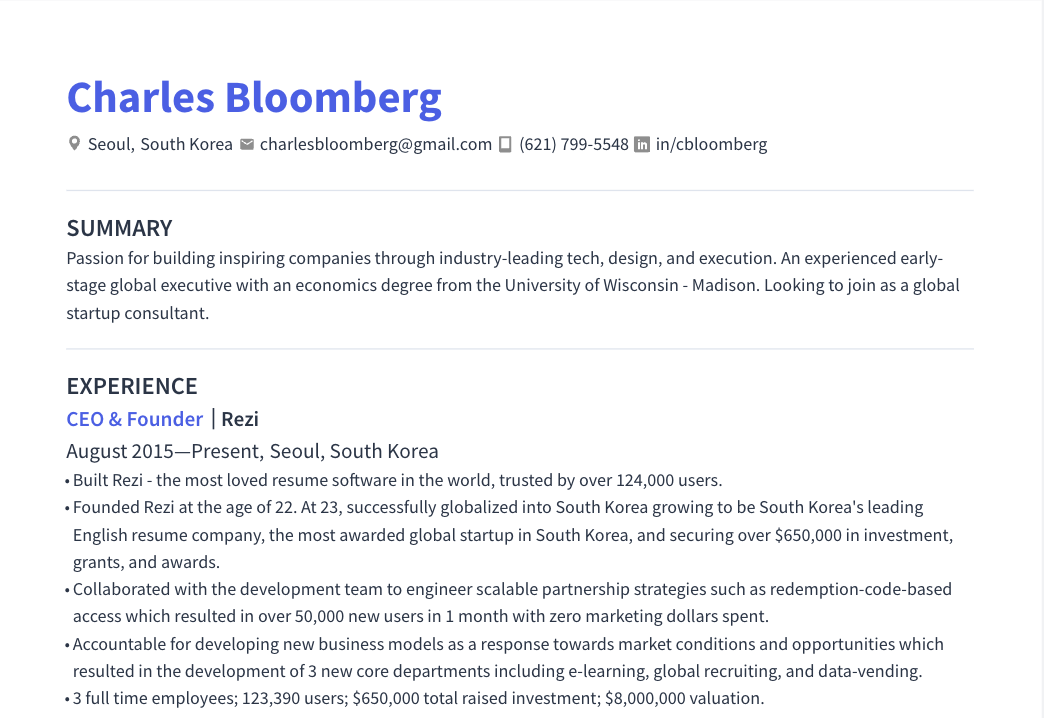
Impress employers and recruiters.
Choose from hundreds of resume examples.
Tailor your resume to this Senior Data Analyst role.
Rezi rewrites your resume against University of Texas at Austin's job description. Free.
Tailor your resume to this Senior Data Analyst role.
Rezi rewrites your resume against University of Texas at Austin's job description. Free.
Don't guess if your resume is good enough.
See how it scores against the Senior Data Analyst posting at University of Texas at Austin — free, in seconds.
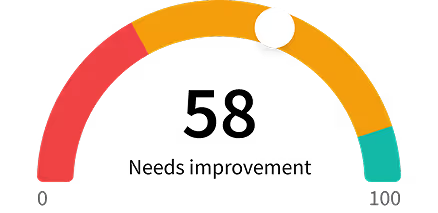
Don't guess if your resume is good enough.
See how it scores against the Senior Data Analyst posting at University of Texas at Austin — free, in seconds.
About the Role
The Senior Data Analyst is a senior-level individual contributor responsible for leading complex data analytics initiatives that drive strategic decision-making across clinical, operational, and financial domains. This position is housed within the UT Data Core team and works directly with the Department of Women’s Health to support departmental projects, analytics initiatives, and data requests. The role partners closely with leadership, clinical program directors, faculty, staff, and cross-functional teams to deliver high-impact insights and data-driven solutions. The Senior Data Analyst serves as a subject matter expert in healthcare data, advanced analytics, and data visualization, with expertise in extracting, integrating, analyzing, and interpreting data from electronic health records (EHRs) and other clinical and operational data sources. The position utilizes Viewpoint and other relevant data systems and reporting tools to fulfill complex data requests and support clinical, research, operational, and strategic initiatives within Women’s Health.
Responsibilities
- Analyzes data using standard statistical tools, methods, and techniques; interprets results to identify significant differences and trends.
- Leads the design and execution of advanced statistical models and predictive analytics.
- Translates complex business problems into analytical frameworks.
- Synthesizes, processes, and analyzes large datasets to uncover actionable insights.
- Presents findings to senior leadership and governance committees.
- Develops and maintains dashboards and scorecards.
- Standardizes KPIs and reporting methodologies across departments.
- Automates enterprise-level reporting processes.
- Ensures data visualizations are intuitive, accurate, and aligned with strategic goals.
- Collaborates with IT to optimize reporting infrastructure.
- Develops and implements databases, data collection systems, and analytics strategies that optimize statistical efficiency and data quality.
- Leads integration of disparate data sources including EHR, claims, financial, and operational systems.
- Assists in defining, developing, and implementing data standards and data quality measures.
- Conceptualizes, creates, and maintains operational and research data models for visualization and statistical analysis.
- Establishes and maintains standard work procedures governing the appropriate use of data.
- Serves as a trusted advisor to clinical and administrative leaders.
- Consults with internal and external customers, including faculty and staff, to identify user needs and clarify data requirements.
- Provides guidance and interpretation of complex systems and data.
- Facilitates data strategy sessions and requirements gathering workshops.
- Builds consensus around data definitions and usage.
- Mentors junior and mid-level analysts on technical and professional development.
- Documents data analysis efforts, including data sources, reporting specifications, tools used, and issue resolutions.
- Evaluates and pilots emerging analytics tools and methodologies.
- Researches and stays up-to-date on new technologies and data analysis trends.
- Leads analytics communities of practice and training sessions.
- Contributes to scholarly activity.
- Participates in strategic planning and digital transformation initiatives.
- Supports grant-funded research and academic collaborations.
- Represents the organization at industry conferences and professional forums.
- Leads post-implementation reviews of analytics projects.
- Contributes to vendor evaluations and procurement of analytics tools.
Requirements
- Requires a Bachelor's Degree in Data Science, Public Health, Health Information Management, Statistics, Computer Science, or a related field with at least 5 year(s) of experience in healthcare analytics or data science.
- Skilled in large scale data analysis, data processing and data technology.
- Skilled with one or more industry data models and standards (e.g. OMOP, FHIR, DICOM).
- Experience with advanced analytics tools, data visualizations, and cloud data environments (e.g., Azure, Google AWS).
- Relevant education may substitute for experience on a year-for-year basis.
- Master's Degree in a quantitative or healthcare-related field with at least 7 year(s) of experience in a complex healthcare environment.
- Cloud Data Analytics Certification or equivalent cloud-based certification (Azure, Google, AWS).
- Resume/CV
- 3 work references with their contact information; at least one reference should be from a supervisor
- Letter of interest
- Ability to maintain the security or integrity of critical infrastructure.
- Complete the federal Employment Eligibility Verification I-9 form.
- Present acceptable and original documents to prove identity and authorization to work in the United States.
Skills
- Healthcare data
- Advanced analytics
- Data visualization
- Extracting data
- Integrating data
- Analyzing data
- Interpreting data
- EHR data
- Clinical data
- Operational data
- Viewpoint
- Statistical tools
- Statistical methods
- Statistical techniques
- Predictive analytics
- Dashboards
- Scorecards
- KPIs
- Reporting methodologies
- Enterprise-level reporting
- Reporting infrastructure
- Databases
- Data collection systems
- Analytics strategies
- Data quality measures
- Data models
- Standard work procedures
- Strategic Agility
- Dealing with Ambiguity
- Influence
- Technical Learning
- Innovation Management
- Collaboration
- Large scale data analysis
- Data processing
- Data technology
- OMOP
- FHIR
- DICOM
- Advanced analytics tools
- Cloud data environments
- Azure
- Google AWS
- E-Verify
Location
- AUSTIN, TX
Work Type
- 40 hours per week
Experience Level
- Senior-level
- At least 5 year(s) of experience in healthcare analytics or data science
- At least 7 year(s) of experience in a complex healthcare environment
Education Level
- Bachelor's Degree in Data Science, Public Health, Health Information Management, Statistics, Computer Science, or a related field
- Master's Degree in a quantitative or healthcare-related field
- Cloud Data Analytics Certification or equivalent cloud-based certification
Salary/Compensations
- $89,800 +
Benefits
- Teacher Retirement System of Texas (TRS)
About the Company
- The Department of Women's Health
- UT Data Core team
- The University of Texas at Austin
Equal Opportunity
- The University of Texas at Austin, as an equal opportunity/affirmative action employer, complies with all applicable federal and state laws regarding nondiscrimination and affirmative action. The University is committed to a policy of equal opportunity for all persons and does not discriminate on the basis of race, color, national origin, age, marital status, sex, sexual orientation, gender identity, gender expression, disability, religion, or veteran status in employment, educational programs and activities, and admissions.