Impress employers and recruiters.
Choose from hundreds of resume examples.
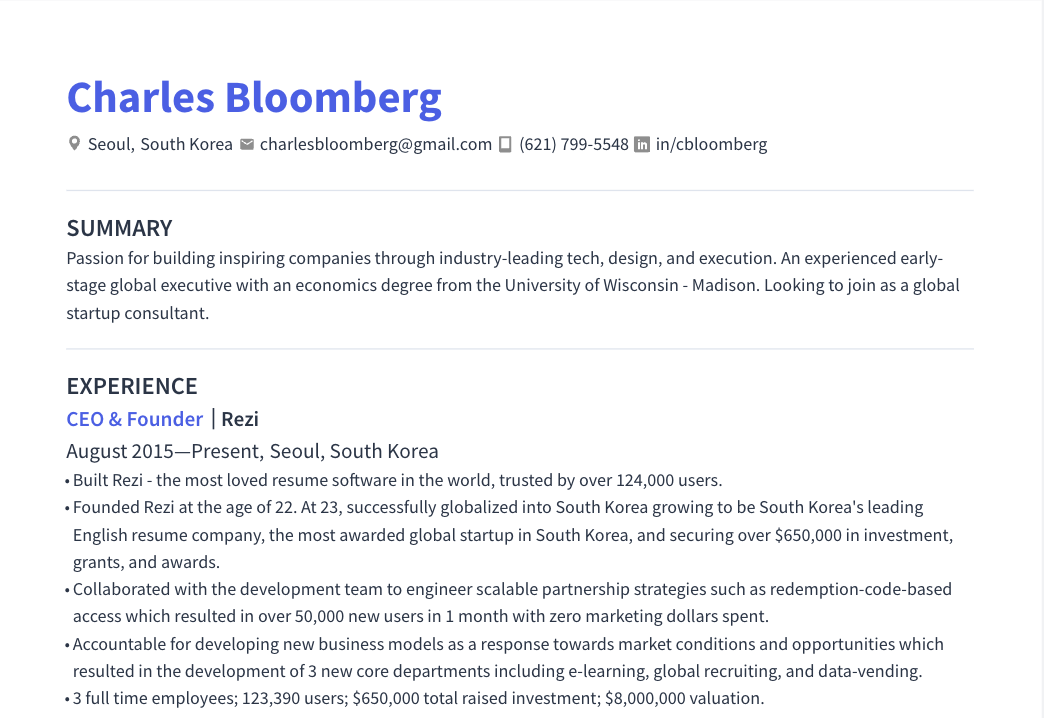
Impress employers and recruiters.
Choose from hundreds of resume examples.
Tailor your resume to this Senior Software Engineer — RL Environments & Sandboxes role.
Rezi rewrites your resume against Lumos AI Research's job description. Free.
Tailor your resume to this Senior Software Engineer — RL Environments & Sandboxes role.
Rezi rewrites your resume against Lumos AI Research's job description. Free.
Don't guess if your resume is good enough.
See how it scores against the Senior Software Engineer — RL Environments & Sandboxes posting at Lumos AI Research — free, in seconds.
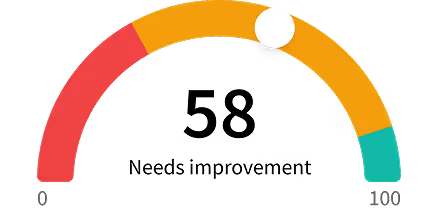
Don't guess if your resume is good enough.
See how it scores against the Senior Software Engineer — RL Environments & Sandboxes posting at Lumos AI Research — free, in seconds.
About the Role
We're looking for a Senior Software Engineer — RL Environments & Sandboxes to build high-fidelity environments where frontier AI agents learn to perform complex, real-world tasks. You'll design and implement stateful, executable environments that allow agents to interact with software, APIs, scientific tools, and laboratory systems. These environments must be reproducible, verifiable, and scalable enough to support reinforcement learning and rigorous evaluation. This role is particularly exciting because your work won't be limited to simulated software. You'll work closely with our wet-lab team to build the infrastructure connecting AI agents to physical experiments, laboratory automation, and real biological outcomes. You'll own systems end to end, from environment architecture and sandbox execution to tool interfaces, task verification, and rollout infrastructure. We're looking for someone who enjoys working at the boundary of software, AI, and the physical world — someone who would be equally excited about building a distributed execution engine and making a laboratory robot perform an experiment.
Responsibilities
- Build RL environments: Design and implement realistic, stateful environments that reproduce complex workflows across healthcare, biology, and scientific software.
- Develop secure sandboxes: Build isolated, reproducible execution environments supporting agent-generated code, tool calls, filesystem operations, and application interactions.
- Connect AI agents to the wet lab: Work with scientists and automation engineers to integrate laboratory instruments, robotic liquid handlers, experimental protocols, and biological readouts into agent-accessible workflows.
- Build agent-facing tools: Implement MCP servers, APIs, and interfaces that enable agents to interact with software applications, scientific instruments, and simulated systems.
- Engineer state management: Develop deterministic initialization, snapshot/restore, state transitions, resets, and execution replay.
- Develop tasks and verifiers: Translate real-world workflows into executable tasks with clear success criteria, ground-truth states, and programmatic verification.
- Scale environment execution: Build orchestration infrastructure for high-throughput parallel rollouts, supporting both simulated environments and physical experiments with appropriate execution controls.
- Work with Harbor: Develop, integrate, and validate environments using Harbor-compatible task structures, execution harnesses, and evaluation workflows.
- Improve environment fidelity: Identify unrealistic shortcuts, hidden state inconsistencies, and verification gaps that could compromise training quality.
- Own the full lifecycle: Take ambitious technical ideas from early prototypes through production-grade infrastructure.
Requirements
- 5+ years of software engineering experience, or equivalent evidence of exceptional engineering ability.
- Excellent Python skills and strong fundamentals in algorithms, data structures, systems design, and software architecture.
- Hands-on experience with Docker, Linux, containers, process isolation, or sandbox execution.
- Strong understanding of distributed systems, asynchronous execution, state management, and reliability.
- Experience designing complex APIs, backend systems, and integrations.
- Ability to independently architect, build, debug, and ship sophisticated technical systems.
- Hands-on experience with Harbor, especially building custom RL environments, task definitions, verifiers, or evaluation infrastructure.
- Experience with RL environments, AI agents, model evaluation, or agent training infrastructure.
- Familiarity with MCP, Gymnasium, Ray, or similar agent and execution frameworks.
- Experience with robotics, laboratory automation, hardware interfaces, or cyber-physical systems.
- Knowledge of deterministic simulation, sandbox orchestration, reproducible execution, and reward verification.
- Experience with scientific computing, bioinformatics, or computational biology.
Skills
- Python
- Algorithms
- Data Structures
- Systems Design
- Software Architecture
- Docker
- Linux
- Containers
- Process Isolation
- Sandbox Execution
- Distributed Systems
- Asynchronous Execution
- State Management
- Reliability
- API Design
- Backend Systems
- Integrations
- Harbor
- RL Environments
- AI Agents
- Model Evaluation
- Agent Training Infrastructure
- MCP
- Gymnasium
- Ray
- Robotics
- Laboratory Automation
- Hardware Interfaces
- Cyber-physical Systems
- Deterministic Simulation
- Sandbox Orchestration
- Reproducible Execution
- Reward Verification
- Scientific Computing
- Bioinformatics
- Computational Biology
Location
- Remote
Work Type
- Full-time
Experience Level
- Senior
Benefits
- Competitive compensation
- Meaningful equity
About the Company
- Lumos AI Research is building the infrastructure to train and evaluate frontier AI systems in healthcare and life sciences.
- As AI moves beyond answering questions toward executing complex scientific workflows, models need more than training data. They need environments where they can interact with tools, make decisions, execute experiments, observe consequences, and learn from verifiable outcomes.
- We build those environments.
- Our work spans clinical systems, genomics, drug discovery, and laboratory automation. We're developing both computational environments and environments connected to physical wet-lab infrastructure, bridging AI agents with real scientific instruments, robotic systems, and experimental workflows.
- We're a small, ambitious team of engineers, scientists, and researchers working to expand what AI can accomplish in the real world.