Impress employers and recruiters.
Choose from hundreds of resume examples.
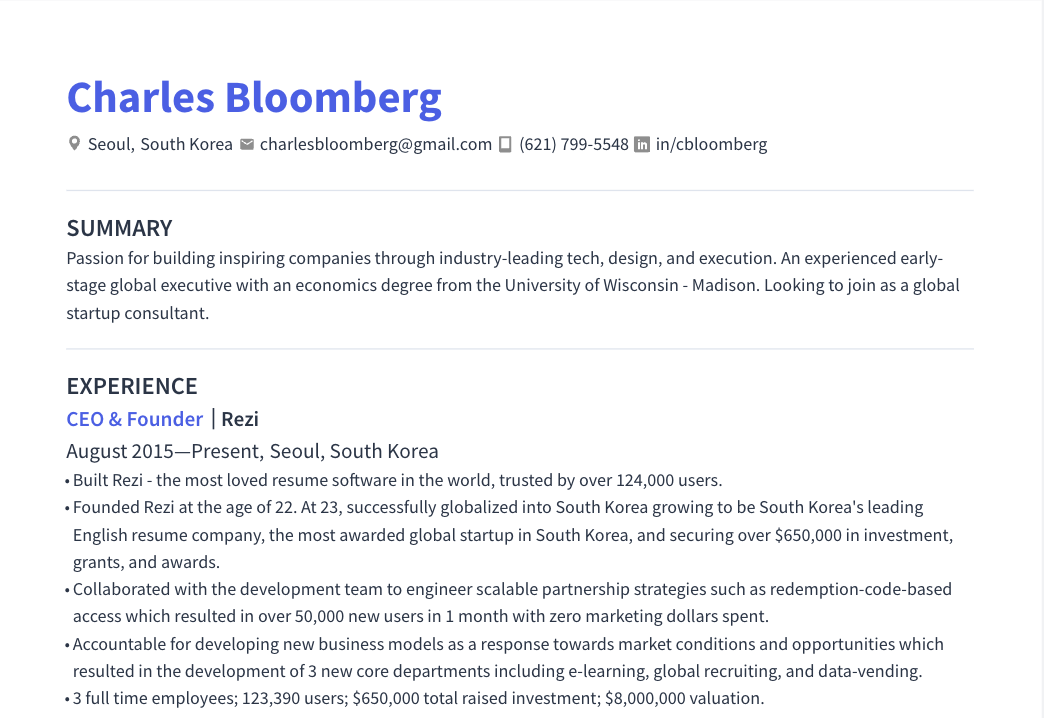
Impress employers and recruiters.
Choose from hundreds of resume examples.
Tailor your resume to this Senior Product Designer role.
Rezi rewrites your resume against AION's job description. Free.
Tailor your resume to this Senior Product Designer role.
Rezi rewrites your resume against AION's job description. Free.
Don't guess if your resume is good enough.
See how it scores against the Senior Product Designer posting at AION — free, in seconds.
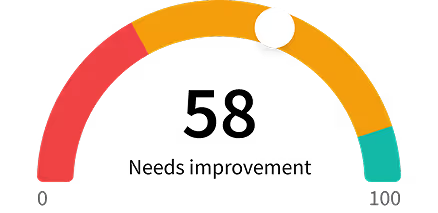
Don't guess if your resume is good enough.
See how it scores against the Senior Product Designer posting at AION — free, in seconds.
About the Role
Aion is the enterprise AI platform, a full-stack solution for building, fine-tuning, and deploying AI at scale. We are looking for exceptional people to help us scale.
Responsibilities
- Turn ambiguous problems into clear flows, information architecture and interaction models.
- Design every state of every screen: empty, loading, partial, error and the edge cases.
- Own the visual layer: typography, layout, colour, iconography and hierarchy.
- Specify interactions and motion precisely for engineers.
- Build and evolve the design system.
- Review shipped work for misalignments and errors.
- Test with real users and iterate.
- Work directly with founders shaping technical and product strategy.
- Build infrastructure powering the future of AI compute globally.
Requirements
- 6+ years in product design, with complex products shipped end to end.
- User research: interviews, contextual inquiry and usability testing, planned and run yourself and turned into decisions.
- Problem framing: user needs, jobs to be done and success measures defined before any screen is drawn.
- End-to-end journeys: journey maps and service blueprints covering every touchpoint, handoff and failure path.
- Task flows and wireframes that account for every branch, edge case and error, tested before visual design.
- Information architecture: content models, navigation and labelling, validated with card sorts and tree tests.
- Interaction design: mental models, affordances, feedback and system status, consistent across the product.
- Evaluation: heuristic reviews and usability metrics such as task success, time on task and error rate.
- Visual hierarchy: one clear focal point per screen, built with scale, weight, contrast and space rather than decoration.
- Typography: type scales, optical sizes, tracking that tightens as type grows, tabular figures, and layouts that hold up at larger text sizes.
- Layout: grids, a strict spacing scale, every edge on the pixel grid, and optical corrections where the measurements are right but the result looks wrong.
- Colour: semantic colour systems for light and dark themes, and perceptually even palettes in OKLCH or Display P3.
- Depth and materials: elevation, shadows, translucency and blur, continuous corner curves and concentric radii, used to show what is interactive and what sits on top of what.
- Component states: default, hover, pressed, focus, selected, disabled, loading and error, designed for every component.
- Design systems: primitive and semantic tokens, variables and modes, components with real variants, and documentation teams use.
- Iconography: a consistent grid, stroke and corner language, with icons drawn to read at small sizes.
- Motion: springs rather than fixed durations; fluid, interruptible motion that follows the finger and keeps its momentum on release; clear choreography of what moves first, what follows and what leaves.
- Platform conventions: deep knowledge of desktop, web and mobile patterns, and the judgement to know when to break them.
- Accessibility designed in from the start to WCAG 2.2 AA: contrast, focus order, larger text, reduced motion and screen-reader labels.
- Interfaces for output that is non-deterministic, streamed and sometimes wrong.
- Patterns that keep people in control: review, correction, undo and honest failure states.
- Trust built through clarity, not decoration.
- Illustration, iconography or brand identity work.
- Industrial, print or type design, where tolerances are unforgiving.
- Dense professional tools: editors, dashboards, developer products.
- Public work: writing, talks or side projects.
Skills
- Figma at expert level: variables and modes, component properties, auto layout, advanced prototyping and Figma Motion.
- After Effects, Rive or ProtoPie when an interaction has to be felt, not described.
Experience Level
- 6+ years in product design
Benefits
- Competitive compensation
- Flexible work options
- Wellness benefits
- Significant ownership and impact with equity reflective of your contributions.
About the Company
- Aion is the enterprise AI platform, a full-stack solution for building, fine-tuning, and deploying AI at scale.
- We’re a fast-growing, VC-backed startup led by founders with a track record of successful exits.
- With teams across the US, UK, and India, we’re building the next generation of enterprise AI.