Impress employers and recruiters.
Choose from hundreds of resume examples.
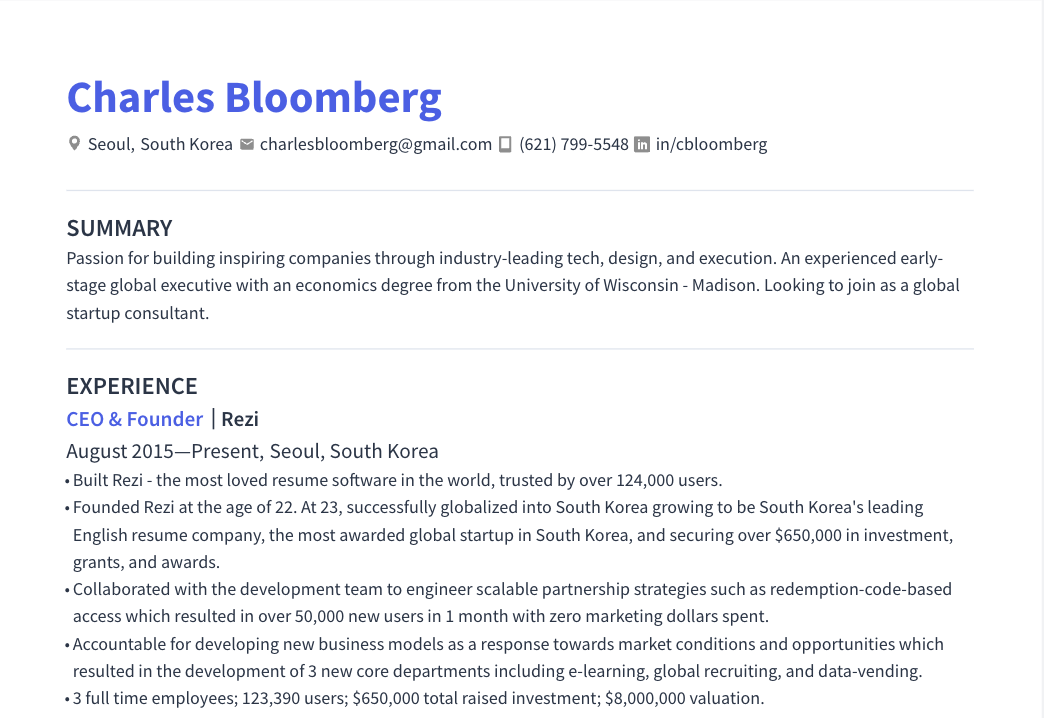
Impress employers and recruiters.
Choose from hundreds of resume examples.
Tailor your resume to this Data Governance Lead role.
Rezi rewrites your resume against Cleary Gottlieb Steen & Hamilton LLP's job description. Free.
Tailor your resume to this Data Governance Lead role.
Rezi rewrites your resume against Cleary Gottlieb Steen & Hamilton LLP's job description. Free.
Don't guess if your resume is good enough.
See how it scores against the Data Governance Lead posting at Cleary Gottlieb Steen & Hamilton LLP — free, in seconds.
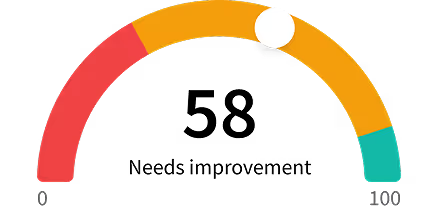
Don't guess if your resume is good enough.
See how it scores against the Data Governance Lead posting at Cleary Gottlieb Steen & Hamilton LLP — free, in seconds.
About the Role
Cleary Gottlieb is seeking a Data Governance Lead to establish, implement, and mature the Firm’s global data governance practice. This role will translate the Firm’s data governance strategy into an effective operating model, practical standards, clearly defined decision rights, and measurable improvements in data quality, consistency, and understanding. The Data Governance Lead will serve as the operational owner of the Firm’s data governance framework and processes, establishing how data governance operates across the Firm, including the Data Owner and Data Steward model, governance forums, decision processes, data quality methodology, metadata and lineage practices, issue management, governance measurement, and training. The role will partner closely with Data Owners and Data Stewards and with colleagues across IT, Risk, Finance, Practice Development, Business Development, Innovation, AI, and other functions, initially focusing on priority data domains supporting the Firm’s clients, matters, knowledge, financial, and operational activities. Through this work, the Data Governance Lead will help create a trusted and well-governed data foundation that supports effective decision-making, operational efficiency, client service, analytics, innovation, automation, and AI.
Responsibilities
- Lead the implementation and day-to-day operation of the Firm’s federated data governance operating model.
- Establish the processes, standards, procedures, roles, decision rights, governance forums, and escalation mechanisms for governing data.
- Clearly define and document the respective accountabilities of Data Owners, Data Stewards, technology custodians, and Data Governance.
- Establish repeatable governance processes for decisions, approvals, exceptions, escalations, cross-domain issues, and changes to governance standards.
- Ensure governance processes enable business accountability rather than transferring ownership of business data or business decisions to IT or the Data Governance function.
- Monitor adoption and effectiveness of the operating model and recommend improvements.
- Establish and operationalize the Firm’s Data Owner and Data Steward model, including role definitions, decision rights, responsibilities, working practices, training, and supporting materials.
- Enable Data Owners to exercise accountability for their domains by providing consistent processes for making and documenting decisions concerning data definitions, quality expectations, appropriate business use, priorities, and issue remediation.
- Establish the processes and tools through which Data Stewards maintain business definitions, monitor data quality, maintain governance metadata, investigate issues, and support Data Owners.
- Build and facilitate an active community of Data Owners and Data Stewards.
- Identify gaps in ownership or stewardship and facilitate assignment or escalation.
- Provide guidance and challenge where governance requirements are not being met.
- Maintain the Firm-wide data quality governance framework, including common standards, quality dimensions, measurement approaches, issue severity criteria, reporting practices, and escalation processes.
- Partner with Data Owners and Data Stewards to identify Critical Data Elements and establish appropriate quality requirements.
- Facilitate the definition of data quality rules and thresholds.
- Establish repeatable processes for measuring, monitoring, prioritizing, escalating, and reporting data quality issues.
- Develop data quality scorecards and governance metrics.
- Facilitate root-cause analysis of significant or recurring data quality issues and ensure remediation actions have clearly identified business and technology owners.
- Track significant data quality issues and remediation commitments.
- Escalate unresolved or systemic data quality issues.
- Promote preventive controls and accountability for data.
- Establish the methodology and standards for documenting data lineage for priority data domains and Critical Data Elements.
- Coordinate lineage development with Data Owners, Data Stewards, Data Architecture, Data Engineering, Enterprise Applications, and other technology teams.
- Establish and facilitate processes for developing and maintaining the Firm’s business glossary and data dictionary.
- Facilitate resolution of competing definitions through the appropriate Data Owner or governance forum.
- Establish expectations for maintaining governance artifacts as systems, processes, and business requirements evolve.
- Chair and facilitate Data Governance meetings, stewardship forums, working groups, and roundtable discussions.
- Assist with establishing clear charters, membership, decision rights, escalation paths, and operating practices for governance forums.
- Develop agendas and decision materials that clearly identify the issue, accountable Data Owner, affected stakeholders, options, dependencies, and required decision.
- Facilitate decisions involving competing data definitions, ownership questions, cross-domain dependencies, quality requirements, and other governance matters.
- Maintain a transparent record of governance decisions, exceptions, actions, owners, and remediation commitments.
- Escalate significant unresolved issues to the Director of Data Strategy and Governance or appropriate governance body.
- Support the Director of Data Strategy and Governance in developing and maintaining enterprise data governance policies, standards, procedures, and controls.
- Translate approved governance policies and standards into practical operating requirements.
- Establish mechanisms to monitor adoption of data governance standards and identify areas requiring remediation or escalation.
- Support data classification and Critical Data Element identification.
- Coordinate governance requirements with applicable privacy, information security, client confidentiality, records management, retention, and regulatory requirements.
- Support implementation of data lifecycle and retention requirements from a data governance perspective.
- Build productive working relationships with Data Owners, Data Stewards, technology teams, and business stakeholders.
- Act as a bridge between business and technical teams, translating governance concepts into practical business requirements and operating processes.
- Develop and deliver Data Owner and Data Steward onboarding, training, communications, guidance, and supporting materials.
- Provide ongoing coaching to Data Owners and Data Stewards.
- Support broader data literacy and foster a culture in which accountability for data is embedded within the business and technology processes that create, maintain, and use it.
- Establish and maintain metrics that measure governance adoption, stewardship participation, data quality, metadata coverage, lineage documentation, issue resolution, and other indicators of governance maturity.
- Identify gaps in governance adoption or accountability and facilitate corrective action.
- Monitor the effectiveness of governance processes and recommend practical improvements.
- Support ongoing development of the Firm’s data governance roadmap.
Requirements
- Bachelor’s degree in Information Systems, Computer Science, Data/Analytics, Business, or a related discipline.
- 5+ years of progressive experience in data governance, data management, data quality, business analysis, or a related discipline.
- At least 2 years of demonstrated experience implementing, operationalizing, or materially contributing to an enterprise data governance program.
- Demonstrated experience designing or implementing federated data governance practices involving business Data Owners and Data Stewards.
- Experience developing data governance standards, business definitions, data quality rules, governance processes, and operating procedures.
- Experience establishing or working within Data Owner and Data Steward models, with a strong understanding of the distinction between governance accountability, business accountability, and technology responsibility.
- Experience facilitating governance councils, workshops, stewardship forums, or other cross-functional decision-making processes.
- Practical experience establishing data quality rules, measurement practices, issue-management processes, and remediation approaches.
- Working knowledge of metadata management, data catalogs, data lineage, data classification, Critical Data Elements, and master/reference data concepts.
- Experience working across business stakeholders, application teams, architects, data engineers, analysts, and risk or control functions in a complex data environment.
- Ability to use SQL or comparable analytical techniques to investigate data and support data quality analysis.
- Familiarity with law firm data and processes—including client and matter management, conflicts, knowledge, time and billing, financial information, and related operational data.
- Experience with enterprise data governance, cataloging, metadata management, lineage, or data quality technologies is preferred.
- Relevant professional certifications, such as the Certified Data Management Professional (CDMP) or Data Governance and Stewardship Professional (DGSP), are a plus.
- Familiarity with core legal technology, such as iManage, Aderant, Foundation, and Intapp, is required.
- Strong knowledge of data governance frameworks and regulation (ISO 27001, SOC 2, GDPR, CCPA).
Skills
- Strong written and verbal communication skills
- Ability to translate technical and governance concepts into clear business language
- Excellent stakeholder-management and facilitation skills
- Ability to build consensus and influence outcomes without direct authority
- Strong analytical and problem-solving capabilities
- Ability to translate ambiguous data problems into clear ownership, decisions, actions, and outcomes
- Ability to manage multiple priorities and coordinate activities across functions and geographies in a complex global organization
- Collaborative
- Influential
- Hands-on
- Structured and analytical
- Strong facilitator
- Clear communicator
- Accountable
- Curious and adaptable
- Change-oriented
Location
- Global
Work Type
- Full-time
Experience Level
- 5+ years of progressive experience in data governance, data management, data quality, business analysis, or a related discipline
- At least 2 years of demonstrated experience implementing, operationalizing, or materially contributing to an enterprise data governance program
Education Level
- Bachelor’s degree in Information Systems, Computer Science, Data/Analytics, Business, or a related discipline
Salary/Compensations
- $175,000 to $200,000
Benefits
- Health care benefits
About the Company
- Cleary Gottlieb is a pioneer in globalizing the legal profession with 14 offices in major financial centers around the world, operating as a single, integrated global partnership.
- The firm employs approximately 1,100 lawyers from more than 50 countries.
- Since 1946, lawyers and staff have worked across practices, industries, jurisdictions, and continents to provide clients with simple, actionable approaches to their most complex legal and business challenges.
- The firm supports every client relationship with intellectual agility, commercial acumen, and a human touch.
Equal Opportunity
- We are an equal opportunity employer and prohibit discrimination based on any category protected by law.
- Cleary provides reasonable accommodations to enable otherwise qualified employees to perform the essential functions of their position, provided the accommodation does not pose an undue hardship to the Firm.