Impress employers and recruiters.
Choose from hundreds of resume examples.
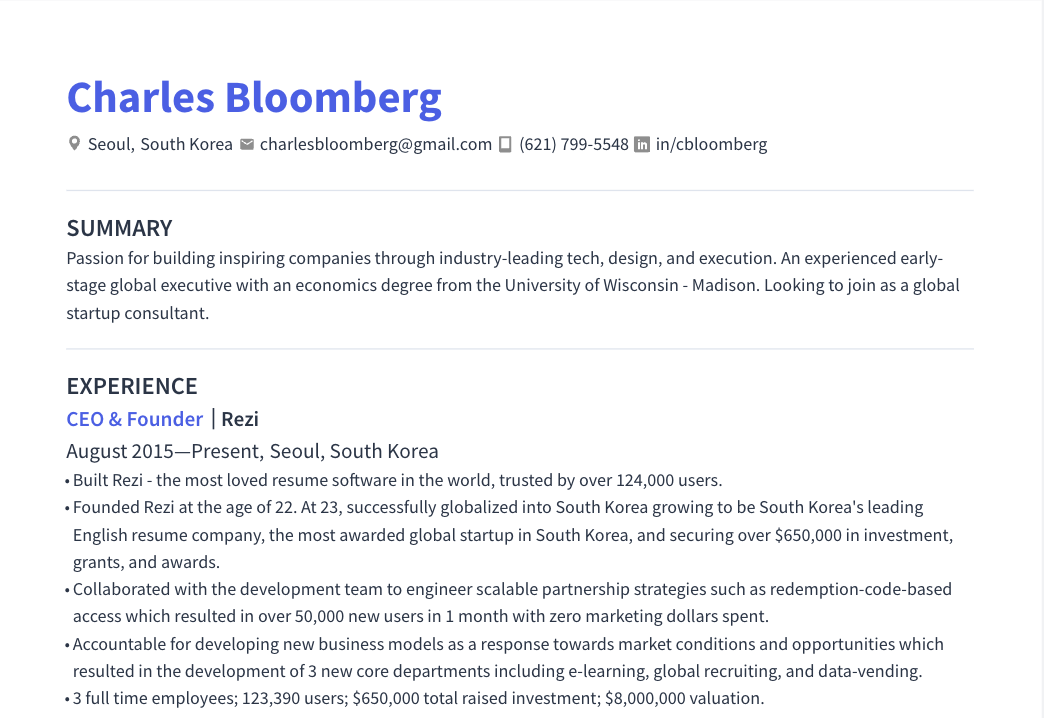
Impress employers and recruiters.
Choose from hundreds of resume examples.
Tailor your resume to this Chip Lead / Physical Design Director role.
Rezi rewrites your resume against Cadence Design Systems's job description. Free.
Tailor your resume to this Chip Lead / Physical Design Director role.
Rezi rewrites your resume against Cadence Design Systems's job description. Free.
Don't guess if your resume is good enough.
See how it scores against the Chip Lead / Physical Design Director posting at Cadence Design Systems — free, in seconds.
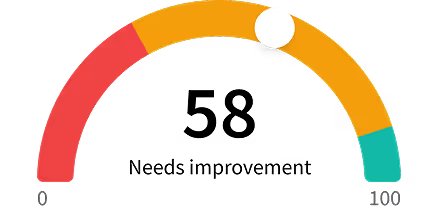
Don't guess if your resume is good enough.
See how it scores against the Chip Lead / Physical Design Director posting at Cadence Design Systems — free, in seconds.
About the Role
As an expert Physical Design Architect, you will engage directly with our leading-edge customers to deliver differentiated RTL-to-GDS services in advanced FinFET nodes. You will lead a talented Physical Design team with the goal of not only meeting but exceeding customers’ demanding Performance, Power, Area, and Schedule (PPAS) targets. At Cadence, our customers are at the heart of everything we do, and talented leaders like you are essential to turning this passion into tangible results.
Responsibilities
- Serve as the technical leader for Physical Design and Design for Test teams, driving complex customer SoC projects from RTL or Netlist to GDS.
- Work directly with customers throughout engagements, from initiation to final GDS delivery, taking ownership of technical decisions, design trade-offs, and innovative problem solving to achieve customer PPA and schedule requirements.
- Guide customers in selecting the appropriate foundry/node, library, and memory compiler, and establish sign-off criteria to ensure the best features versus cost trade-offs.
- Collaborate with internal Cadence teams to deliver technical presentations and promote internal AI initiatives to improve quality and efficiency.
- Work closely with customer or internal RTL/Synthesis teams to ensure that key metrics are achieved efficiently prior to the physical design execution phase gate.
- Partner with Cadence tools R&D to enhance tools and methodologies to meet and surpass customer requirements.
- Document and share best practices and lessons learned from ongoing and completed projects to improve efficiency, success rates, and AI adoption in future programs.
Requirements
- Fifteen or more years of industry experience in Physical Design.
- Bachelor’s degree in Computer Science/Engineering, Electrical Engineering, or a related field.
- Strong knowledge of Digital Design Fundamentals, Semiconductor fundamentals, and Static Timing Analysis (including timing constraints).
- Experience with IC digital implementation flows and backend EDA tools, including Place and Route, Clock Tree Synthesis, IR Drop analysis, backend design timing, and power closure.
- Demonstrated experience in complete design closure for chip top-level projects.
- Expertise in PPA optimization, including driving trade-offs between performance, power, and area to meet aggressive design requirements.
- Experience with advanced nodes at 7nm and below.
- Proficiency in scripting languages such as Tcl, Perl, or Python is essential.
- Strong customer-facing communication and problem-solving skills.
- Personal drive for continuous learning and expanding professional skill sets.
- Experience in building strong technical relationships with internal stakeholders, including RTL, DFT, CAD, and Library teams.
- Master’s degree in Computer Science/Engineering, Electrical Engineering, or a related field.
- Prior experience with IC digital implementation flows and front-end EDA tools, including Synthesis, DFT, and Logical Equivalence Checking.
- Experience with Cadence tools such as Genus, Innovus, Conformal, Tempus, Modus, Voltus, or with similar tools like ICC, ICC2, DC, or Primetime is highly desired.
- Experience with advanced nodes at 5nm and below.
- Domain expertise in CPUs, GPUs, AI Engines, Networks on Chip (NoCs), or high-speed interfaces.
- Experience with 3D IC design is a significant plus.
Skills
- Physical Design
- Design for Test
- RTL to GDS
- SoC projects
- PPA optimization
- Performance, Power, Area, and Schedule (PPAS) targets
- Foundry/node selection
- Library selection
- Memory compiler selection
- Sign-off criteria
- Technical presentations
- AI initiatives
- RTL/Synthesis
- EDA tools
- Place and Route
- Clock Tree Synthesis
- IR Drop analysis
- Backend design timing
- Power closure
- Chip top-level design closure
- Advanced nodes (7nm and below)
- Tcl scripting
- Perl scripting
- Python scripting
- Customer-facing communication
- Problem-solving
- Continuous learning
- Technical relationship building
- Synthesis
- Logical Equivalence Checking
- Cadence Genus
- Cadence Innovus
- Cadence Conformal
- Cadence Tempus
- Cadence Modus
- Cadence Voltus
- ICC
- ICC2
- DC
- Primetime
- Advanced nodes (5nm and below)
- CPUs
- GPUs
- AI Engines
- Networks on Chip (NoCs)
- High-speed interfaces
- 3D IC design
Location
- Remote
Work Type
- Full-time
Experience Level
- Fifteen or more years of industry experience in Physical Design
- Advanced nodes at 7nm and below
- Advanced nodes at 5nm and below
Education Level
- Bachelor’s degree in Computer Science/Engineering, Electrical Engineering, or a related field.
- Master’s degree in Computer Science/Engineering, Electrical Engineering, or a related field.
About the Company
- At Cadence, we hire and develop leaders and innovators who want to make an impact on the world of technology.
- Working at Cadence means collaborating with some of the industry’s brightest minds and driving innovation for the world’s most advanced companies.
- Through Cadence’s tools, emulation hardware, and IP products, we have supported a diverse range of customers. Enabling products in data centers, advanced driver-assistance system (ADAS) automotive and physical AI, and cutting-edge artificial intelligence verticals.