Impress employers and recruiters.
Choose from hundreds of resume examples.
Impress employers and recruiters.
Choose from hundreds of resume examples.
Tailor your resume to this Senior Staff Software Engineer, Linux Kernel role.
Rezi rewrites your resume against Efficient Computer's job description. Free.
Tailor your resume to this Senior Staff Software Engineer, Linux Kernel role.
Rezi rewrites your resume against Efficient Computer's job description. Free.
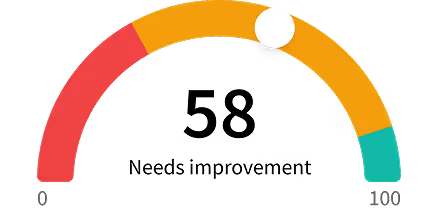
Don't guess if your resume is good enough.
See how it scores against the Senior Staff Software Engineer, Linux Kernel posting at Efficient Computer — free, in seconds.
Don't guess if your resume is good enough.
See how it scores against the Senior Staff Software Engineer, Linux Kernel posting at Efficient Computer — free, in seconds.
About the Role
Efficient Computer is rethinking computing from the ground up to solve AI's biggest challenge: energy. Our Fabric architecture delivers a 10–100x improvement in energy efficiency for general-purpose computation, including AI. Join us to build the hardware and software that bring intelligence wherever it's needed and help shape the next generation of computing.
Responsibilities
- Own the Linux kernel-mode driver for the Fabric accelerator, including device discovery, MMIO register interfaces, interrupt handling, power management, firmware, diagnostics, and logging.
- Abstract the user-space ABI with a HAL that the runtime depends on.
- Define how custom hardware accelerators are exposed to Linux, including ioctl and sysfs interfaces.
- Implement the unified memory model between ARM cores and the Fabric accelerator.
- Own SMMU (IOMMU) integration, including stream and context configuration, allocation, page table management, translation, shared virtual addressing, and fault handling.
- Build and maintain QEMU device models and board definitions for the Fabric and its SoC.
- Own the Linux boot path on new platforms, from first boot in emulation through FPGA prototypes to production silicon.
- Lead kernel-side bring up on first silicon, validating hardware specifications and providing feedback.
- Act as the go-to engineer for kernel debugging across the stack, utilizing various tools and techniques.
- Establish kernel-level test coverage, including driver unit tests, emulation-based regression suites, and hardware-in-the-loop validation.
Requirements
- B.S. in Electrical/Computer Engineering, Computer Science, or equivalent; M.S. a plus.
- 7+ years of systems software experience, including significant hands-on Linux kernel-mode driver development for complex devices.
- Deep understanding of Linux kernel memory management, including cache coherence, IOMMU/SMMU configuration, and unified or shared virtual memory.
- Hands-on experience with QEMU, emulation, or simulation environments.
- Experience with pre-silicon hardware bring up and first-silicon enablement.
- Experience designing runtime interfaces between kernel and user space.
- Strong kernel debugging skills across crash analysis, tracing, hardware debuggers, and race and memory-corruption diagnosis.
- Fluency with memory-mapped I/O: register-level programming, ordering and barrier semantics, and interrupt handling.
- Experience interfacing custom hardware accelerators to Linux.
- Strong experience with ARM cores and the ARM architecture.
- Solid understanding of the Linux boot flow.
- Expert C and strong scripting skills.
- Comfortable working with AI-assisted development tools for code, analysis, and debugging.
- Experience with FPGA prototyping and hardware emulation platforms is desired.
- Knowledge of dataflow, spatial, or other novel compute architectures is desired.
- Experience on a first-generation silicon product is desired.
- Experience working on a CUDA, ROCm, or other language runtime software stack is desired.
Skills
- Linux kernel-mode driver development
- QEMU
- Emulation
- Simulation
- Pre-silicon hardware bring up
- First-silicon enablement
- Kernel debugging
- Crash analysis
- Tracing
- Hardware debuggers
- Memory-mapped I/O
- Interrupt handling
- ARM architecture
- Linux boot flow
- C programming
- Scripting
- AI-assisted development tools
- FPGA prototyping
- Hardware emulation platforms
- Dataflow architectures
- Spatial architectures
- CUDA
- ROCm
Location
- Remote
Work Type
- Full-time
Experience Level
- Senior Staff
- 7+ years
Education Level
- B.S. in Electrical/Computer Engineering, Computer Science, or equivalent
- M.S. a plus
Benefits
- Competitive pay
- Equity
- 401(k) match
- Company-paid benefits
- Paid parental leave
- Flexibility
About the Company
- Efficient Computer is rethinking computing from the ground up to solve one of AI's biggest challenges: energy.
- Our Fabric architecture delivers a 10–100x improvement in energy efficiency for general-purpose computation, including AI, while supporting familiar programming languages and software frameworks—unlocking new possibilities for autonomous machines, intelligent infrastructure, wearables, and space systems.
- With our first processor, Electron E1, now shipping in volume and more than $97 million in Series B financing recently announced, we're accelerating customer deployments and scaling our architecture to data center performance.
- Join us to build the hardware and software that bring intelligence wherever it's needed and help shape the next generation of computing.
- Efficient Computer is building the next generation of energy efficient, general-purpose processors designed around the Fabric architecture, a novel spatial dataflow design spun out from decades of fundamental SOC research at CMU.