Impress employers and recruiters.
Choose from hundreds of resume examples.
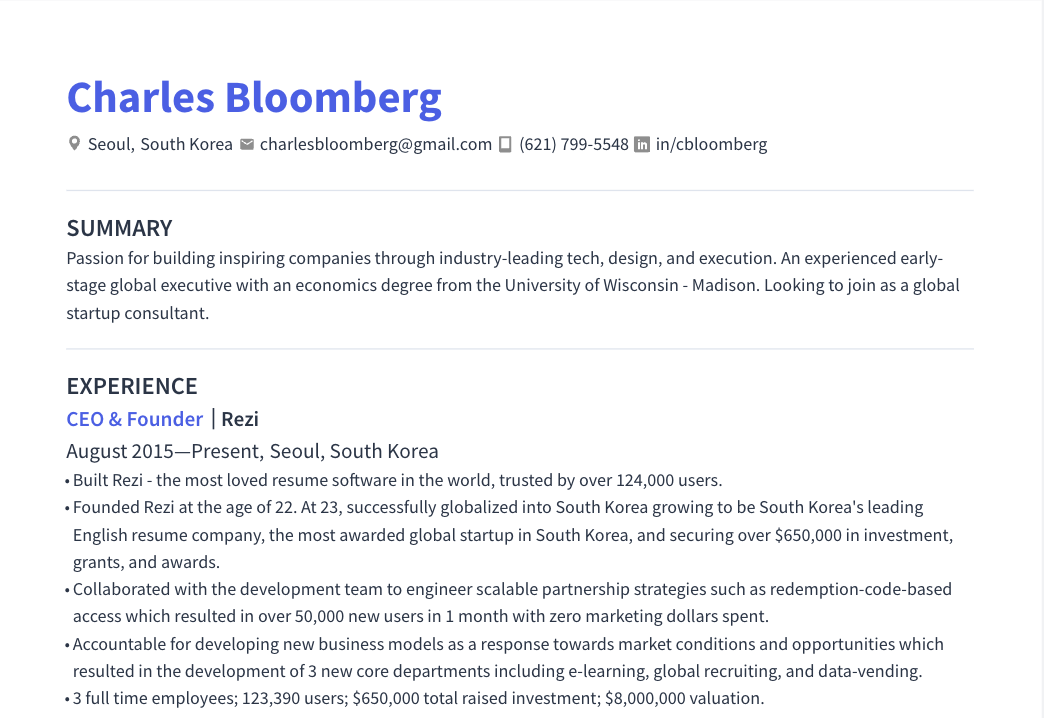
Impress employers and recruiters.
Choose from hundreds of resume examples.
Tailor your resume to this Senior Staff Software Engineer, Linux Runtime & Drivers role.
Rezi rewrites your resume against Efficient Computer's job description. Free.
Tailor your resume to this Senior Staff Software Engineer, Linux Runtime & Drivers role.
Rezi rewrites your resume against Efficient Computer's job description. Free.
Don't guess if your resume is good enough.
See how it scores against the Senior Staff Software Engineer, Linux Runtime & Drivers posting at Efficient Computer — free, in seconds.
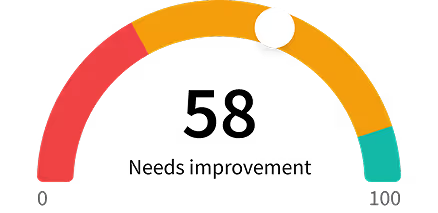
Don't guess if your resume is good enough.
See how it scores against the Senior Staff Software Engineer, Linux Runtime & Drivers posting at Efficient Computer — free, in seconds.
About the Role
Efficient Computer is developing energy-efficient, general-purpose processors using its novel Fabric architecture. This role involves owning user-mode components that interface with the Fabric and support the effcc compiler, working in pre-silicon environments to ensure applications run on day one.
Responsibilities
- Own the Runtime Library and User-Mode Driver.
- Design, implement, and maintain the user-mode runtime driver for the Fabric accelerator.
- Implement context management, program loading, resource management, command queue construction and submission, descriptor allocation and setup, streaming, completion queue/event synchronization, error handling, logging, memory allocation, and general library support.
- Design and implement user-mode interfaces between the compiler, the Fabric ABI, and the kernel mode driver.
- Define in-memory representations generated by the compiler and consumed by the Fabric.
- Design and implement runtime library support and interfaces for 3rd party ML framework backends (PyTorch, ONNX, TensorFlow).
- Lead user-mode efforts for bring-up on first silicon, utilizing functional simulation, emulation, and FPGA environments.
- Establish runtime test coverage, including API unit and conformance tests, emulation-based regression suites, performance benchmarks, and hardware-in-the-loop validation.
Requirements
- B.S. in Electrical/Computer Engineering, Computer Science, or equivalent; M.S. a plus.
- 7+ years of systems software experience.
- Significant hands-on Linux user-mode driver development.
- Significant hands-on language runtime library development for accelerators (GPUs, NPUs, DSPs, FPGAs, or similar).
- Experience building or contributing to a production accelerator runtime software stack.
- Solid understanding of accelerator memory models, unified memory systems, allocators, and zero-copy data paths.
- Experience designing public APIs exposed by runtime libraries (ABI stability, versioning, error models, thread safety, documentation).
- Experience working with compiler teams on binary formats, loaders, launch ABIs, and kernel metadata.
- Experience integrating runtimes with language runtimes or ML frameworks.
- Hands-on experience with QEMU, emulation, or simulation environments during pre-silicon development.
- Experience designing interfaces between kernel and user space (ABI and HAL design, synchronization, memory sharing, error handling).
- Strong user-mode debugging skills.
- Working knowledge of ARM/AArch64 Linux systems and the Linux driver model.
- Expert C and C++ skills.
- Strong Python skills.
- Comfortable working with AI-assisted development tools.
Skills
- Linux user-mode driver development
- Language runtime library development
- Accelerator runtime software stack
- Accelerator memory models
- Unified memory systems
- Allocators
- Zero-copy data paths
- Public API design
- ABI stability
- Versioning
- Error models
- Thread safety
- Documentation
- Compiler integration
- Binary formats
- Loaders
- Launch ABIs
- Kernel metadata
- Runtime integration
- Language runtimes
- ML frameworks
- Python bindings
- Framework backends
- Execution providers
- C/C++ application interfaces
- QEMU
- Emulation
- Simulation environments
- Pre-silicon development
- Kernel and user space interface design
- HAL design
- Synchronization
- Memory sharing
- Error handling
- User-mode debugging
- Crash analysis
- Sanitizers
- Tracing
- Profiling
- Race and synchronization diagnosis
- ARM/AArch64 Linux systems
- Linux driver model
- C
- C++
- Python
- AI-assisted development tools
- CUDA Runtime (cudart)
- ROCm (HIP, ROCr, HSA)
- Tenstorrent runtime (TT-Metalium)
- oneAPI Level Zero
- OpenCL
- LLVM
- MLIR
- Dataflow architectures
- Spatial architectures
- Novel compute architectures
- FPGA prototyping
- Hardware emulation platforms
Location
- Remote
Work Type
- Full-time
Experience Level
- Senior Staff
- 7+ years of systems software experience
Education Level
- B.S. in Electrical/Computer Engineering, Computer Science, or equivalent
- M.S. a plus
Benefits
- Competitive pay
- Equity
- 401(k) match
- Company-paid benefits
- Paid parental leave
- Flexibility
- Opportunities to grow skills and career
About the Company
- Efficient Computer is rethinking computing from the ground up to solve AI's energy challenges.
- Our Fabric architecture delivers a 10–100x improvement in energy efficiency for general-purpose computation, including AI.
- The architecture supports familiar programming languages and software frameworks, unlocking new possibilities for autonomous machines, intelligent infrastructure, wearables, and space systems.
- Our first processor, Electron E1, is shipping in volume.
- The company recently announced over $97 million in Series B financing.
- We are accelerating customer deployments and scaling our architecture to data center performance.
- We are building the hardware and software that bring intelligence wherever it's needed and shape the next generation of computing.
- Efficient Computer is building the next generation of energy efficient, general-purpose processors designed around the Fabric architecture, a novel spatial dataflow design spun out from decades of fundamental SOC research at CMU.