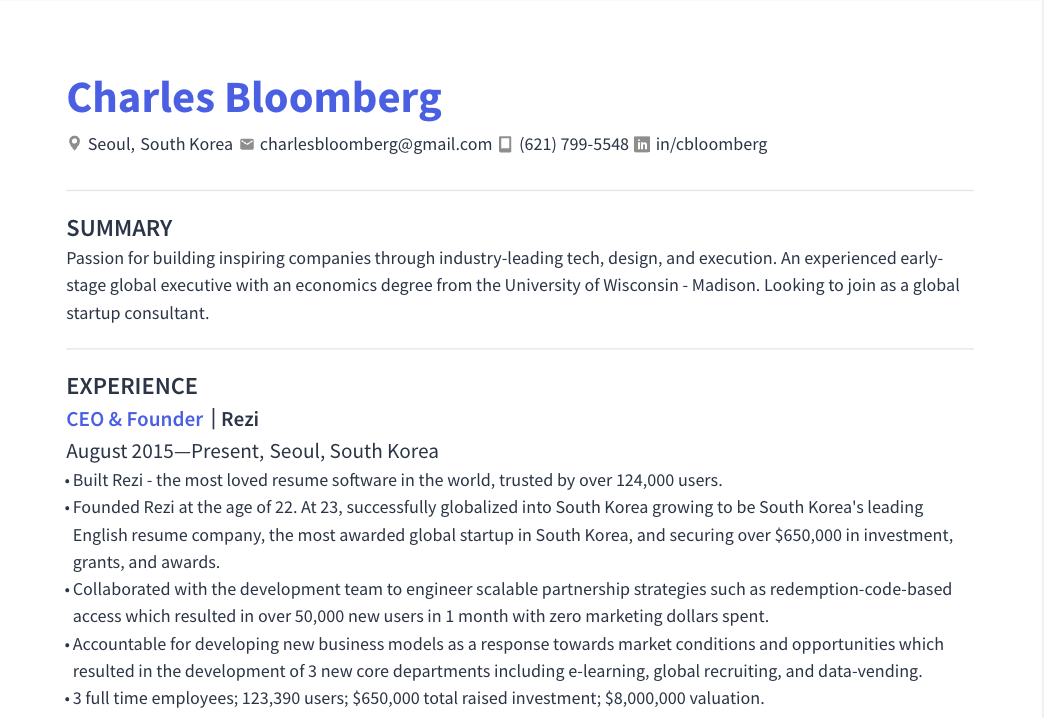
Impress employers and recruiters.
Choose from hundreds of resume examples.
Impress employers and recruiters.
Choose from hundreds of resume examples.
Tailor your resume to this Applied ML Scientist, Physical AI role.
Rezi rewrites your resume against Vector Institute's job description. Free.
Tailor your resume to this Applied ML Scientist, Physical AI role.
Rezi rewrites your resume against Vector Institute's job description. Free.
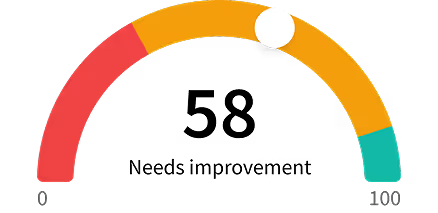
Don't guess if your resume is good enough.
See how it scores against the Applied ML Scientist, Physical AI posting at Vector Institute — free, in seconds.
Don't guess if your resume is good enough.
See how it scores against the Applied ML Scientist, Physical AI posting at Vector Institute — free, in seconds.
About the Role
As an Applied Machine Learning Scientist, Physical AI, you will develop and apply state-of-the-art machine learning methods to enable intelligent, reliable, and safe robots to perceive, reason, and act in the physical world. You will focus on robotic manipulation and embodied AI, bridging advances in machine learning with practical robotic systems. You will work with ML researchers, Applied ML specialists, research professionals, and robotics experts to design, develop, evaluate, and deploy robotic AI policies in simulation and on physical embodiments. This scope includes working across data generation, simulation environments, model/policy development and evaluation, with a focus on bridging the sim-to-real gap and enabling reliable behavior in real-world environments. The role encourages publishing applied research while maintaining a strong focus on translating research advances into impactful prototypes, tools, and real-world solutions.
Responsibilities
- Research and implement state-of-the-art methods for robotic manipulation, robot learning, and Physical AI.
- Design, develop, and benchmark robotic AI policies using modern architectures like vision-language-action models, world models, diffusion policies, etc.
- Develop synthetic data generation, simulation, and evaluation strategies for robotic learning, including the research and application of world models, with a focus on reducing the sim-to-real gap and identifying and mitigating model failure modes.
- Design policy training and fine-tuning pipelines that combine teleoperation data and synthetic demonstrations with techniques like reinforcement learning and imitation learning for dexterous manipulation.
- Investigate approaches for improving the generalization, robustness, sample efficiency, safety, and adaptability of learned robotic policies across tasks, environments, and hardware platforms.
- Collaborate with researchers, AI engineering team members, and external partners to build prototypes, demonstrations, and MVPs.
- Work with engineering teams and external collaborators to build tools and frameworks that accelerate the development and deployment of robotic policies on physical embodiments.
- Provide scientific guidance on Physical AI, robotics, and robotic manipulation strategies, technical approaches, and research roadmaps.
- Serve as a technical lead for Vector Physical AI and robotics projects, including contributing to and/or leading peer-reviewed publications and technical reports.
- Share expertise through training, workshops, and knowledge-transfer initiatives.
- Other related duties as assigned from time to time.
Requirements
- PhD in computer science, computer engineering, robotics, electrical engineering, mechanical engineering, or a related field, with a research focus on machine learning or robotics preferred.
- Experience developing and evaluating ML policies for robots, ideally including hands-on experience deploying policies on physical robotic hardware.
- Experience with robotic platforms, sensors, simulation environments, and/or robotics software such as ROS/ROS2.
- Strong Python skills and experience with deep learning frameworks such as PyTorch or JAX and related libraries for Generative AI and Physical AI development.
- Strong understanding of machine learning and Physical AI fundamentals, including deep learning, representation learning, reinforcement learning, diffusion, vision language and reasoning models, and model evaluation.
- Strong research record demonstrated through publications, open-source contributions, or impactful robotics/ML projects.
- Experience with NVIDIA's Physical AI ecosystem (or comparable platforms), including Isaac Lab, Isaac Sim, and Cosmos, is considered an asset.
- Experience with vision-language-action models, world models, multimodal foundation models, or robotics foundation models is considered an asset.
- Experience optimizing and deploying machine learning models on real-world robotic systems, including considerations such as latency, compute constraints, reliability, and safety, is considered an asset.
- Knowledge or experience in AI safety, interpretability, transparency, robustness, or responsible AI, particularly as applied to embodied or robotic systems, is considered an asset.
- Experience building agentic AI systems for multi-step workflows including failure recovery and foundation model reasoning is considered an asset.
Skills
- Machine Learning
- Robotic Manipulation
- Physical AI
- Embodied AI
- Robotics
- Python
- PyTorch
- JAX
- Generative AI
- Deep Learning
- Representation Learning
- Reinforcement Learning
- Diffusion Models
- Vision Language Models
- Reasoning Models
- Model Evaluation
- ROS/ROS2
- NVIDIA's Physical AI ecosystem (Isaac Lab, Isaac Sim, Cosmos)
- Vision-language-action models
- World models
- Multimodal foundation models
- Robotics foundation models
- AI safety
- Interpretability
- Transparency
- Robustness
- Responsible AI
- Agentic AI systems
Location
- Remote
- Hybrid
Work Type
- Full-time
Experience Level
- PhD preferred
- Experience developing and evaluating ML policies for robots
- Hands-on experience deploying policies on physical robotic hardware
- Experience with robotic platforms, sensors, simulation environments
- Experience with robotics software such as ROS/ROS2
- Strong Python skills
- Experience with deep learning frameworks (PyTorch, JAX)
- Strong understanding of machine learning and Physical AI fundamentals
- Strong research record
- Experience with NVIDIA's Physical AI ecosystem
- Experience with vision-language-action models, world models, multimodal foundation models, or robotics foundation models
- Experience optimizing and deploying machine learning models on real-world robotic systems
- Knowledge or experience in AI safety, interpretability, transparency, robustness, or responsible AI
- Experience building agentic AI systems
Education Level
- PhD in computer science, computer engineering, robotics, electrical engineering, mechanical engineering, or a related field
Salary/Compensations
- $125,800 - $157,300 per year
Benefits
- Vacation time
- Floater days
- GRRSP
- Health Spending Account
- Summer Hours program
- Flexible work arrangements
About the Company
- Vector believes AI powers possibility by advancing cutting-edge research and translating it into real-world impact through collaboration with research, industry, and government.
- Vector is committed to fostering a diverse and inclusive culture that reflects its values.
Equal Opportunity
- The Vector Institute welcomes applications from all qualified candidates, including those who are Indigenous, 2SLGBTQIA+, racialized persons/visible minorities, women, and people with disabilities.
- If you require an accommodation at any stage of the recruitment or selection process, please contact hr@vectorinstitute.ai. The Vector Institute team will be happy to work with you to ensure your experience is as inclusive and accessible as possible.