Impress employers and recruiters.
Choose from hundreds of resume examples.
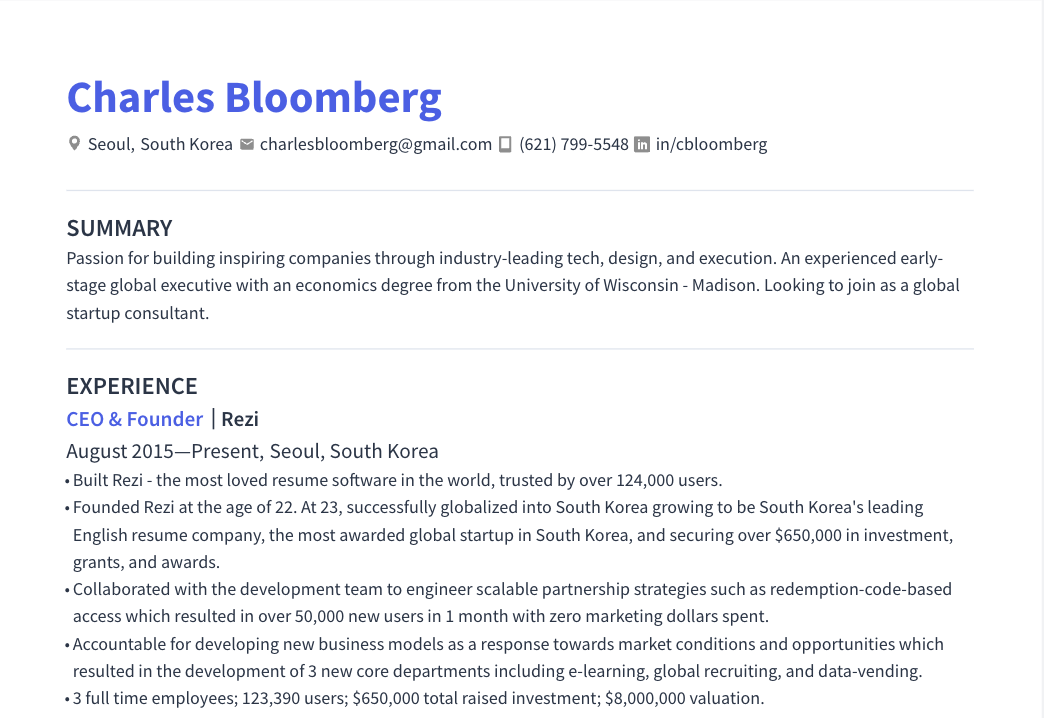
Impress employers and recruiters.
Choose from hundreds of resume examples.
Tailor your resume to this Economic Systems Foresight Lead role.
Rezi rewrites your resume against CFA Institute's job description. Free.
Tailor your resume to this Economic Systems Foresight Lead role.
Rezi rewrites your resume against CFA Institute's job description. Free.
Don't guess if your resume is good enough.
See how it scores against the Economic Systems Foresight Lead posting at CFA Institute — free, in seconds.
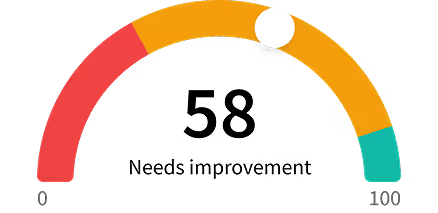
Don't guess if your resume is good enough.
See how it scores against the Economic Systems Foresight Lead posting at CFA Institute — free, in seconds.
About the Role
The Economic Systems Foresight Lead is the senior economic specialist responsible for interpreting major structural disruptions into economic and macro-financial insights to guide the CFA Institute's understanding of global finance evolution. This role focuses on the economic implications of significant structural changes like AI, private markets, and geopolitical shifts, contributing to long-term analysis without focusing on near-term forecasting or cyclical market commentary. It involves examining how structural changes affect capital flows, growth, and market structure, developing economic framings and hypotheses to support foresight priorities. A key purpose is internal enablement, partnering with various teams to challenge assumptions and assess the impact of structural change on existing work, while also translating economic analysis into thought leadership for both internal and external audiences.
Responsibilities
- Analyze the economic and macro-financial implications of major structural disruptions, prioritizing material changes while maintaining awareness of longer-horizon developments.
- Map transmission mechanisms through which structural forces affect capital flows, growth, labor markets, inflation, financial conditions, market structure, institutions, and investment practice.
- Translate structural change into clear economic questions, hypotheses, critical uncertainties, regime logics, and conditional pathways to inform Foresight priorities.
- Contribute economic expertise to scenario development and stress-testing, defining relevant drivers, constraints, and effects.
- Use macroeconomic, financial, capital-flow, policy, and cross-country evidence to substantiate, challenge, and update structural assumptions.
- Identify relevant economic thresholds, breakpoints, sensitivities, and reassessment triggers indicating changing structural conditions.
- Assess how structural disruption may challenge economic assumptions embedded in investment theory, market practice, research, standards, or advocacy positions.
- Partner with RPC functional teams to stress-test existing work where changing economic conditions may affect its relevance.
- Support RPC’s living-readiness discipline by identifying material economic developments that should trigger reassessment of existing assumptions.
- Produce timely economic landscape assessments, executive briefings, and contributions to broader Foresight outputs.
- Develop high-quality external thought leadership translating structural economic change into accessible implications for finance and investment practice.
- Engage economists, market practitioners, policymakers, academics, and other experts to challenge assumptions and strengthen economic analysis.
- Respond to priority questions from leadership where economic expertise is needed to assess structural developments or inform decisions.
Requirements
- Deep expertise in macroeconomics, political economy, economic systems analysis, or a closely related field.
- Strong understanding of how economic systems interact with financial markets, institutions, capital allocation, and investment practice.
- Demonstrated ability to analyze structural economic change rather than relying primarily on cyclical or short-term forecasting frameworks.
- Strong understanding of economic transmission mechanisms and ability to construct coherent pathways, regime logics, and conditional interpretations under uncertainty.
- Quantitative fluency and ability to work critically with macroeconomic, financial, capital-flow, and cross-country data.
- Strong empirical judgment, including the ability to distinguish supported evidence from hypothesis or uncertainty.
- Strong systems thinking, connecting economic dynamics with technological, geopolitical, regulatory, market, and institutional change.
- Ability to identify second- and third-order effects, critical assumptions, and conditions under which economic relationships may change.
- Ability to translate complex economic developments into clear questions, hypotheses, scenarios, and implications for non-specialist audiences and other subject-matter experts.
- Strong collaborative skills and ability to operate effectively within a multidisciplinary Foresight team.
- Strong stakeholder-management skills, including the ability to engage constructively with senior internal stakeholders and external experts.
- Exceptional written and verbal communication skills, including the ability to explain complex economic dynamics clearly and concisely.
Skills
- Macroeconomics
- Political economy
- Economic systems analysis
- Financial markets analysis
- Capital allocation
- Investment practice
- Structural economic change analysis
- Economic transmission mechanisms
- Quantitative analysis
- Empirical judgment
- Systems thinking
- Scenario development
- Thought leadership
- Stakeholder management
- Written communication
- Verbal communication
Experience Level
- Senior
Benefits
- Health coverage
- Generous time off
- Competitive retirement plans
- Flexible work options
- Wellbeing and development programs
About the Company
- CFA Institute is the global leader in investment excellence and ethics.
- With nearly 200,000 charterholders across 160 markets, we promote professional growth, uphold ethical standards, and help advance better financial markets.
- Join a global organization committed to putting investors first.
Equal Opportunity
- We are an Equal Opportunity Employer. CFA Institute prohibits both discrimination and harassment with regard to all identifying characteristics: any individual employee, group of employees, or prospective employee on the basis of race, color, national origin, citizenship or immigration status, religion, creed or belief, age, marital or partnership status, marital or family status, care giver status, pregnancy and maternity, sexual and other reproductive health decisions, physical abilities/qualities, disability, sexual orientation, gender, gender identity or expression, predisposing genetic characteristic, military or veteran status, status as a victim or witness of domestic violence or sex offense or stalking, unemployment status, infectious disease carrier status, migrant worker status, educational background, socio-economic status, geographic location and culture or any other basis protected by applicable law.
- This policy impacts all aspects of employment, including but not limited to, recruitment, hiring, compensation, training, development, promotion, demotion, layoff, recall, furlough, transfer, leave of absence, and dismissal.
- This is a global policy that applies to all CFA Institute employees, regardless of location.