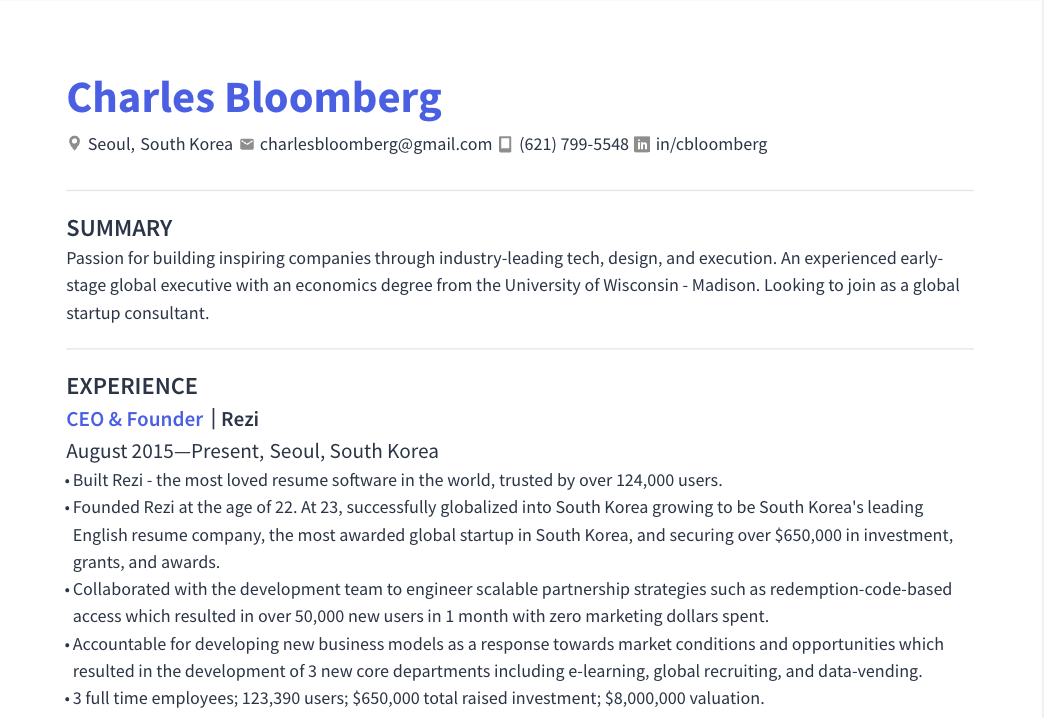
Impress employers and recruiters.
Choose from hundreds of resume examples.
Impress employers and recruiters.
Choose from hundreds of resume examples.
Tailor your resume to this Software Engineer-Remote role.
Rezi rewrites your resume against UnitedHealth Group's job description. Free.
Tailor your resume to this Software Engineer-Remote role.
Rezi rewrites your resume against UnitedHealth Group's job description. Free.
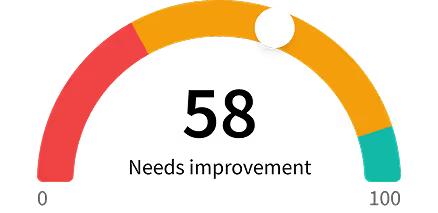
Don't guess if your resume is good enough.
See how it scores against the Software Engineer-Remote posting at UnitedHealth Group — free, in seconds.
Don't guess if your resume is good enough.
See how it scores against the Software Engineer-Remote posting at UnitedHealth Group — free, in seconds.
About the Role
This role supports the Identity Management rebuild initiative and ongoing support for the existing application. The Software Engineer will design, build, test, deploy, and operate scalable APIs, microservices, and data-intensive backend services. The role retains a solid foundation in Python and PySpark while expanding into API development, cloud-native application engineering, automation, observability, and secure software delivery.
Responsibilities
- Design, develop, test, deploy, and support backend applications, RESTful APIs, and microservices for the Identity Management rebuild and existing application
- Build production-quality services using Python and modern API frameworks
- Develop data-intensive application components and distributed processing workflows using PySpark and Azure Databricks and Azure Data Factory
- Define clear API contracts, request and response models, error-handling standards, versioning strategies, and service documentation using OpenAPI or Swagger
- Implement resilient microservice patterns, including service-to-service communication, retries, timeouts, idempotency, asynchronous processing, and graceful failure handling
- Create automated unit, integration, API, regression, and performance tests; integrate quality checks into CI/CD pipelines
- Implement application logging, metrics, tracing, alerting, and dashboards to improve observability, incident response, and operational reliability
- Apply secure coding practices, authentication and authorization controls, secrets management, encryption, and privacy-by-design principles
- Troubleshoot production issues, perform root cause analysis, improve service performance, and contribute to scalability and cost optimization
- Use Git-based engineering practices, code reviews, branching strategies, automated builds, release controls, and infrastructure-aware deployment workflows
- Use enterprise-approved AI tools and custom agents to accelerate coding, testing, documentation, debugging, monitoring, and operational support
- Collaborate with product, data engineering, platform engineering, architecture, security, and application teams to deliver priorities and communicate risks, dependencies, and progress
Requirements
- 5+ years of hands-on software engineering experience building and operating enterprise applications, backend services, APIs, or microservices
- 5+ years of hands-on experience with Python, including object-oriented programming, modular design, exception handling, packaging, automation, and maintainable coding practices
- 3+ years of hands-on experience developing RESTful APIs and working with API specifications, validation, authentication, versioning, and documentation
- 3+ years of hands-on experience with PySpark for distributed processing, transformation, data validation, and performance tuning
- 2+ years of working experience with Azure Databricks or similar distributed data platforms for data-intensive application use cases
- 2+ years of working experience with relational and NoSQL databases, data modeling, SQL, transaction patterns, and application-level data access
- Experience designing and building microservices, including service decomposition, interface design, scalability, resilience, and operational support
- Experience with automated testing frameworks such as pytest and unit, integration, API, and regression testing practices
- Git experience, including pull requests, code reviews, branching strategies, CI/CD fundamentals, release management, and production support
- Experience with Docker and a working understanding of Kubernetes or managed container platforms
- Experience implementing logging, monitoring, alerting, metrics, and distributed tracing for production services
- Understanding of software design principles, common design patterns, clean code, code quality, and maintainable architecture
- Basic working understanding of cloud security, identity and access management, data privacy, governance, and enterprise compliance concepts
- Proven good problem-solving and root cause analysis skills, with the ability to troubleshoot across application, API, data, and cloud layers
- Proven good communication and collaboration skills, with the ability to explain technical decisions, risks, dependencies, and delivery progress clearly
- Experience with event-driven architecture and messaging technologies such as Kafka, Azure Event Hubs, Azure Service Bus, or comparable platforms
- Experience supporting performance testing, capacity planning, secure software development lifecycle practices, and cloud cost optimization
- Experience building identity management, identity resolution, consumer profile, member/customer identity, or entity-resolution applications
- Hands-on experience with Azure Data Factory and data pipeline orchestration
- Hands-on experience building or supporting custom AI agents for coding, testing, documentation, validation, monitoring, incident triage, or workflow automation
- Healthcare, insurance, consumer profile, or enterprise identity data experience
- Knowledge of caching, API gateways, load balancing, rate limiting, asynchronous programming, and high-availability design
- Demonstrate baseline proficiency with enterprise-approved AI tools such as GitHub Copilot, Microsoft 365 Copilot, Databricks Genie, and other approved GenAI platforms, where applicable
- Apply AI tools responsibly to improve coding, code review, test creation, technical documentation, debugging, analysis, monitoring, and delivery quality
- Use or support custom agents for software development, automated testing, API validation, failure detection, incident triage, runbook execution, and operational reporting
- Follow enterprise guidance for responsible AI use, data protection, human review, security, and software quality
- Balances solid software engineering discipline with practical data engineering knowledge
- Builds secure, observable, maintainable services that can be supported reliably in production
- Works effectively across application, data, platform, security, and business teams
- Continuously improves engineering productivity through automation, reusable components, and responsible use of AI-assisted development tools
- Candidates are required to pass a drug test before beginning employment.
Skills
- Python
- PySpark
- API development
- Cloud-native application engineering
- Automation
- Observability
- Secure software delivery
- RESTful APIs
- Azure Databricks
- Azure Data Factory
- OpenAPI
- Swagger
- Microservices
- Automated testing
- CI/CD pipelines
- Git
- Docker
- Kubernetes
- Logging
- Monitoring
- Alerting
- Metrics
- Distributed tracing
- Software design principles
- Clean code
- Maintainable architecture
- Cloud security
- Identity and access management
- Data privacy
- Governance
- Enterprise compliance
- Problem-solving
- Root cause analysis
- Communication
- Collaboration
- Event-driven architecture
- Messaging technologies
- Kafka
- Azure Event Hubs
- Azure Service Bus
- Performance testing
- Capacity planning
- Secure software development lifecycle
- Cloud cost optimization
- Identity management
- Identity resolution
- Consumer profile
- Member/customer identity
- Entity-resolution
- Data pipeline orchestration
- Custom AI agents
- Healthcare data
- Insurance data
- Enterprise identity data
- Caching
- API gateways
- Load balancing
- Rate limiting
- Asynchronous programming
- High-availability design
- GitHub Copilot
- Microsoft 365 Copilot
- Databricks Genie
- GenAI platforms
Location
- Remote (U.S.)
- Minneapolis
- Washington, D.C.
Work Type
- Remote
- Onsite (minimum four days per week in Minneapolis or Washington, D.C. area)
Experience Level
- 5+ years of software engineering experience
- 2+ years of working experience with Azure Databricks or similar distributed data platforms
- 2+ years of working experience with relational and NoSQL databases
- Experience designing and building microservices
- Experience with automated testing frameworks
- Git experience
- Experience with Docker
- Experience implementing logging, monitoring, alerting, metrics, and distributed tracing
- Experience with event-driven architecture and messaging technologies
- Experience supporting performance testing, capacity planning, secure software development lifecycle practices, and cloud cost optimization
- Experience building identity management, identity resolution, consumer profile, member/customer identity, or entity-resolution applications
- Hands-on experience with Azure Data Factory and data pipeline orchestration
- Hands-on experience building or supporting custom AI agents
- Healthcare, insurance, consumer profile, or enterprise identity data experience
- Knowledge of caching, API gateways, load balancing, rate limiting, asynchronous programming, and high-availability design
Salary/Compensations
- $72,800 - $130,000 annually
Benefits
- Comprehensive benefits package
- Incentive and recognition programs
- Equity stock purchase
- 401k contribution
About the Company
- Optum Tech is a global leader in health care innovation.
- Our teams develop cutting-edge solutions that help people live healthier lives and help make the health system work better for everyone.
- From advanced data analytics and AI to cybersecurity, we use innovative approaches to solve some of health care’s most complex challenges.
- Your contributions here have the potential to change lives.
- Ready to build the next breakthrough? Join us to start Caring. Connecting. Growing together.
- At UnitedHealth Group, our mission is to help people live healthier lives and make the health system work better for everyone.
- We believe everyone–of every race, gender, sexuality, age, location and income–deserves the opportunity to live their healthiest life.
- Today, however, there are still far too many barriers to good health which are disproportionately experienced by people of color, historically marginalized groups and those with lower incomes.
- We are committed to mitigating our impact on the environment and enabling and delivering equitable care that addresses health disparities and improves health outcomes — an enterprise priority reflected in our mission.
Equal Opportunity
- UnitedHealth Group is an Equal Employment Opportunity employer under applicable law and qualified applicants will receive consideration for employment without regard to race, national origin, religion, age, color, sex, sexual orientation, gender identity, disability, or protected veteran status, or any other characteristic protected by local, state, or federal laws, rules, or regulations.
- UnitedHealth Group is a drug - free workplace.