Senior Data Engineer, Risk Technology
Investment Management Corporation of Ontario (IMCO) · CA
2 hours agoImpress employers and recruiters.
Choose from hundreds of resume examples.
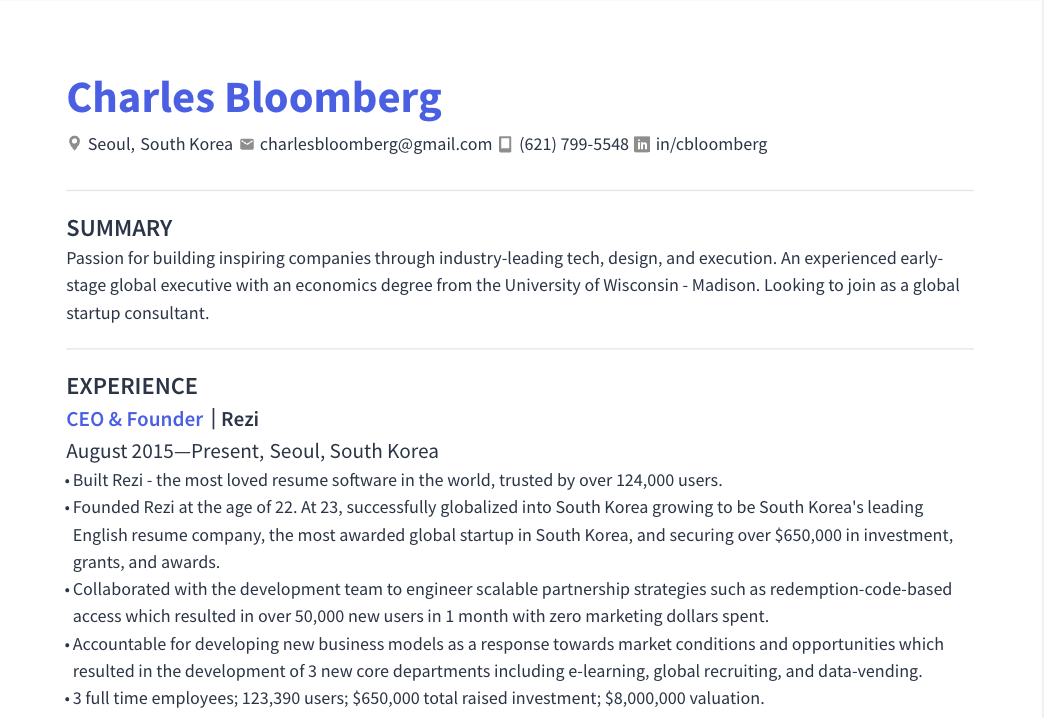
Impress employers and recruiters.
Choose from hundreds of resume examples.
Tailor your resume to this Senior Data Engineer, Risk Technology role.
Rezi rewrites your resume against Investment Management Corporation of Ontario (IMCO)'s job description. Free.
Tailor your resume to this Senior Data Engineer, Risk Technology role.
Rezi rewrites your resume against Investment Management Corporation of Ontario (IMCO)'s job description. Free.
Don't guess if your resume is good enough.
See how it scores against the Senior Data Engineer, Risk Technology posting at Investment Management Corporation of Ontario (IMCO) — free, in seconds.
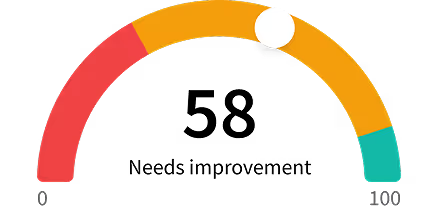
Don't guess if your resume is good enough.
See how it scores against the Senior Data Engineer, Risk Technology posting at Investment Management Corporation of Ontario (IMCO) — free, in seconds.
About the Role
As a key member of the Risk Technology team, the Senior Data Engineer will be the team’s senior hands-on Power BI developer, responsible for designing complex reports and visuals, scalable semantic models, and governed business intelligence solutions. The role also requires strong data engineering capability, building and supporting reliable data pipelines that hydrate Power BI semantic models from enterprise data warehouses and developing complex ETL and transformation solutions using Azure Databricks, Snowflake, Azure Data Factory, SQL, Python, and PySpark. This position combines deep technical delivery with stakeholder partnership.
Responsibilities
- Design, develop, test, deploy, and support sophisticated Power BI reports, dashboards, and interactive visual experiences for Investment Risk and related stakeholders.
- Build and optimize enterprise-grade Power BI semantic models, including dimensional design, relationships, measures, calculation groups where appropriate, row-level security, object-level security, incremental refresh, and model performance tuning.
- Write and optimize complex DAX and Power Query (M) logic, applying clear development standards and reusable design patterns.
- Partner closely with business users to translate analytical requirements into intuitive visual designs, rapidly prototype solutions, validate usability, and incorporate feedback throughout delivery.
- Understand and actively manage Fabric capacity considerations, including compute consumption, memory guardrails, concurrency, refresh demand, background versus interactive workloads, throttling risk, and workload optimization.
- Use capacity and performance telemetry to identify bottlenecks, recommend remediation, and balance report responsiveness, refresh schedules, model size, and platform stability.
- Design and support data pipelines that reliably hydrate Power BI semantic models from Snowflake, Databricks, enterprise data warehouses, lakehouses, and other approved data sources.
- Implement governed Power BI access management, including workspaces, apps, audiences, Microsoft Entra security groups, role-based access, sharing, row-level security, deployment permissions, and periodic access reviews.
- Design, build, test, and support Power Automate cloud flows that extend Power BI solutions through data-driven alerts, notifications, approvals, scheduled actions, and user-triggered workflows.
- Apply appropriate Power Automate governance and support practices, including connection management, environment awareness, secure sharing, run monitoring, exception handling, and operational documentation.
- Promote effective Power BI lifecycle management through source control, deployment pipelines, environment segregation, release controls, documentation, and CI/CD practices.
- Develop complex, performant, and maintainable solutions in Azure Databricks and Snowflake using SQL, Python, and PySpark.
- Develop and orchestrate data integration workflows using Azure Data Factory and other approved Azure data services.
- Create and optimize database objects, data transformations, data quality controls, and reconciliation processes with a strong understanding of dimensional and analytical data modeling.
- Build custom services and workflows when needed to complement platform capabilities, including file-format conversion, third-party API integration, and external web-service calls.
- Automate manual processes and improve data delivery, observability, scalability, recoverability, and operational efficiency.
- Contribute to solution architecture and technical design for the Databricks, Snowflake, Microsoft Fabric, and Azure data ecosystem.
- Work closely with business systems analysts, subject-matter experts, platform teams, and vendors to deliver solutions, investigate root causes, recommend changes, and maintain accurate technical and operational documentation.
- Monitor production solutions, investigate incidents, perform performance tuning, and enhance service reliability through effective incident, problem, change, configuration, and release-management practices.
- Prepare functional and technical specifications, data-flow documentation, support procedures, test evidence, deployment plans, and knowledge-transfer materials.
- Facilitate testing and production implementation while acting as a trusted liaison between Technology, Investment Risk stakeholders, and external solution providers.
- Share design, coding, troubleshooting, and analytical practices with colleagues through reviews, pairing, documentation, and knowledge sessions.
- Demonstrate a constructive and collaborative working style, openness to feedback, accountability for outcomes, and willingness to support colleagues across disciplines.
- Participate effectively in the organization’s hybrid working model, including regular in-office collaboration with the team and stakeholders.
Requirements
- Minimum 7 years of progressive experience in advanced Power BI development expertise, including complex report design, visual storytelling, semantic modeling, DAX, Power Query, model optimization, refresh design, and troubleshooting.
- Experience of delivering data, analytics, data warehousing, or business intelligence solutions, with substantial recent hands-on Power BI development experience.
- Demonstrated experience building governed, enterprise-scale Power BI solutions rather than solely creating ad hoc or departmental reports.
- Hands-on Microsoft Fabric experience, or directly transferable experience with Power BI Premium capacity, including capacity monitoring, compute and memory constraints, workload management, performance tuning, and migration planning.
- Experience designing and operating pipelines that load or transform data for Power BI semantic models from cloud data warehouses or Lakehouse platforms.
- Practical experience administering Power BI access through workspaces, apps, audiences, security groups, permissions, and row-level security, with an understanding of least-privilege access and controlled content distribution.
- Hands-on experience developing and supporting Power Automate cloud flows, ideally integrated with Power BI, Microsoft 365, approvals, alerts, or other enterprise services.
- Minimum 3 years of Databricks experience with strong data engineering experience, including complex transformations and performance-aware development.
- Advanced SQL skills, including complex queries, tables, views, stored procedures, query optimization, and performance tuning.
- Proficiency in Python and PySpark for scalable data processing and automation.
- Developed data warehouses with change data capture (CDC) and implemented dimensional data warehouses.
- Understanding data quality, GitHub source control, CI/CD, and production support practices for enterprise BI and data solutions.
- Strong communication, problem-solving, prioritization, and collaboration skills, with the ability to work effectively with technical and business stakeholders in a hybrid environment.
- Experience in financial services, pension management, investment management, and capital markets is desirable.
- Relevant Microsoft Power BI, Fabric, Azure data engineering, Databricks, Snowflake, or Power Platform certification is an asset.
- Candidates being considered for this position will be required to undergo background screening.
Skills
- Power BI
- DAX
- Power Query (M)
- Microsoft Fabric
- Power BI Premium capacity
- Power Automate
- Azure Databricks
- Snowflake
- Azure Data Factory
- SQL
- Python
- PySpark
- Dimensional data modeling
- Analytical data modeling
- Data quality
- GitHub source control
- CI/CD
- Production support
Location
- Downtown Toronto
- 16 York Street, Suite 2400, Toronto, ON M5J 0E6
Work Type
- Hybrid
- Office-first approach
- Regular in-office collaboration
Experience Level
- Senior
- Minimum 7 years of progressive experience in advanced Power BI development
- Minimum 3 years of Databricks experience
Salary/Compensations
- CAD $105,000.00 - $138,000.00
Benefits
- Annual incentive plan
- Comprehensive benefits package
- Defined benefit pension plan
About the Company
- IMCO offers a uniquely stimulating and rewarding environment where you can help build and drive organizational transformation, all while seeking to challenge yourself, learn, and grow your career.
- Our culture is built on collaboration and passion, with a shared commitment to delivering lasting value to the clients we serve.
- Our vision is to be the partner of choice for Ontario’s public sector funds and to build a high-performing, value-driven asset management firm.
- Risk Technology is part of the Data Technology group and partners primarily with Investment Risk to deliver technology, data, analytics, reporting, and production-support capabilities through small and medium-sized initiatives, multi-year programs, and ongoing operational services.
Equal Opportunity
- IMCO is committed to providing accommodation for people with disabilities throughout the recruitment process. If you require support, please let us know and we will work with you to meet your needs.
- Artificial intelligence (AI) tools may be used to support parts of our recruitment process, such as screening and assessments. However, all hiring decisions are made by our recruitment team.