Impress employers and recruiters.
Choose from hundreds of resume examples.
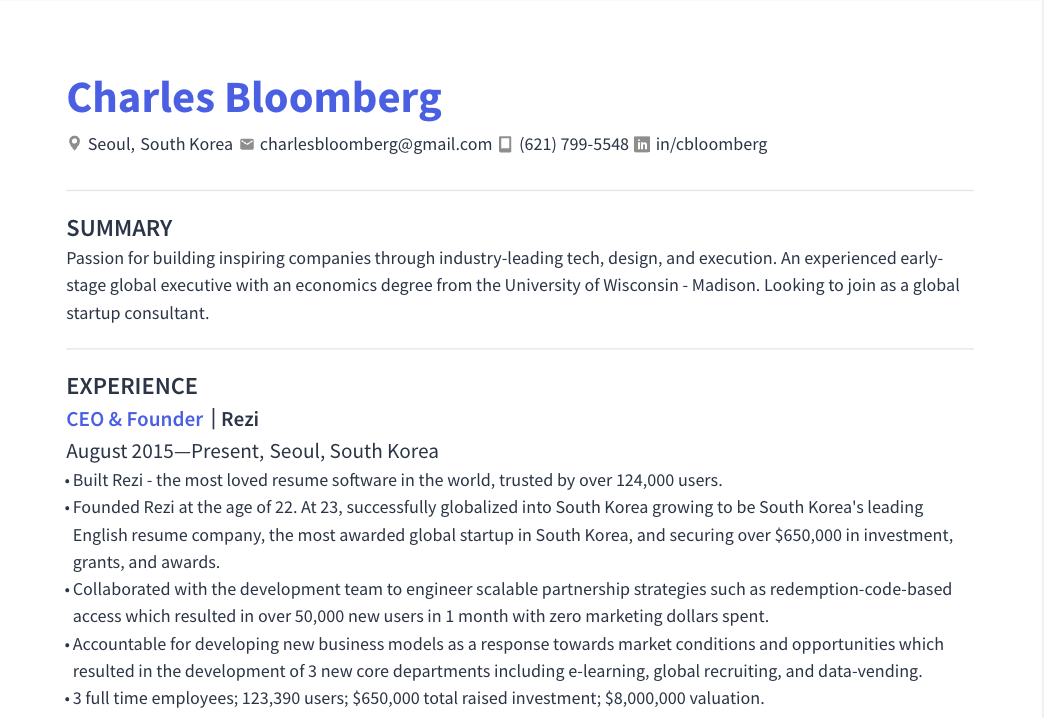
Impress employers and recruiters.
Choose from hundreds of resume examples.
Tailor your resume to this Quantum Algorithm Engineer - Detection role.
Rezi rewrites your resume against Oxford Quantum Circuits's job description. Free.
Tailor your resume to this Quantum Algorithm Engineer - Detection role.
Rezi rewrites your resume against Oxford Quantum Circuits's job description. Free.
Don't guess if your resume is good enough.
See how it scores against the Quantum Algorithm Engineer - Detection posting at Oxford Quantum Circuits — free, in seconds.
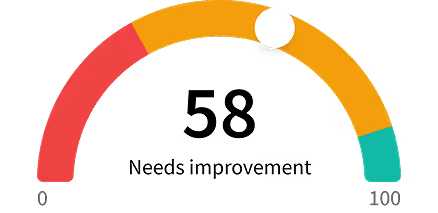
Don't guess if your resume is good enough.
See how it scores against the Quantum Algorithm Engineer - Detection posting at Oxford Quantum Circuits — free, in seconds.
About the Role
Develop and evaluate quantum methods for detection, prediction, and estimation workloads. Establish credible evidence for performance on real hardware, understanding the quantum component's contribution, portability, and value.
Responsibilities
- Develop quantum parent methods for detection, prediction, and related estimation workloads.
- Explore approaches spanning quantum kernels, variational models, estimation, optimisation, and sampling.
- Design quantum advice and observable-acquisition strategies suitable for downstream shadow-model training.
- Analyse circuit cost, sample complexity, measurement requirements, noise robustness, and resource requirements.
- Evaluate algorithm and circuit portability across quantum hardware, including the impact of compilation and hardware constraints.
- Design controlled ablation studies that isolate and quantify the contribution of individual quantum components.
- Benchmark theoretical expectations against evidence from real hardware, using results to guide algorithm development and product decisions.
Requirements
- Broad quantum algorithm expertise across areas such as quantum kernels, variational models, estimation, optimisation, or sampling.
- Strong algorithm analysis skills, including resource estimation and understanding the practical costs of quantum execution.
- Strong knowledge of quantum measurement strategies and their impact on algorithm performance.
- Experience analysing noise sensitivity and the behaviour of algorithms under realistic hardware constraints.
- Understanding of quantum compilation and its impact on performance and hardware portability.
- Ability to design rigorous experiments and distinguish theoretical promise from evidence demonstrated on real quantum hardware.
- Strong ownership and communication skills, with the ability to work effectively across quantum, software, product, and engineering disciplines.
- Degree or equivalent practical experience in Quantum Computing, Computer Science, Physics, or a related discipline.
- Experience taking quantum research software or experimental methods into repeatable engineering workflows.
- Experience evaluating quantum algorithms across different hardware platforms or architectures.
- Familiarity with regulated enterprise use cases and evidence-led product development.
- Experience developing quantum methods that contribute to hybrid classical-quantum workflows.
- A pragmatic, curious approach and comfort working in a fast-evolving technical environment.
- A relevant professional or postgraduate qualification.
Skills
- Quantum kernels
- Variational models
- Estimation
- Optimisation
- Sampling
- Algorithm analysis
- Resource estimation
- Quantum measurement strategies
- Noise sensitivity analysis
- Quantum compilation
- Experimental design
- Communication skills
- Ownership
Location
- London
Work Type
- Full-time
Experience Level
- Mid-level
- Senior
Education Level
- Degree in Quantum Computing, Computer Science, Physics, or related discipline
- Equivalent practical experience
- Professional qualification
- Postgraduate qualification
Benefits
- World-class team
- Culture of bold innovation
- Unique lab infrastructure
- Opportunity to redefine the limits of computation
About the Company
- OQC is building the future of quantum computing, transitioning it from an academic dream into a commercial reality.
- Recently closed a £260 million Series C funding round, the largest ever for a European quantum computing company.