Impress employers and recruiters.
Choose from hundreds of resume examples.
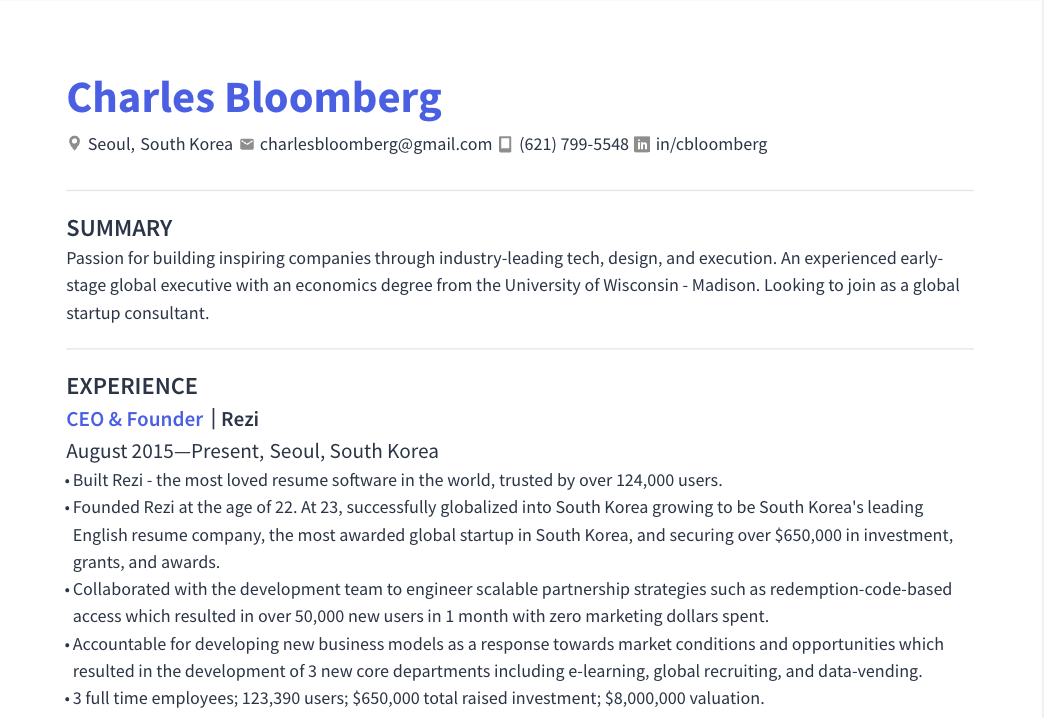
Impress employers and recruiters.
Choose from hundreds of resume examples.
Tailor your resume to this Head of IT Business Applications role.
Rezi rewrites your resume against Twelve NYC's job description. Free.
Tailor your resume to this Head of IT Business Applications role.
Rezi rewrites your resume against Twelve NYC's job description. Free.
Don't guess if your resume is good enough.
See how it scores against the Head of IT Business Applications posting at Twelve NYC — free, in seconds.
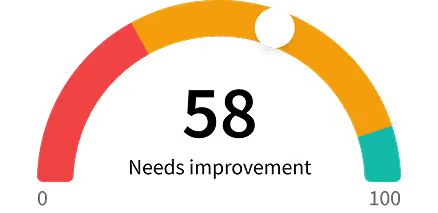
Don't guess if your resume is good enough.
See how it scores against the Head of IT Business Applications posting at Twelve NYC — free, in seconds.
About the Role
The Head of Information Technology & Business Applications leads the technology, systems, data, and digital infrastructure supporting Twelve's global operations. This role ensures employees across the US and EMEA have secure, reliable, and scalable tools for efficient execution, strong client service, and business growth. The leader owns technology strategy, enterprise applications, IT service delivery, cybersecurity, systems integration, data governance, business continuity, and vendor management. This role partners with functional leaders to translate business requirements into practical solutions, strengthen controls, and ensure technology investments deliver measurable value. It is a hands-on leadership role requiring strategic judgment and disciplined execution, focusing on clear priorities, improved cross-functional workflows, and an accountable technology operating model.
Responsibilities
- Develop and execute global technology and business systems roadmap aligned with company growth priorities, operating model, client requirements, and risk profile.
- Establish governance for technology intake, prioritization, investment decisions, system ownership, architecture standards, and roadmap accountability.
- Advise executive leadership on technology priorities, dependencies, operating risks, investment tradeoffs, and emerging capabilities.
- Own the lifecycle, performance, and integration of core platforms including ERP, CRM, finance, project and workflow management, product lifecycle, HR, collaboration, reporting, and related systems.
- Define the target application architecture, system-of-record model, integration standards, data flows, and ownership across platforms.
- Partner with functional leaders to identify capability gaps, define requirements, and make build, buy, integrate, optimize, or retire decisions.
- Oversee end-user technology, connectivity, identity and access, device lifecycle management, collaboration tools, software provisioning, and employee technology support.
- Establish service standards for requests, incidents, escalations, root-cause resolution, documentation, release management, and user communication.
- Own the cybersecurity program, including policies, controls, monitoring, incident response, vulnerability management, security awareness, and remediation planning.
- Partner with Legal, Compliance, People Operations, and Finance to embed privacy, audit, segregation-of-duties, data-retention, and regulatory requirements into system and vendor decisions.
- Maintain tested backup, recovery, disaster response, and business continuity capabilities for critical technology services.
- Support client security reviews, audit requests, cyber-insurance requirements, and evidence readiness.
- Establish data ownership, master-data standards, quality controls, retention requirements, and access rules across business systems.
- Partner with Finance and functional leaders to improve reporting integrity, system-of-record discipline, and access to timely, decision-ready information.
- Build a practical roadmap for AI and automation that reduces manual work, improves accuracy and cycle time, and addresses priority business needs.
- Establish responsible AI standards covering approved tools, confidentiality, data use, accuracy, human oversight, security, and ongoing risk review.
- Map current workflows with business teams, identify root causes and control gaps, and redesign processes before introducing new technology.
- Reduce fragmented tools and manual handoffs by implementing reliable integrations, APIs, workflows, and automation across the end-to-end business process.
- Define baseline measures and track adoption, cycle time, data quality, service improvement, control effectiveness, and financial return.
- Lead technology implementations, upgrades, migrations, and integrations from discovery and business case through design, testing, training, launch, and stabilization.
- Set clear scope, milestones, decision rights, dependencies, risks, and success measures for each initiative.
- Create effective communication, training, and adoption plans and hold business owners accountable for decisions, testing, readiness, and sustained use.
- Manage the technology budget, licensing strategy, vendor portfolio, implementation partners, contracts, renewals, service levels, and performance reviews.
- Protect value through license optimization, clear statements of work, milestone controls, benefit tracking, and vendor accountability.
- Build the internal and external resources required to deliver reliable support and execute the technology roadmap.
- Operate as a strategic business partner connecting technology decisions to commercial, operational, and client outcomes.
- Translate complex technology issues into clear business implications, options, and recommendations.
- Balance urgent business needs with security, usability, cost, technical quality, and long-term maintainability.
- Drive adoption and accountability after launch, not only technical implementation.
- Provide transparent reporting on roadmap progress, system performance, adoption, incidents, risk, spend, vendor health, and realized business outcomes.
- Maintain a hands-on approach and step into operational detail when service delivery or business continuity requires it.
Requirements
- 10 or more years of progressive experience across enterprise technology, business applications, IT operations, technology consulting, or digital transformation, including significant leadership accountability.
- Demonstrated ownership of business-critical platforms such as ERP (NetSuite), CRM (Monday), finance, project or workflow management (Monday, Notion), product lifecycle, integration, data, and reporting systems.
- Working knowledge of end-user computing, SaaS administration, identity and access management, device lifecycle, service management, infrastructure, backup, recovery, and business continuity.
- Strong understanding of security controls, incident response, vendor risk, privacy requirements, audit support, and access governance.
- Strong understanding of SaaS architecture, APIs, integrations, master data, reporting, data governance, and application lifecycle management.
- Demonstrated ability to assess and implement practical AI or automation use cases with appropriate governance, security, measurement, and human oversight.
- Proven success delivering multi-system implementations, migrations, and process transformations with disciplined governance, testing, change management, and measurable adoption.
- Ability to translate business problems into practical technology and process solutions, challenge unclear requirements, and influence decisions across functions and seniority levels.
- Experience managing technology budgets, software licensing, implementation partners, contracts, and vendor performance with close attention to cost and value.
- Hands-on, pragmatic, service-oriented, and solutions-driven, with the judgment to balance speed, usability, risk, cost, and long-term scalability.
Skills
- ERP (NetSuite)
- CRM (Monday)
- Project management (Monday, Notion)
- Workflow management (Monday, Notion)
- Product lifecycle management
- Integration
- Data management
- Reporting systems
- End-user computing
- SaaS administration
- Identity and access management
- Device lifecycle management
- Service management
- Infrastructure management
- Backup and recovery
- Business continuity planning
- Cybersecurity controls
- Incident response
- Vendor risk management
- Privacy compliance
- Audit support
- Access governance
- SaaS architecture
- APIs
- Master data management
- Data governance
- Application lifecycle management
- AI implementation
- Automation implementation
- Change management
- Budget management
- Software licensing
- Contract management
- Vendor performance management
Location
- US
- EMEA
Work Type
- Hybrid
Experience Level
- 10+ years
Salary/Compensations
- $200k depending on experience
Benefits
- Medical
- Dental
- Vision
- Disability
- Life Insurance
- Mental Health Mondays (offices close globally once a month)
- Generous Paid Time Off (including birthday, personal days, time off around holidays)
- Paid Parental Leave
- Family planning and wellness benefits
- Summer Fridays
- Discretionary Bonuses
About the Company
- Twelve designs and builds merchandise and packaging for coveted brands, with expertise in global production, creative innovation, and sustainability.
- They turn bold ideas into elevated, high-impact realities for clients in luxury fashion, beauty, and lifestyle industries.
- Clients trust Twelve to deliver unforgettable experiences through beautifully executed product and packaging.
Equal Opportunity
- Twelve Inc. is committed to building an inclusive environment for people of all backgrounds and everyone is encouraged to apply.
- It is the policy of the Company to prohibit discrimination of any type and to afford equal employment opportunities to employees and applicants without regard to race, creed, color, religion, sex, national origin, ancestry, age, alienage or citizenship status, disability, or handicap, marital status, familial status, veteran status, sexual orientation, arrest record, genetic information or any other characteristic protected by applicable federal, state or local laws.