Impress employers and recruiters.
Choose from hundreds of resume examples.
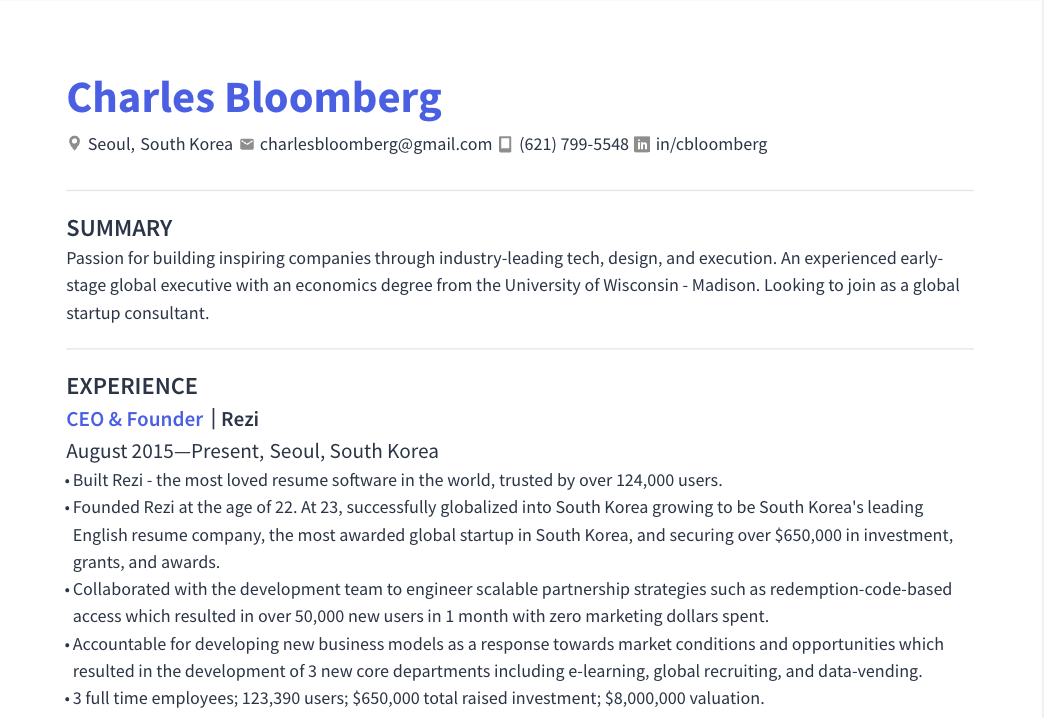
Impress employers and recruiters.
Choose from hundreds of resume examples.
Tailor your resume to this Postdoctoral Researcher, Experimental Data Generation & CRO Strategy role.
Rezi rewrites your resume against Microsoft's job description. Free.
Tailor your resume to this Postdoctoral Researcher, Experimental Data Generation & CRO Strategy role.
Rezi rewrites your resume against Microsoft's job description. Free.
Don't guess if your resume is good enough.
See how it scores against the Postdoctoral Researcher, Experimental Data Generation & CRO Strategy posting at Microsoft — free, in seconds.
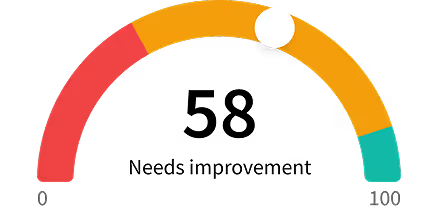
Don't guess if your resume is good enough.
See how it scores against the Postdoctoral Researcher, Experimental Data Generation & CRO Strategy posting at Microsoft — free, in seconds.
About the Role
Microsoft Research AI for Science seeks a Postdoctoral Researcher to design and lead experimental data-generation campaigns for the Biomolecular Emulator (BioEmu) model. This role focuses on developing AI methods for molecular simulation and discovery, aiming to model protein dynamics and function for improved drug discovery. The position emphasizes scientific ownership, cross-disciplinary collaboration, and scalable data and modeling pipelines, with experimental execution primarily through external partners.
Responsibilities
- Design scalable campaigns for biomolecular interactions, conformational dynamics, and related protein measurements.
- Select systems, constructs, assays, and controls based on scientific value, feasibility, diversity, throughput, and cost.
- Anticipate bottlenecks and define success criteria, contingency plans, and follow-up experiments.
- Translate research goals into clear work packages, milestones, and experimental requirements.
- Coordinate parallel programs with CROs and academic collaborators, review progress, and guide corrective iterations.
- Provide scientific direction on protein production, assay development, and biophysical or structural characterization.
- Review raw and processed experimental outputs, including binding curves and kinetic measurements.
- Diagnose artifacts, failed fits, and systematic assay problems using quantitative and biophysical reasoning.
- Define reproducible QC criteria and scalable triage processes beyond manual review.
- Convert heterogeneous experimental outputs into traceable, model-ready datasets with appropriate metadata and provenance.
- Work with computational researchers to prioritize systems, evaluate model predictions, and design informative follow-up experiments.
- Use basic scripting and data-analysis tools to organize, inspect, and summarize experimental datasets.
- Communicate experimental findings, limitations, and risks to biological and computational collaborators.
- Drive projects from ambiguous questions to usable datasets, scientific conclusions, and publications.
- Contribute to the experimental data strategy for future BioEmu models.
Requirements
- PhD in Biology, Biophysics, Biochemistry, Molecular Biology, Protein Science, Bioengineering, Computational Biology, Molecular Modelling, or a related field, with experience designing, conducting, or analyzing biomolecular experiments and/or computational studies.
- Strong quantitative understanding of experimental measurements and their limitations.
- Ability to coordinate complex projects and communicate clearly across experimental and computational teams.
- Experience working with real-world biological, structural, or biophysical datasets.
- Ability to independently own and deliver research projects.
- Experience managing CROs, vendors, or distributed experimental collaborations.
- Expertise in protein-protein interactions, binder design, affinity optimization, or high-throughput assay development.
- Familiar with techniques such as protein expression and purification, binding assays (SPR, BLI, ITC, cryo-EM), structural biology (X-ray crystallography, NMR), Mass Spec (HDX-MS, Cross-link Mass Spec).
- Practical Python or equivalent scripting skills for data analysis, QC, and workflow automation.
- Experience in designing, curating, or standardizing datasets for machine-learning applications.
- Interest in model-guided experimental design, drug discovery, or therapeutic applications.
Skills
- Python scripting
- Data analysis
- Quality control
- Workflow automation
- Protein expression and purification
- Binding assays (SPR, BLI, ITC, cryo-EM)
- Structural biology (X-ray crystallography, NMR)
- Mass Spectrometry (HDX-MS, Cross-link Mass Spec)
Experience Level
- Postdoctoral Researcher
Education Level
- PhD
Salary/Compensations
- € 8,191.00 per month
- £ 6,655.00 per month
Benefits
- Certain roles may be eligible for benefits and other compensation.
About the Company
- Microsoft Research AI for Science focuses on the development of machine learning and artificial intelligence methods for transforming molecular simulation and discovery of novel materials, drugs and chemical reactions.
- The BioEmu project aims to model the dynamics and function of proteins, how they change shape, bind to each other, and bind small molecules.
- This approach will help us to understand biological function and dysfunction on a structural level and lead to more effective and targeted drug discovery.
- Our BioEmu-1 model was published in Science.
Equal Opportunity
- Microsoft is an equal opportunity employer. All qualified applicants will receive consideration for employment without regard to age, ancestry, citizenship, color, family or medical care leave, gender identity or expression, genetic information, immigration status, marital status, medical condition, national origin, physical or mental disability, political affiliation, protected veteran or military status, race, ethnicity, religion, sex (including pregnancy), sexual orientation, or any other characteristic protected by applicable local laws, regulations and ordinances.
- If you need assistance with religious accommodations and/or a reasonable accommodation due to a disability during the application process, read more about requesting accommodations.