Impress employers and recruiters.
Choose from hundreds of resume examples.
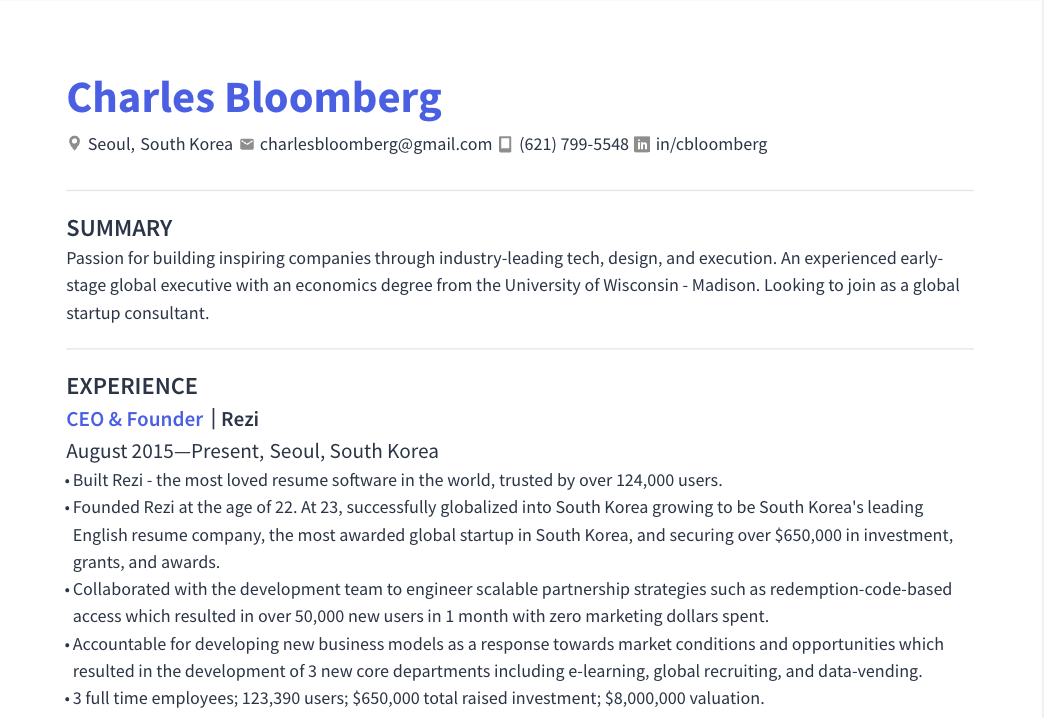
Impress employers and recruiters.
Choose from hundreds of resume examples.
Tailor your resume to this Data Modeler (CEMI) role.
Rezi rewrites your resume against Cornell University's job description. Free.
Tailor your resume to this Data Modeler (CEMI) role.
Rezi rewrites your resume against Cornell University's job description. Free.
Don't guess if your resume is good enough.
See how it scores against the Data Modeler (CEMI) posting at Cornell University — free, in seconds.
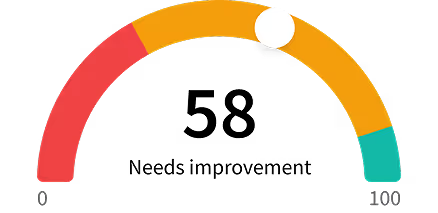
Don't guess if your resume is good enough.
See how it scores against the Data Modeler (CEMI) posting at Cornell University — free, in seconds.
About the Role
The Data Modeler (CEMI) is a senior individual contributor responsible for designing, developing, and maintaining enterprise data models and analytics solutions that support institutional reporting and decision-making. This role leads the design of dimensional data models, data warehouses, and data marts, translating complex business requirements into scalable, high-performance data structures. The position analyzes source data structures and business processes to build fact and dimension tables in a database, requiring SQL proficiency and an understanding of database fundamentals. The role also involves testing and validating data and models, collaborating with stakeholders to define requirements, design solutions, and ensure data quality. As a technical authority, this role guides data design standards, mentors peers, and ensures solutions align with enterprise architecture and performance expectations.
Responsibilities
- Design, development, and maintenance of enterprise data models and analytics solutions
- Lead the design of dimensional data models, data warehouses, and data marts
- Translate complex business requirements into scalable, high-performance data structures
- Analyze source data structures and business processes
- Build fact and dimension tables in a database
- Test and validate data and models
- Collaborate with business stakeholders, data architects, developers, and analysts to define requirements, design solutions, and ensure data quality and usability
- Function as a technical authority and subject matter expert
- Guide data design standards
- Mentor peers
- Ensure solutions align with enterprise architecture and performance expectations
- Foster a culture of belonging and a healthy work environment by communicating across differences, being cooperative, collaborative, open, and welcoming, showing respect, compassion, and empathy, engaging and supporting others regardless of background or perspective, speaking up when others are being excluded or treated inappropriately, and supporting work/life integration of oneself and others.
Requirements
- Bachelor’s degree in Computer Science, Information Systems, Engineering, or related field and 5–7 years of relevant experience, or equivalent combination of education and experience
- Demonstrated expertise in dimensional data modeling (fact/dimension design)
- Demonstrated expertise in data warehousing, data marts, and data architecture
- Demonstrated expertise in SQL development, query optimization, and data profiling
- Demonstrated expertise in source-to-target mapping and ETL processes
- Experience translating business requirements into technical data solutions and models
- Strong understanding of data structures, relationships, and database design principles (PK/FK, schemas)
- Experience working across complex, multi-system environments (ERP, analytics platforms, etc.)
- Ability to lead design sessions, facilitate requirements gathering, and guide technical solutions
- Demonstrated ability to analyze and solve complex problems and develop scalable and efficient data solutions
- Ability to communicate technical concepts to non-technical stakeholders
- Experience mentoring or providing technical guidance to peers
- Ability to manage multiple priorities in a fast-paced, evolving environment
- Ability to cultivate and develop inclusive working relationships with students, faculty, staff, and community members.
Skills
- SQL
- Dimensional data modeling
- Data warehousing
- Data marts
- Data architecture
- SQL development
- Query optimization
- Data profiling
- Source-to-target mapping
- ETL processes
- Database design principles
- Complex problem-solving
- Technical communication
- Mentoring
- BI and analytics tools (e.g., Power BI, Tableau, OBIEE)
- ERP systems (e.g., Workday, PeopleSoft, SAP, Oracle)
- Data lake architectures
- Modern analytics ecosystems
Location
- Remote
- United States
Work Type
- Remote
- 2 Year Term Appointment
Experience Level
- 5-7 years of relevant experience
- Senior individual contributor
Education Level
- Bachelor’s degree in Computer Science, Information Systems, Engineering, or related field
Salary/Compensations
- $114,698.00 - $140,186.00
Benefits
- Comprehensive health care options
- Generous retirement contributions
- Access to wellness programs
- Employee discounts with local and national retail brands
- Health and personal leave
- Three weeks of vacation
- 13 holidays
- Two additional floating holidays
- Tuition-free Extramural Study
- Employee Degree Program
- Tuition aid for external education
- Cornell Children's Tuition Assistance Program
About the Company
- Information Technology (IT) is a strategic enabler for many functions at Cornell University, with staff located across colleges, administrative units, and campuses throughout the institution. IT operates as one, partnering closely with faculty, staff, and students to support teaching, research, and business operations. By being embedded where the Cornell community is, IT is well positioned to provide support ranging from day-to-day needs to large, complex initiatives that advance major academic, research, and operational objectives across the university.
- The Data & Analytics function supports enterprise reporting and decision-making by integrating data from ERP systems and other institutional sources into a centralized data environment. The team develops scalable data models, analytics solutions, and reporting tools that enable business units across the university to efficiently access, interpret, and act on data.
Equal Opportunity
- Cornell welcomes students, faculty, and staff with diverse backgrounds from across the globe to pursue world-class education and career opportunities, to further the founding principle of “... any person ... any study.” No person shall be denied employment on the basis of any legally protected status or be subjected to prohibited discrimination involving, but not limited to, such factors as race, ethnic or national origin, citizenship and immigration status, color, sex, pregnancy or pregnancy-related conditions, age, creed, religion, actual or perceived disability (including persons associated with such a person), arrest and/or conviction record, military or veteran status, sexual orientation, gender expression and/or identity, an individual’s genetic information, domestic violence victim status, familial status, marital status, or any other characteristic protected by applicable federal, state, or local law.
- Cornell University embraces diversity in its workforce and seeks job candidates who will contribute to a climate that supports students, faculty, and staff of all identities and backgrounds. We hire based on merit, and encourage people from historically underrepresented and/or marginalized identities to apply. Consistent with federal law, Cornell engages in affirmative action in employment for qualified protected veterans as defined in the Vietnam Era Veterans’ Readjustment Assistance Act (VEVRAA) and qualified individuals with disabilities under Section 503 of the Rehabilitation Act. We also recognize a lawful preference in employment practices for Native Americans living on or near Indian reservations in accordance with applicable law.