Impress employers and recruiters.
Choose from hundreds of resume examples.
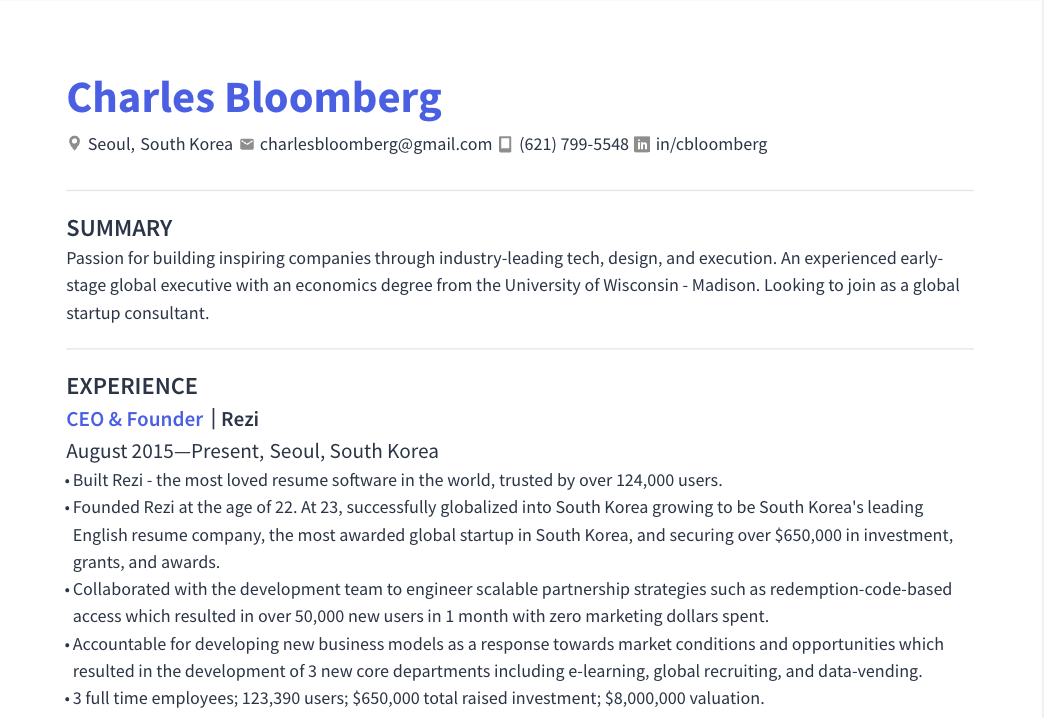
Impress employers and recruiters.
Choose from hundreds of resume examples.
Tailor your resume to this Research Data Analyst I role.
Rezi rewrites your resume against UCSF's job description. Free.
Tailor your resume to this Research Data Analyst I role.
Rezi rewrites your resume against UCSF's job description. Free.
Don't guess if your resume is good enough.
See how it scores against the Research Data Analyst I posting at UCSF — free, in seconds.
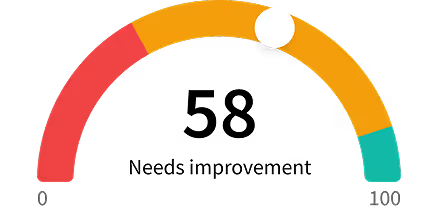
Don't guess if your resume is good enough.
See how it scores against the Research Data Analyst I posting at UCSF — free, in seconds.
About the Role
Entry-level professional with limited prior experience, learning to use professional concepts to resolve problems of limited scope and complexity. Works on assignments that are initially routine, requiring limited judgment. Expected to acquire skills for more advanced work through training and development.
Responsibilities
- Gather and organize various types of research data.
- Analyze research datasets according to established lab pipelines.
- Prepare figures and tables summarizing results for research proposals, protocols, and reports.
- Contribute to scientific manuscripts, publications, and presentations.
- Maintain research data collection, retrieval, and reporting systems.
- Collects research data and prepares it for analysis.
- Supports testing of research instruments and data sources.
- Assists with evaluation and research of data reporting products.
- Assists in analysis of single cell RNA-seq and ATAC-seq data.
- Assists in analysis of large data sets of Phip-Seq data.
- Assists with data science research to contribute to proposals for other researchers and Principal Investigators.
- Creates, maintains, documents, and utilizes computer programs of limited algorithmic complexity and scale.
- Utilizes basic algorithms, techniques, AI, and statistical methodologies to conduct predictive analytics or generate insights under supervision.
- Develops knowledge in areas of storage, documentation, and dissemination of computerized data.
Requirements
- Acquiring knowledge of research function and ability to perform research analysis duties.
- Acquiring statistical analysis, systems programming, and database design skills.
- Ability to effectively manage time and complete assigned project segments by deadlines.
- Familiarity with basic data science workflows and statistical modeling applications.
- Proficiency in both Python and R programming languages.
- Direct hands-on experience in bioinformatics and computational biology research.
- Interpersonal skills to work with technical and non-technical personnel and iteratively improve data science methodologies with biomedical domain experts.
- Ability to communicate technical information clearly and concisely.
- Basic consultation and communication skills.
- Excellent verbal and written communication skills with the ability to integrate and communicate complex information.
- Excellent organizational skills.
- Ability to work independently and as a member of an interdisciplinary research team.
- Ability to prioritize tasks, coordinate work with others, and meet multiple deadlines.
- Experience with R and Python programming.
- Familiarity with basic data science workflows.
Skills
- Python
- R
- Bioinformatics
- Computational Biology
- Data Science
- Statistical Modeling
- Statistical Analysis
- Systems Programming
- Database Design
- Predictive Analytics
- AI
- Single-cell RNA-seq analysis
- ATAC-seq analysis
- PhIP-Seq analysis
Location
- UCSF Diabetes Center
Work Type
- Full-time
Experience Level
- Entry-level
Education Level
- Bachelor's degree in a related area or equivalent experience/training
- Coursework in biological sciences
- Coursework in computer sciences
About the Company
- The Quandt lab at the UCSF Diabetes Center is seeking to hire a motivated Research Data Analyst.
- The lab's research focuses on mechanisms of immune tolerance in patients with autoimmune diseases such as type 1 diabetes and endocrine side effects of cancer immunotherapy, as well as mouse models of autoimmunity.