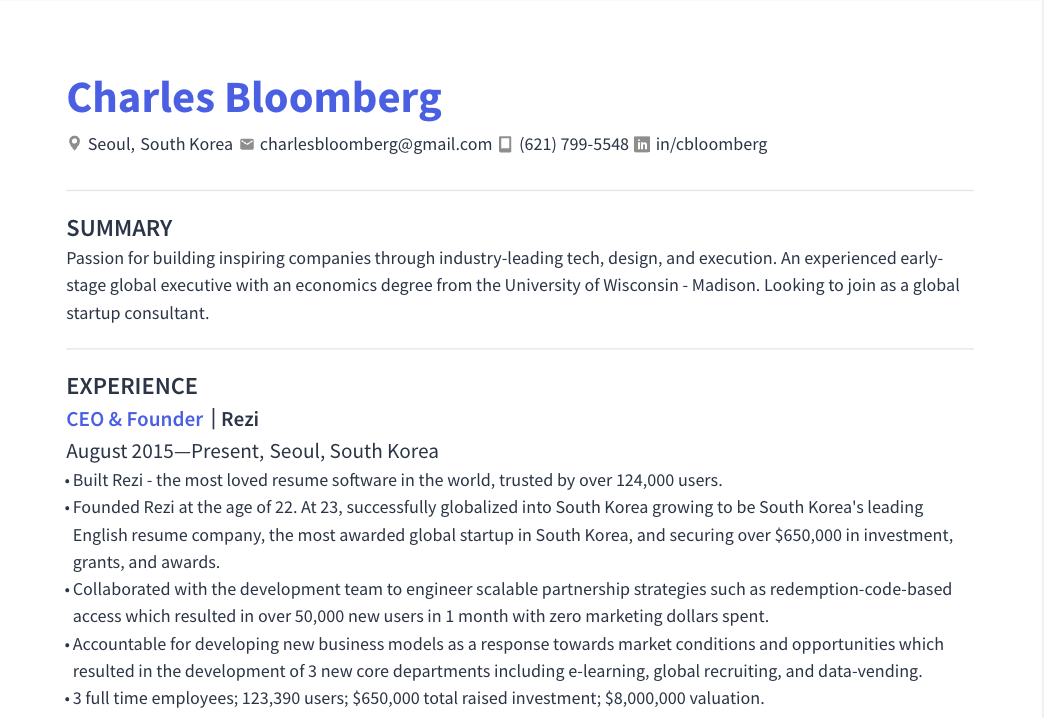
Impress employers and recruiters.
Choose from hundreds of resume examples.
Impress employers and recruiters.
Choose from hundreds of resume examples.
Tailor your resume to this Vice President of Research & Development role.
Rezi rewrites your resume against Harris Computer's job description. Free.
Tailor your resume to this Vice President of Research & Development role.
Rezi rewrites your resume against Harris Computer's job description. Free.
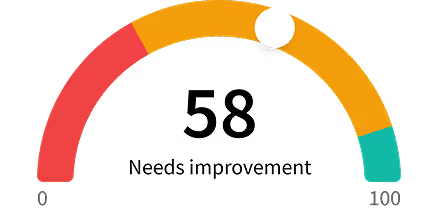
Don't guess if your resume is good enough.
See how it scores against the Vice President of Research & Development posting at Harris Computer — free, in seconds.
Don't guess if your resume is good enough.
See how it scores against the Vice President of Research & Development posting at Harris Computer — free, in seconds.
About the Role
This role leads the technical roadmap and AI-driven opportunity for Corrections and Law Enforcement product lines. It involves setting multi-year technical roadmaps, rebuilding assumptions around AI-enabled delivery acceleration, and planning roadmaps around customer problems. The role also involves deciding where AI should be embedded in products and balancing acceleration against customer commitments and installed base realities. Additionally, it requires owning technology standards, architectural direction, and technical documentation, as well as evaluating build, buy, and consolidation options.
Responsibilities
- Use AI development tools personally and daily, holding a current and practical command of what they can and cannot do.
- Research and experiment continuously with new AI tooling, models, and workflows, then bring what proves out into the organization's standard practice.
- Lead every development team to agentic, human-on-the-loop delivery, where AI agents own bounded work end to end while engineers set goals, define guardrails, and review outcomes.
- Own the AI delivery-maturity roadmap across all actively supported products, applied stage by stage across the lifecycle.
- Stand up the governance that makes delegated agent work safe, including review gates, validation, security review of AI-generated code, and measurable outcome reporting.
- Make the codebase and delivery pipeline accessible to AI agents through documentation, test coverage, CI/CD, and structured context.
- Build the tooling and training program that moves engineers from AI-assisted work, to AI-directed work, to fully delegated agent execution.
- Report AI delivery maturity and the business outcomes it produces on a recurring executive cadence.
- Set the multi-year technical roadmap for the Corrections and Law Enforcement product lines, planned against the pace agentic delivery now makes possible.
- Rebuild roadmap assumptions around that acceleration.
- Pull committed work forward where AI-enabled delivery shortens the build, and direct the recovered capacity toward customer problems that were previously out of reach.
- Plan the roadmap around customer problems as much as product features, judging each item on whether AI can reach the outcome faster than a conventional build cycle would.
- Decide deliberately where AI belongs embedded in the products customers buy and where it is better applied as a fast path to a customer outcome, and treat both as revenue opportunities.
- Balance that acceleration against customer commitments already in flight and the realities of an installed base that cannot absorb change at an unlimited rate.
- Own technology standards, architectural direction, and technical documentation across the portfolio, and hold the development organizations to them.
- Evaluate build, buy, and consolidation options where product lines overlap, and bring recommendations with supporting analysis to the Executive Vice President.
- Monitor industry direction, competitor capability, and emerging technology relevant to law enforcement, corrections, and justice software.
- Own release commitments across every development team, including scope, sequencing, and the dates communicated to customers and to sales.
- Establish a single reporting cadence for status, blockers, and slips so that risk surfaces early.
- Standardize development process, tooling, and engineering metrics across companies that today operate independently.
- Resolve cross-team dependencies and resource contention, and escalate the trade-offs that require an executive decision.
- Set and enforce quality standards covering code review, automated testing, defect thresholds, and release readiness, applied equally to human-written and AI-generated code.
- Maintain the highest levels of product and platform security, promoting a culture and practice of security awareness in every development team.
- Ensure development activities meet the regulatory, contractual, and industry requirements that apply to public safety and justice customers.
- Partner with Support Services to close the loop between escalated customer issues and engineering priorities.
- Lead, mentor, and develop the development managers and directors across the portfolio companies, setting clear goals and performance expectations.
- Recruit and retain engineering talent, and build succession depth in every key technical role.
- Set the expectation that every engineer works with AI tools as a normal part of the job, and give them the training, access, and time to get there.
- Structure the organization for the work ahead, including the balance between onshore, offshore, and contract capacity, and the reshaping that agentic delivery makes possible.
- Promote transparency and collaboration by making priorities, progress, and decisions visible across the organization.
- Own the R&D budget across the portfolio, including headcount planning, capitalization, AI tooling spend, and vendor commitments.
- Contribute R&D inputs to the monthly forecast and to quarterly executive reporting, with explanations for variance against plan.
- Drive measurable improvement in development cost as a percentage of revenue without sacrificing delivery or quality.
- Allocate engineering capacity to the products and initiatives with the strongest return, and defend those choices with data.
- Lead platform migration and modernization programs, including the sequencing and customer impact of each phase.
- Retire technical debt and legacy dependencies on a published schedule rather than opportunistically.
- Measure adoption and business impact of new capability, and stop investment that does not earn its place.
- Act as the primary liaison between R&D and Operations, Support, Product Management, Sales, and Finance.
- Present roadmap progress, AI maturity, risk, and investment recommendations to executive leadership in terms a non-technical audience can act on.
- Engage directly with customers, partners, and user groups to validate direction and to hear where the products fall short.
- Support due diligence and technical integration for acquisitions that join the portfolio.
Requirements
- Bachelor's degree in Computer Science, Engineering, Information Technology, or a related field; advanced degree preferred.
- Ten or more years in software development with at least three years leading engineering organizations at director level or above.
- Demonstrated hands-on use of AI development tools in daily work, with a clear point of view on where they help, where they fail, and how quickly that is changing.
- Experience raising an engineering organization's way of working from individual AI assistance to agentic, human-on-the-loop delivery, including the governance and validation that makes it safe.
- Strong understanding of software architecture, cloud technologies, modern development methodologies, and enterprise software delivery.
- A record of translating AI capability into customer-facing value and revenue, not only internal development efficiency.
- Proven ownership of a multi-product or multi-company development portfolio, including budget accountability.
- Experience delivering enterprise software to public sector, public safety, or other regulated markets is strongly preferred.
- Track record modernizing legacy platforms while continuing to support an installed customer base.
- Working command of modern architecture, cloud delivery, and secure development practice, including security review of AI-generated code.
- Bachelor's degree in Computer Science, Engineering, or a related field, or equivalent professional experience.
Skills
- AI development tools
- AI tooling
- AI models
- AI workflows
- Agentic delivery
- Human-on-the-loop delivery
- AI agents
- AI delivery-maturity roadmap
- Governance
- Validation
- Security review of AI-generated code
- AI-accessible codebase
- AI-accessible delivery pipeline
- AI-assisted work
- AI-directed work
- Delegated agent execution
- Technical roadmap
- AI-enabled delivery
- Customer problems
- Product features
- Revenue opportunities
- Technology standards
- Architectural direction
- Technical documentation
- Industry direction
- Competitor capability
- Emerging technology
- Release commitments
- Development process standardization
- Tooling standardization
- Engineering metrics standardization
- Cross-team dependency resolution
- Resource contention resolution
- Quality standards enforcement
- Code review
- Automated testing
- Defect thresholds
- Release readiness
- Product security
- Platform security
- Security awareness
- Regulatory requirements
- Contractual requirements
- Industry requirements
- Customer issue resolution
- Team leadership
- Mentoring
- Talent recruitment
- Talent retention
- Succession planning
- Engineering talent development
- AI tools training
- Organizational structuring
- Onshore capacity
- Offshore capacity
- Contract capacity
- Transparency
- Collaboration
- R&D budget ownership
- Headcount planning
- Capitalization
- AI tooling spend
- Vendor commitments
- Financial forecasting
- Executive reporting
- Development cost management
- Engineering capacity allocation
- Platform modernization
- Platform migration
- Technical debt retirement
- Legacy dependency retirement
- Stakeholder communication
- Executive communication
- Customer engagement
- Partner engagement
- User group engagement
- Due diligence support
- Technical integration support
- Software architecture
- Cloud technologies
- Modern development methodologies
- Enterprise software delivery
- Customer-facing value creation
- AI capability translation
- Multi-product portfolio ownership
- Multi-company portfolio ownership
- Budget accountability
- Enterprise software delivery to public sector
- Enterprise software delivery to public safety
- Enterprise software delivery to regulated markets
- Legacy platform modernization
- Installed customer base support
- Modern architecture
- Cloud delivery
- Secure development practice
- Security review of AI-generated code
Experience Level
- Ten or more years in software development
- At least three years leading engineering organizations at director level or above
Education Level
- Bachelor's degree in Computer Science, Engineering, Information Technology, or a related field
- Advanced degree preferred
- Bachelor's degree in Computer Science, Engineering, or a related field, or equivalent professional experience
Salary/Compensations
- $125,000 - $135,000 USD per year